
La Jolla ISD presents new goal progress measures and targeted supports for low-performing schools
Get AI-powered insights, summaries, and transcripts
Subscribe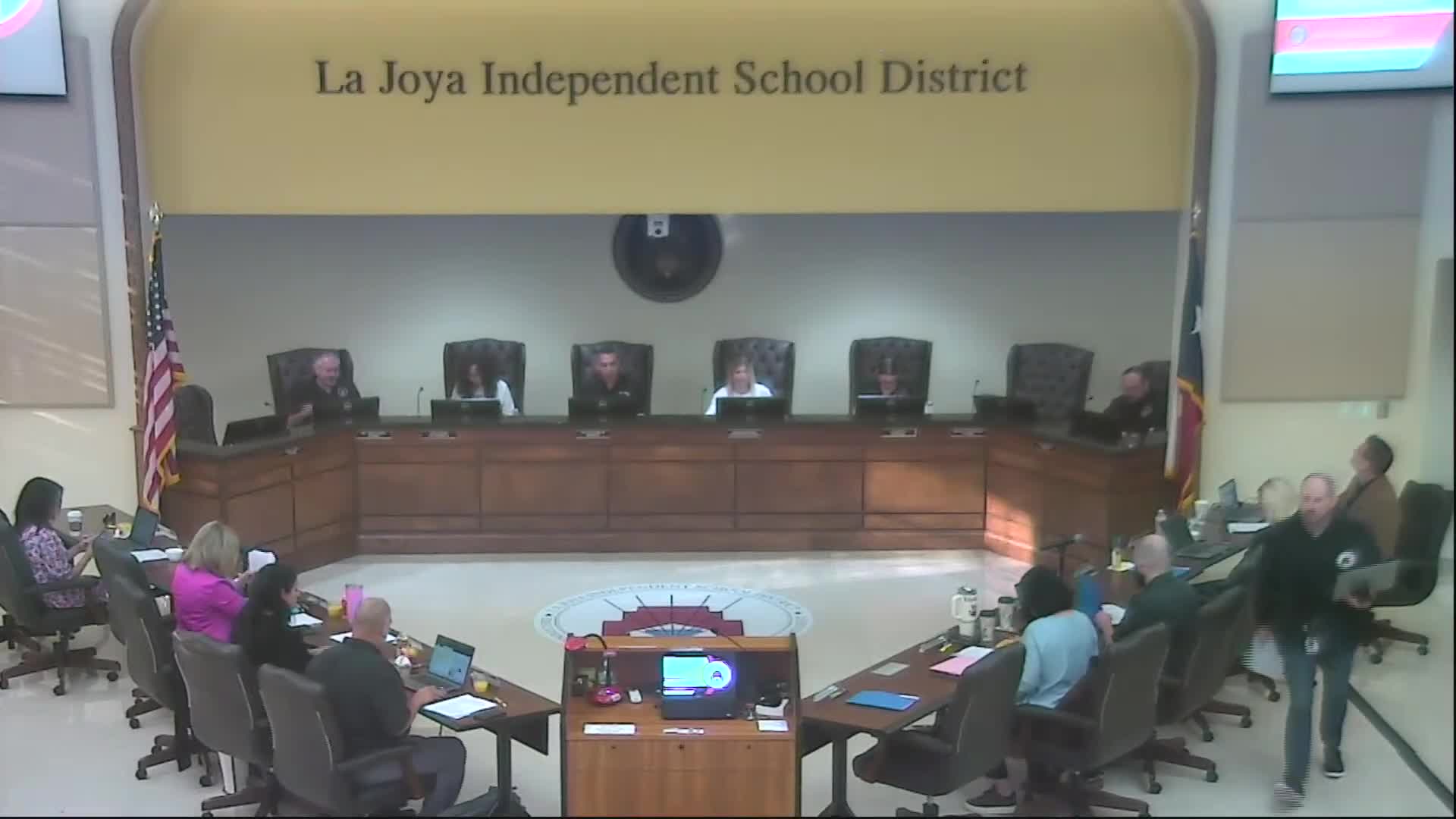
Summary
District staff presented revised goal progress measures using one year of MAP data, proposed campus-by-campus targets for reading and math through 2029, and described differentiated supports and coaching for lower-performing campuses.
La Jolla Independent School District officials used a board workshop to present revised goal progress measures and a package of campus supports aimed at lifting student achievement in early grades, middle school reading and math, and college- and career-readiness.
The presentation, led by Dr. Little (presenter) and framed by Superintendent Dr. Sorensen, used the district’s first full year of MAP (Measure of Academic Progress) data to set new annual and 2029 targets for multiple measures tied to the district’s board goals: third-grade reading and math, eighth-grade reading, and college-, career- and military-readiness (CCR). Dr. Little said, “This will be the first year that we have a new tier 1 on grade level core reading curriculum, k 8 in the district.”
The new goal progress measures (GPMs) include specific numeric targets for grade bands and assessment measures. Examples shown to the board include: first-grade MAP results moving from 36 percent (most recent year) to a 45 percent target by June 2029; second-grade MAP from 33 percent toward 45 percent by 2029; an early reading fluency measure rising from 40 percent to 65 percent (k–2 combined); and kindergarten math (Texas Kindergarten Entry Assessment composite) adjusted from 83 percent to an 88 percent target. For middle grades, the district proposed moving sixth-grade MAP reading from 39 percent to 50 percent by 2029, and raising eighth-grade projections into the mid- to upper-50s over the same period.
Nut graf: The board-level GPMs are districtwide measures intended to be translated into campus-by-campus targets and monitored through the district’s assessment calendar. The district said it will allocate more time, resources and coaching to its lowest-performing campuses to accelerate growth, and will require participation in specified supports for those campuses.
District staff described how the GPMs will be individualized at the campus level. Dr. Little showed examples in which an A-rated campus that posted 51 percent in a first-grade measure might be asked to grow two points, while an F-rated campus at 24 percent would be set a more aggressive target (example: to 30 percent) and receive intensified supports. Dr. Little said schools “will get much more support from us both in time, attention, resources, and personnel capacity on their campus.”
Board members pressed for specifics on supports and accountability. Staff described a differentiated support model that includes: - campus-specific targets tied to each school’s starting point; - increased partner time and coaching at highest-need campuses; - clarified instructional framework and lesson structure for middle grades; - a leadership academy and principal supports to build capacity; and - a district-wide coaching model and new central-office evaluations for leaders and coaches.
On pacing and expected growth, staff explained the district is often “back‑loading” growth because teachers and campus leaders are adopting new high-quality instructional materials (HQIMs), a new assessment cadence and a revised instructional framework. Dr. Little described the process as structural change that can initially depress scores while adults learn new practices: “If I'm a right hand hitter and I got a 300 batting average, and I tell you you can only hit left handed now ... your left hand batting average is gonna drop.”
Board members and staff discussed middle school declines in reading performance. Staff and the superintendent said middle schools showed the largest declines in MAP and STAR/STAAR data, and the district plans to focus on middle-school instruction, adding classroom engagement strategies, writing practice to support STAR performance, and more frequent interim assessments. Dr. Sorensen said the district will make those supports explicit in lesson structures and campus monitoring.
The presentation also covered targeted interventions for vulnerable students, including MTSS protocols and improved special-education services; staff noted a pending special-education audit and said the district will report progress on implementation. On advising and postsecondary planning, the district said it will strengthen counselor capacity and central coordination of college- and career-planning so families get clearer information about pathways (dual credit, early college, P‑TECH and CTE).
The board did not take formal votes on the GPMs at the workshop; staff said they will return with a formal adoption proposal in a subsequent meeting after gathering feedback and finalizing campus targets. Dr. Little described interim criteria for “statusing” targets during the school year: interim updates within 2 percentage points of a target will be considered “on track,” 3–5 points “slightly off track,” and 6+ points “off track.” For final status, meeting or exceeding a target equals green; within 3 points is yellow; 4+ points below is red.
Ending: Staff said they will supply campus-level targets and continued updates tied to the district assessment calendar. The board scheduled a later meeting for formal consideration of revised GPMs and the district’s recommended campus assignments and support allocations.