
Parks staff propose separating rec‑center, reservoir and seasonal access and a sliding‑scale aid program to close a recreation revenue gap
Get AI-powered insights, summaries, and transcripts
Subscribe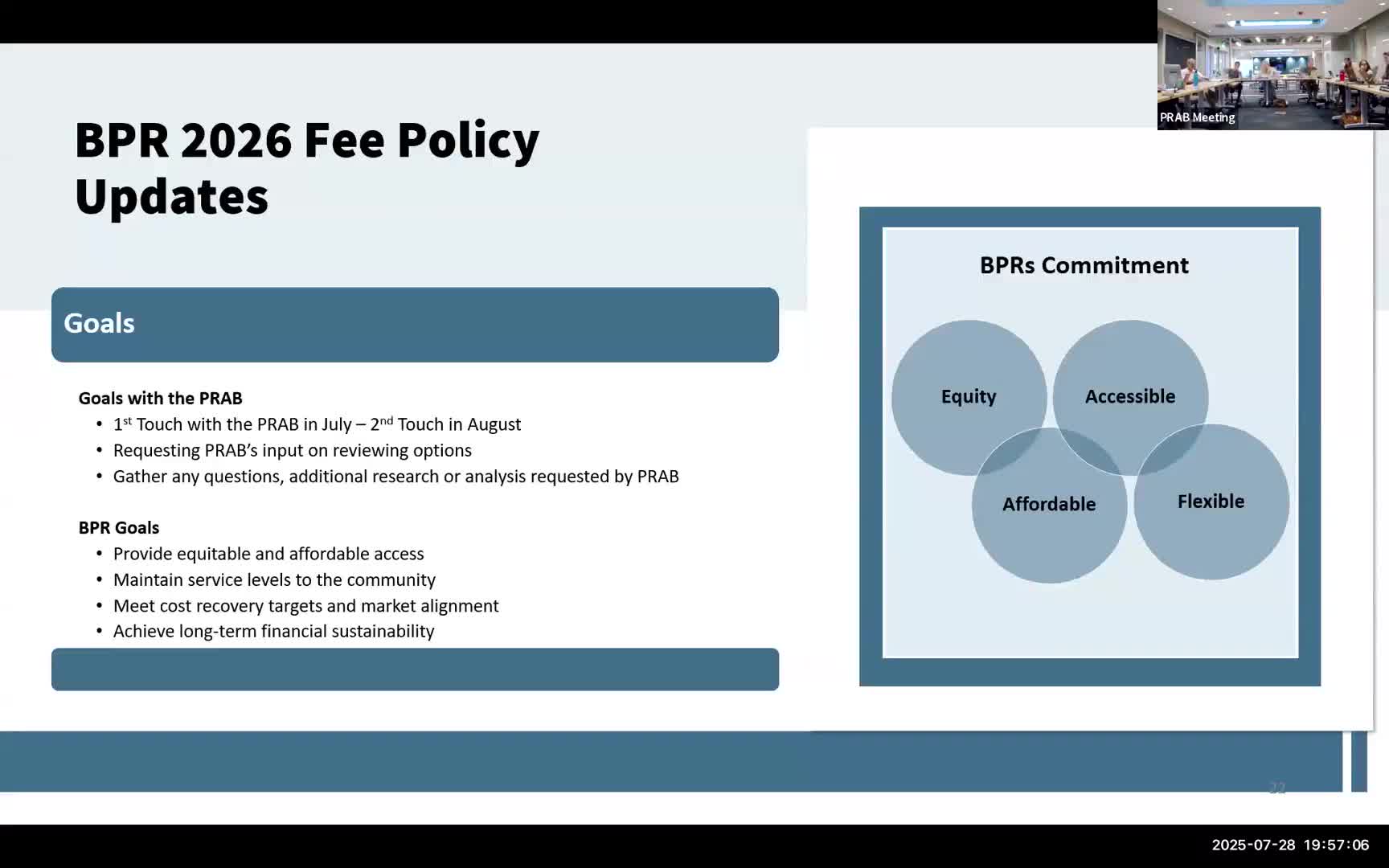
Summary
Parks staff proposed selling rec‑center access, outdoor seasonal facilities and reservoir access as separate passes (while keeping an optional all‑access pass) and recommended a sliding‑scale financial aid program to shield low‑income residents from fee increases needed to close a revenue gap.
Parks staff presented a first‑look package of membership and fee changes designed to close a recreation activity fund gap and reduce pressure on taxpayer subsidies. The department said it needs to raise about $600,000 in additional recreation activity fund revenue for 2026 (a total RAF target near $12.1 million) and that, under the current all‑in membership structure, fees would need to rise nearly 40% to close the gap without service reductions.
“Rates would need to increase nearly 40% to actually accomplish the funding gap,” Recreation staff said in the meeting materials when describing the effects of keeping the existing one‑pass‑for‑everything model. Staff offered two broad alternatives: (1) a product‑based model that groups similar facilities (for example, sell all rec centers together) while selling the reservoir and seasonal pools separately, or (2) a “rec center plus” model that sells rec centers together and offers discounts or add‑on pricing for seasonal/unique facilities. Both approaches would preserve an optional all‑access pass for people who want everything.
Staff recommended several equity measures to avoid disproportionate impacts on low‑income residents: maintain the department’s financial aid program (currently free passes for households at or below 60% AMI) and implement a sliding scale so people pay in proportion to household income rather than all‑or‑nothing eligibility. Staff noted financial aid enrollment has grown from about 829 participants in 2014 to more than 4,300, increasing subsidy pressure.
Other market moves staff proposed to raise revenue without large headline increases include stricter enforcement and pricing for court reservations, aligning golf fees with the local market, and refining daily‑drop‑in fees for the Boulder Reservoir, where 79% of visits are paid daily entries and where the facility is operated to approach full cost recovery.
Staff also discussed third‑party access programs such as SilverSneakers and similar Medicare‑supplement provider programs. Those contracts currently increase participation but reimburse municipal providers at rates that have not kept pace with departmental cost increases; staff recommended keeping those contracts through 2026 while renegotiating as opportunities arise.
Staff said it will return in August with detailed price modeling, pass‑structure examples and communications plans for a September final proposal and a September/October fee‑adoption timeline tied to the budget process.