
Council approves transfers; administration to return plan for $2M in hurricane recovery housing aid
Get AI-powered insights, summaries, and transcripts
Subscribe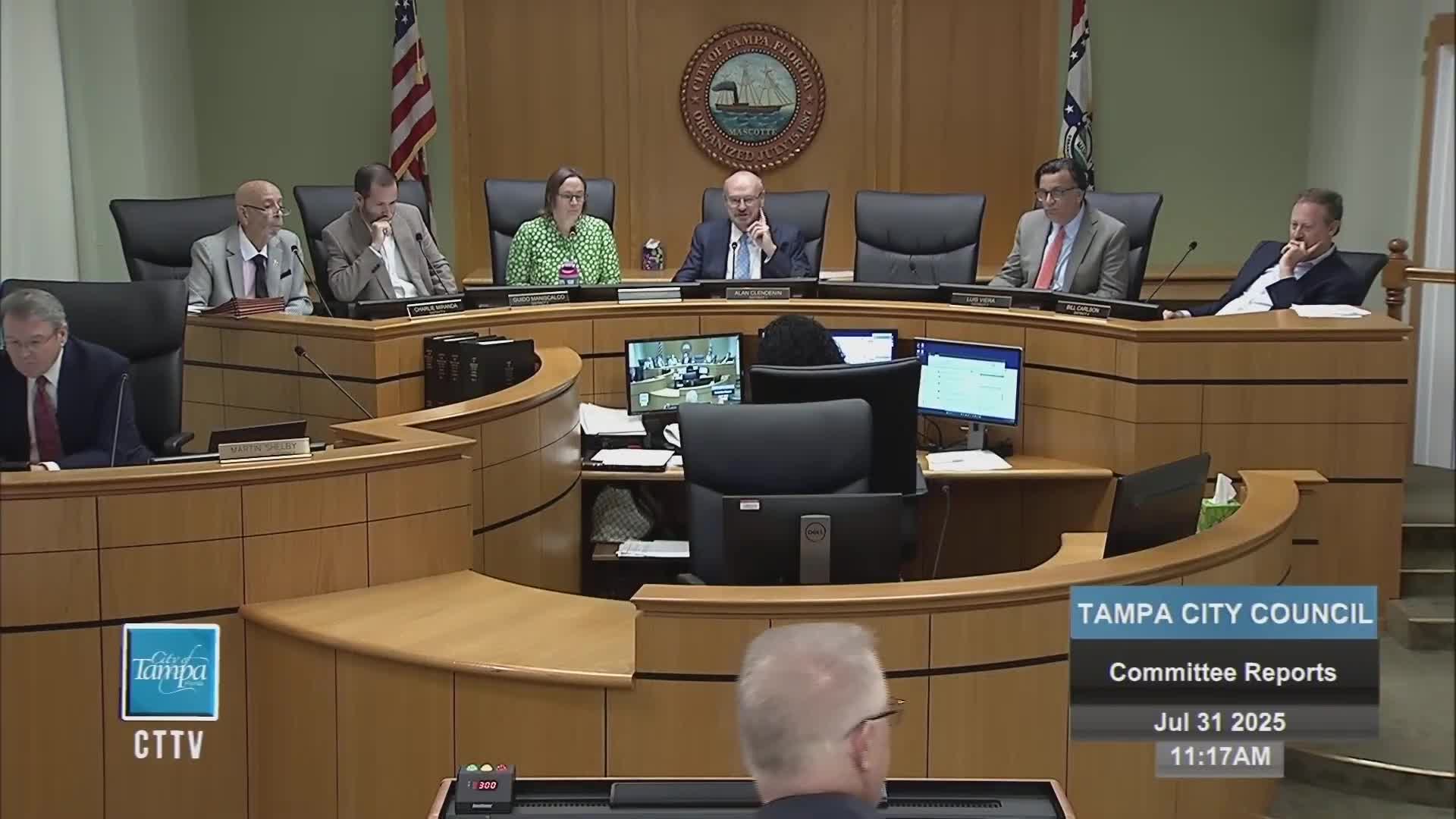
Summary
Council approved a financial resolution to move year‑end balances into targeted funds and heard that the administration will design a broader $2 million program to help homeowners harmed by Hurricanes Helene and Milton; administration will return with a timeline and program details in September.
TAMPA — The council approved a year‑end financial resolution that moves assigned general‑fund balances into capital and special revenue funds and heard an administration briefing about a second tranche of municipal hurricane-recovery housing assistance.
What the council approved: A financial resolution (item 51 on the agenda) moved assigned fund balances from fiscal year 2024 into the stormwater service fund, local option gas tax capital fund and a grant/program fund to support capital and program work. Mike Perry, revenue and finance, explained mechanics of the transfers and noted some funds (for example, stormwater service assessments) may require reauthorizations for appropriations that expire with fiscal-year closeouts.
New hurricane recovery funding: Abby Feely (Development & Economic Opportunity) briefed council on an additional $2 million the administration will use to broaden assistance beyond the first tranche distributed earlier in the recovery. The earlier program provided reimbursements and limited assistance under strict eligibility rules; Feely said the new funds will allow more direct repair contracts and expanded eligibility up to higher income bands (the administration proposed targeting up to 140% AMI in some cases) and will prioritize direct repairs rather than reimbursement models. Feely asked for weeks to develop operational details and requested council return on Sept. 18 with a formal program timeline and implementation plan.
Why it matters: The city earlier stood up an initial program to deliver quick assistance using available housing-program dollars; officials said that many households still cannot afford upfront repairs and need direct assistance rather than reimbursements. The expanded funds would provide more direct help to working and middle‑income homeowners who experienced storm damage.
Next steps: The administration will continue processing applications from the initial program, stand up a city-run application process for the remaining first-tranche applicants, and return in mid-September with a formal plan to spend the $2 million allocation and proposed eligibility thresholds.