
Youngstown resident says county-funded home repairs were incomplete; staff to follow up
Get AI-powered insights, summaries, and transcripts
Subscribe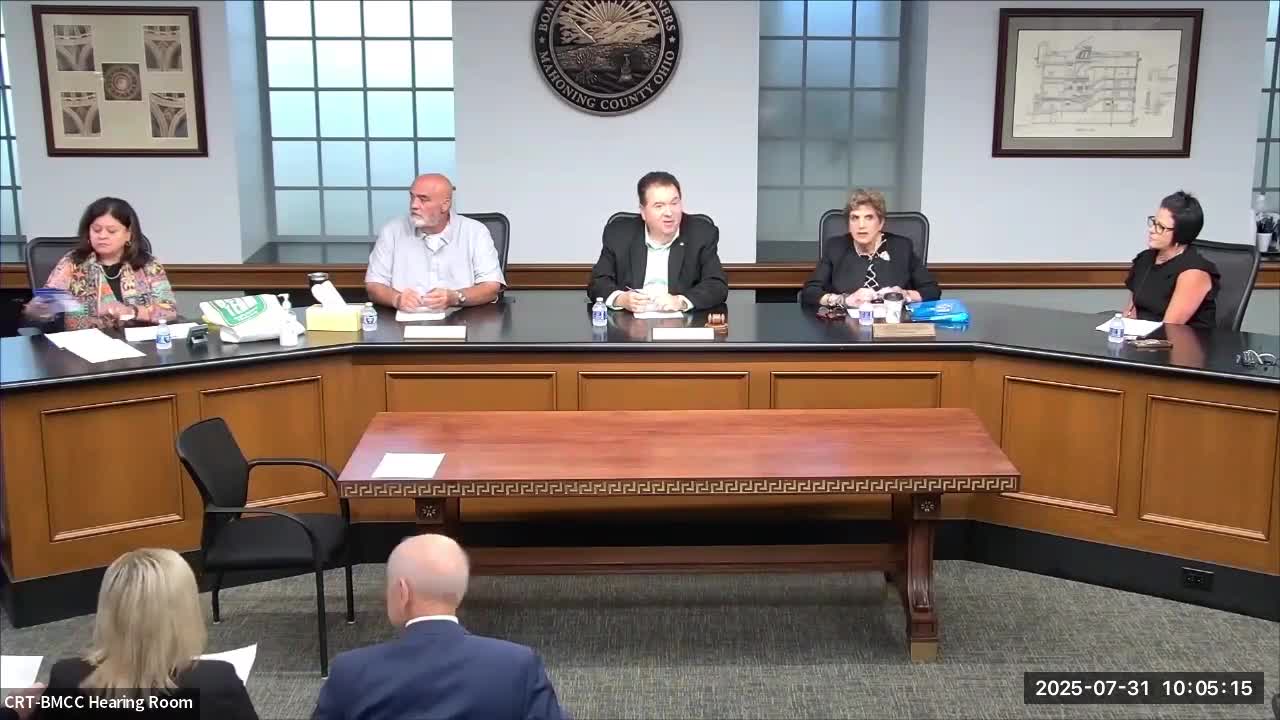
Summary
At a Mahoning County commissioners meeting, resident Floette Jordan described extensive problems with recent lead-hazard/healthy-homes work at her Youngstown house and county staff said they would investigate and follow up with the contractor and inspector.
Floette Jordan, a Youngstown resident, told Mahoning County commissioners she returned to her home on July 14 after roughly a month in a hotel and found work paid for under a county home-repair program to be “shoddy and incomplete.”
Jordan said the exterior looked good but the interior showed “shoddy painting, plastering,” a bent deep‑freezer lid and a cracked toilet seat. “When I received the call that I could return to my home on July 14, almost a month later, I was excited, y’all. When I pulled up in front of my home and saw how good it looked on the outside, I was really excited,” she said. After going inside, she said, “Imagine my letdown…to see such shoddy and incomplete work in every area.”
The complaint was raised during the meeting’s public comments. County staff and commissioners discussed next steps: a county inspector visited Jordan’s home and took photos, and staff members said they would collect Jordan’s contact information and connect her with the county official who oversees the program. Commissioner Carol asked staff to get Jordan’s name and phone number, and staff said they would follow up; Director Phil Purrier (identified in the meeting as the county official responsible for the program) later said the property “cleared the lead inspection risk assessment” on the 15th of the month but that some punch‑list items sometimes take longer to finish and that staff had not yet signed off on the full project.
Why it matters: the county’s lead‑hazard control and Healthy Homes work is intended to make homes safe for occupants. Jordan said she has 30 days to sign off on the work and that the clock was nearly up. She asked the commissioners to be aware of potential substandard work paid with public funds and suggested contractor retraining to prevent future problems.
Discussion details and staff direction: Jordan said an inspector visited and documented problems such as disconnected spouting and gaps that could allow animals into the home. She told commissioners she had stayed in a hotel from June 16 until July 14 while the work was performed. During the meeting, Commissioner Carol and staff agreed that Nancy (county staff) would gather Jordan’s contact information and that Phil Purrier would coordinate follow‑up; Purrier told the commissioners the project had cleared the lead inspection risk assessment on the 15th but that final staff sign‑off had not occurred and that outstanding punch‑list items would be addressed.
No formal board motion or vote was recorded on the complaint itself. The record shows a staff commitment to investigate, confirm outstanding items, and contact the resident.
Jordan’s comments and the staff response were made during the meeting’s public comment and “for the good of the order” segments; commissioners later completed unrelated agenda business.
The county identified the work as part of lead‑hazard control and Healthy Homes projects contracted to outside firms (several related agreements for lead and Healthy Homes work were on the meeting agenda). The resident asked the commissioners to ensure contractors receive any needed training and to guard against an appearance of impropriety when public funds pay for repairs.
What to watch next: county staff said they would follow up with Jordan and the contractor. The county did not record a formal action or vote to reopen or withhold final payment during the meeting; residents and commissioners seeking more detail will likely need to request subsequent staff reports or the contractor’s punch‑list completion documentation.