
Prosecutors, detectives describe investigation steps; judge flags translation foundation and delayed forensic exams
Get AI-powered insights, summaries, and transcripts
Subscribe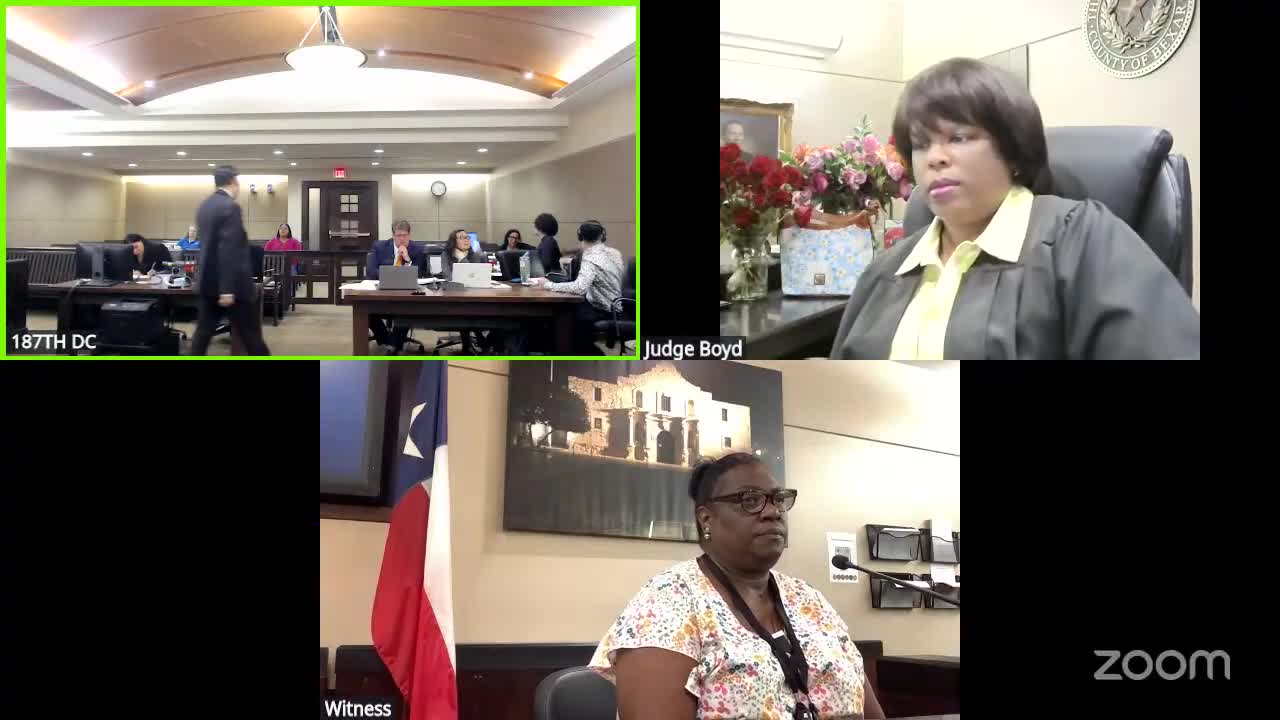
Summary
Detectives and officers described multilingual responses, photo-taking and follow-up contact in a family-violence case; the court flagged gaps the defense emphasized: no early neighborhood-camera checks, no DNA or latent-print requests initially and no SANE exam because days had passed before detectives met the complainant.
San Antonio police officers and detectives who testified at a trial in Bexar County described how they handled a family-violence call from May 4–5, 2024, and how language access and timing affected investigative steps.
Officer Nathan Ruiz and Officer Matthew Beatty said they responded to a reported assault at a strip center on the evening of May 4 and searched the scene and an adjacent restaurant and barbershop. Ruiz testified that the department’s usual practice is to request a Spanish-speaking officer or use LanguageLine Solutions if a live bilingual call-taker is not available; in this case officers who spoke Spanish later joined the scene to assist with victim interviewing.
Lasonya Robinson, custodian of records for SAPD Communications, confirmed the 911 audio copy includes an interpreter from LanguageLine Solutions. The court, however, said the state had not yet established the foundation required for jurors to rely on the translated Spanish-language portions of the recording.
Detective Angela Lopez of SAPD’s Crisis Response Team described her unit’s role and said she did not interview the complainant in a recorded, formal interview room until May 17, 2024. By then, Lopez testified, some forensic opportunities had passed: she told the court she did not request a sexual assault nurse examiner (SANE) exam, DNA swabs or latent-print processing at the barbershop, and that neighborhood cameras had not been checked initially. Lopez explained that by the time detectives reviewed the written 2089 DV statement and contacted the complainant, days had passed and physical evidence that a SANE or on-scene forensics would collect was likely no longer available.
Officer Rodriguez, the crime-scene investigator, photographed visible injuries on May 5 and noted some injuries the victim asked not to be photographed. Investigator Rodriguez said departmental practice allows a female CSI to be called for photographing sensitive injuries, and that victims can instead photograph injuries themselves and send images if they prefer.
Detectives also described administrative issues: an initial police report contained an incorrect name listed as the complainant; follow-up calls from the CRT unit and from a MetroHealth advocate named Leticia were used to locate and verify the correct victim. Detective Lopez told the court that after review she concluded the written 2089 statement indicated additional allegations — including a sexual assault allegation in the narrative — that required clarification with the complainant.
Why it matters: Investigative timing, language access and choices about forensics can affect evidence available to prosecutors and defense counsel. The court’s reservation about authentication of translated 911 audio likewise affects what jurors will be allowed to hear and consider.
Courtroom context: The testimony about investigative steps was given during the state’s case; defense counsel cross-examined officers about whether standard forensic steps were taken at or soon after the scene. The judge allowed the state to supplement the record regarding translation foundation and held open the possibility of recalling witnesses.