
Sandpoint council, mayor review division of duties in workshop led by city attorneys
Get AI-powered insights, summaries, and transcripts
Subscribe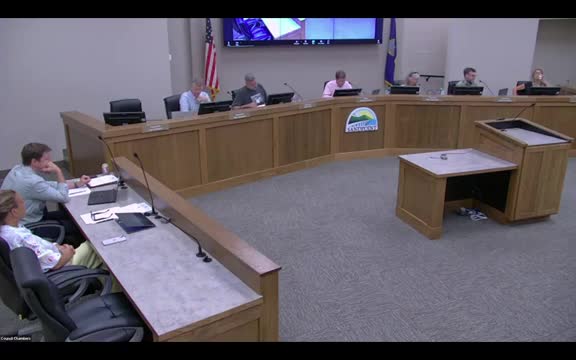
Summary
At a July 30 special meeting, Sandpoint City Council and Mayor Jeremy Grama held a workshop with Lake City Law attorneys to review legal roles, access to staff, and whether the city needs a full-time mayor or city administrator; no formal action was taken.
Sandpoint Mayor Jeremy Grama and the City Council discussed the legal division of powers, staff access and the practical limits of a part‑time mayor at a July 30 special workshop led by attorneys from Lake City Law.
The presentation, delivered by an attorney introduced as Zach, framed the mayor’s role as “the executive and administrative overview and oversight of the city,” and noted overlap with the council through veto authority and the ability to prescribe duties for appointed officials. The attorneys also emphasized that the city and courts operate under Dillon’s Rule and Idaho law, and that case law may be used to resolve disputed boundaries of authority.
The discussion examined several recurring issues: how council members may gather information from staff, how department heads should prioritize requests when multiple elected officials ask for assistance, and how the absence of a city administrator affects operational continuity.
Council members pressed for clearer expectations for department‑head communication and for a chart showing lines of communication. Councilor Pam Duquette and others asked whether the organizational chart should show a dashed line from council to department directors to reflect “access for information” without creating direct supervisory authority. Several councilors said they want the org chart revised to reflect the workshop guidance.
Councilors also debated whether the city should continue with a part‑time mayor or restore a full‑time mayor or city administrator. Councilor Rick Howarth said the city’s “department heads function day to day and own and are responsible and accountable for their fields of expertise,” while Councilor Kyle Schreiber and others worried about continuity, succession and the potential for uneven decisions when an on‑call mayor is unavailable. The group agreed the topic merits continued discussion and that job descriptions for directors will be provided to the council for review.
Attorneys recommended that council members may request information from staff but cannot direct day‑to‑day work; they said that staff should communicate capacity constraints when competing requests arrive. The attorneys also advised that council could adopt policies establishing when staff reports are required for agenda items and that questions about the precise limits of mayoral authority are fact specific and sometimes resolved by case law.
The workshop included council discussion of appointment authority (mayor nominates; council approves), budgetary checks on executive authority, and the practical need for clear communication between mayor, council and department heads. No formal votes or policy changes were taken during the workshop; attorneys and staff will incorporate the discussion into updated materials and the council requested follow‑up on the city org chart and director job descriptions.