Supervisors approve five short‑term rental special exceptions
August 01, 2025 | Lancaster County, Virginia
This article was created by AI summarizing key points discussed. AI makes mistakes, so for full details and context, please refer to the video of the full meeting. Please report any errors so we can fix them. Report an error »
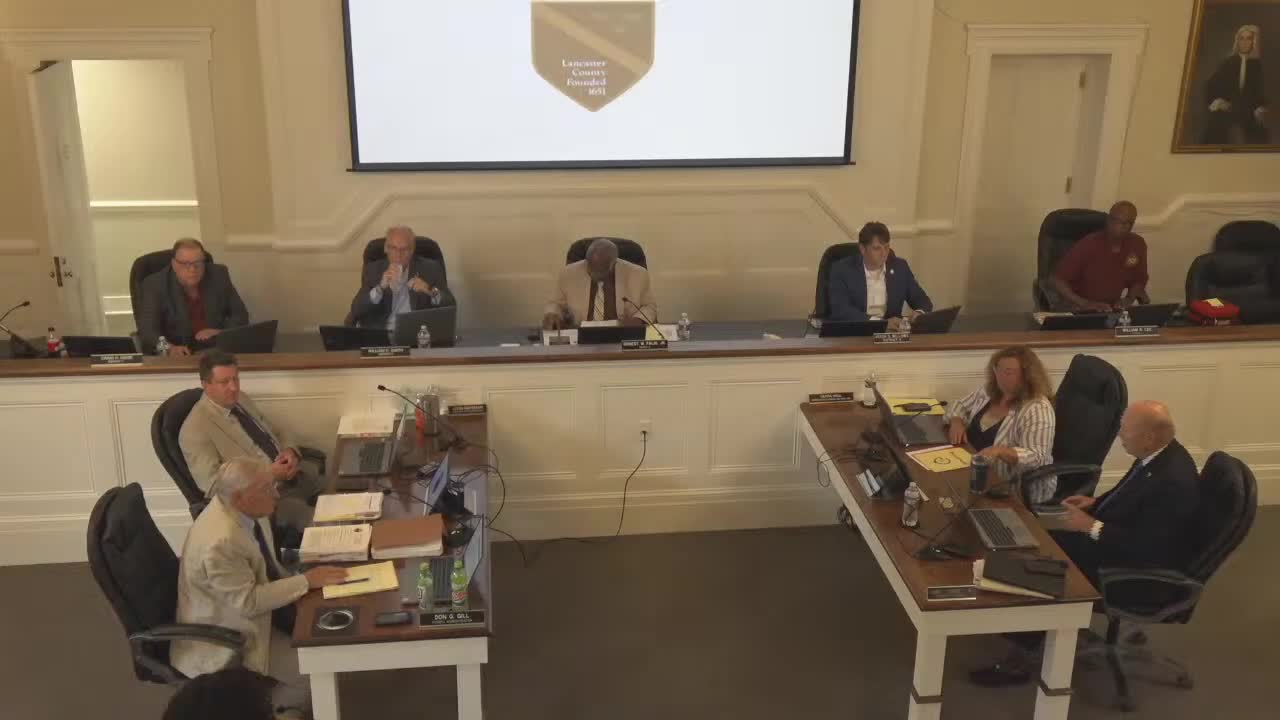
Planning staff told the board that applicants had provided Virginia Department of Health septic operation permits (for three‑ and four‑bedroom authorizations where applicable), had registered for the 2025 calendar year and were paying transient occupancy taxes through hosting platforms or direct bookings. Planning staff said adjoining property owners were notified and that no complaints had been filed for the applications up to the date of the memos; for one property staff noted a few neighborhood phone calls asking questions but “no specific complaints.”
The applicants and properties approved during public hearings were:
- Peter and Diane Boyle, 17 Windfall Lane, Whitestone – 4‑bedroom septic permit; existing short‑term rental; registered for 2025.
- VA Lucky Dog LLC, 3849 Black Stump Road, Williamsburg – 4‑bedroom septic permit; existing short‑term rental; registered for 2025.
- Francis and Camden Patton, 95 Starfish Lane, Whitestone – 3‑bedroom septic permit; not yet operating; owner will submit registry after approval.
- Aaron and Matthew Bykema, 211 Windfall Lane, Whitestone – 4‑bedroom septic permit; existing short‑term rental; registered for 2025.
- Gail Licata / Little Oyster LLC, 385 Little Oyster Lane, Whitestone – 2‑bedroom septic permit; operator will be daughter and son‑in‑law under Little Oyster LLC; insurance provided; hosted through Airbnb.
For each item the board heard the staff recommendation, opened public comment (no public comments were recorded), and took a motion to approve. Several motions explicitly made approval contingent on continued compliance with county requirements (for example, Article 29 for unhosted short term rentals). All motions passed unanimously.
Planning staff repeatedly reminded the board that septic operation permits and transient occupancy tax registration were part of the application packages and that adjoining owners were notified per the law. Where additional neighbor questions had been raised, staff said they were informational inquiries rather than formal complaints.
The approvals allow the applicants to operate under the county’s existing short‑term rental regulatory framework; the board took no additional policy action on licensing, taxation or changes to Article 29 during the meeting.
Don't Miss a Word: See the Full Meeting!
Go beyond summaries. Unlock every video, transcript, and key insight with a Founder Membership.
30-day money-back guarantee
Sponsors
Proudly supported by sponsors who keep Virginia articles free in 2025

