
Council explores property sales, Belvoir solar and data-center interest as 'sixth penny' timing is discussed
Get AI-powered insights, summaries, and transcripts
Subscribe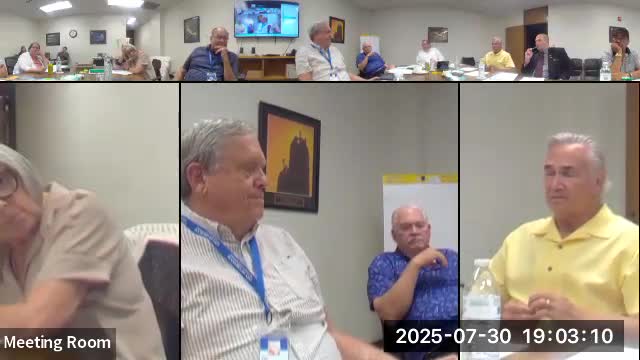
Summary
During its July 30 midyear review the council reviewed several revenue and economic-development ideas: selling surplus city properties, pursuing solar on the Belvoir landfill with private partners, courting data‑center demand, and planning the timing and messaging for fifth- and sixth‑penny sales-tax ballots; staff flagged legal and grant-eligib
At the July 30 work session the City Council discussed a portfolio of revenue initiatives including selling underused city properties, pursuing utility-scale solar on the Belvoir landfill, courting data‑center development, and planning timing and public outreach for a potential “sixth penny” sales-tax ballot measure.
Councilmembers said the pump-house resolution that cleared in July has opened public conversation about selling or partnering on city-owned sites. Council members identified specific parcels (several addresses on Christiansen Road and other small buildings the city owns) as candidates to put back on the market; staff noted some of those properties previously received offers that were declined and that continued local maintenance costs accrue while properties sit vacant.
A multi-part conversation focused on developing the Belvoir landfill for solar. Council members said they reached out to several solar developers; one response came from Q Cells (now operating under Hanwha Renewables in the U.S.), and another international firm signaled interest and plans to visit. A council member said the city hoped for a partner model rather than a pure lease, but city legal staff cautioned state statute limits the level of operational ownership a municipality may hold: the city can be a partner but not a controlling operator. Staff also said many state and federal grant windows that previously subsidized utility projects have closed, so projects now must rest on market economics or partner investment.
Council members said there is clear demand from data centers in the region; one council member referenced press coverage quoting the mayor about a Tallgrass project with up to 10 megawatts of demand. Members discussed access constraints and transportation infrastructure that can affect large-site development and encouraged staff to pursue potential interstate access tied to regional data‑center projects.
On the revenue side the council also discussed small, tactical sales of surplus right-of-way adjacent to the Greenway where homeowners have encroached and asked about the status of the Holiday Park Arts Center MOU. The treasurer’s office was tasked with gathering materials for marketing city properties to potential buyers.
Privatizing municipal sanitation pickup was proposed as a potential cost-saving idea; a council member recalled a prior study that suggested privatization could cost more, and members asked staff to research costs and outcomes before advancing the idea.
Council members and a county official also discussed timing and tactics for the fifth- and sixth‑penny sales-tax measures. Commissioner Malm (county chairman) said the sixth penny previously passed with strong ballot support and suggested putting the sixth penny on the primary and the fifth penny on the general, while noting governing bodies must coordinate projects and voter education. Malm also said the commission could consider making the fifth penny permanent with the consent of other governing bodies but urged outreach and united messaging; he reported high historical approval rates for prior penny votes.
No binding decisions were made. Direction to staff included assembling marketing information on surplus properties, pursuing letters of intent from solar developers, continuing outreach regarding data-center access and utility partners, and researching the fiscal and operational implications of privatizing sanitation. Council members urged early and organized public education in advance of any ballot measures.