Get Full Government Meeting Transcripts, Videos, & Alerts Forever!
City manager presents balanced FY2026 budget; council weighs tax-rate choices, modest utility increase and staffing trade-offs
Summary
City Manager Lizzie presented the City of Commerce proposed fiscal 2026 budget in a council workshop, saying the plan is balanced at the current 79¢ tax rate but leaves limited room for pay increases; council members discussed options including the state'defined no'new'revenue and voter'approval rates, a proposed 3% utility increase and capital spending tied to certificates of obligation.
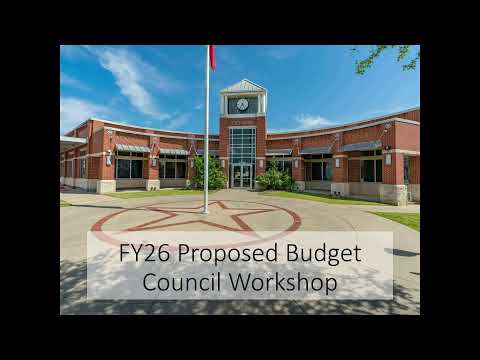
City Manager Lizzie presented the City of Commerce'proposed fiscal 2026 budget in a council workshop, saying the plan is balanced if the tax rate remains at 79¢ per $100 of assessed value and that the proposed budget would increase total general-fund revenue from a projected $8,303,745 for fiscal 2025 to $8,395,542 for fiscal 2026, a roughly 1.1% rise.
Lizzie said the administration used three guiding principles when preparing the budget: the city is a service organization, every dollar the government spends belongs to the public, and trust is the community's most valuable asset. "We serve the community," Lizzie said, adding, "Every dollar we spend is somebody else's dollar." He emphasized efforts to keep spending responsible while funding agreed council priorities.
Why it matters: the budget keeps the current tax rate and funds public safety, operations and several capital projects while leaving little room for a cost'of'living adjustment (COLA). Council members debated whether to accept the balanced budget as presented, raise the rate to fund pay increases, or use a mix of targeted raises and delayed hires.
Key figures and structure: the proposed general fund would be $8.395 million in revenues and $8.396 million in expenditures (roughly a 2% projected increase in general-fund spending year'over'year), with public safety consuming about 51% of the general-fund budget (fire ~25.7%, police ~24.9). Staff said 65% of general-fund spending is salaries and wages (industry'typical for service organizations), and 69% of the proposed revenues come from taxes (property, sales and franchise).
Property-tax choices: staff laid out three tax-rate options required by state law. Keeping the rate at 79¢ produces the balanced budget presented; the state'calculated "no new revenue" rate (used to show whether taxing units are raising revenue beyond prior collections) was about 82¢ and would yield roughly an additional $107,000; the…
Already have an account? Log in
Subscribe to keep reading
Unlock the rest of this article — and every article on Citizen Portal.
- Unlimited articles
- AI-powered breakdowns of topics, speakers, decisions, and budgets
- Instant alerts when your location has a new meeting
- Follow topics and more locations
- 1,000 AI Insights / month, plus AI Chat