
Revenue Commission reports record occupational-license collections, outlines compliance work and opposes state centralization
Get AI-powered insights, summaries, and transcripts
Subscribe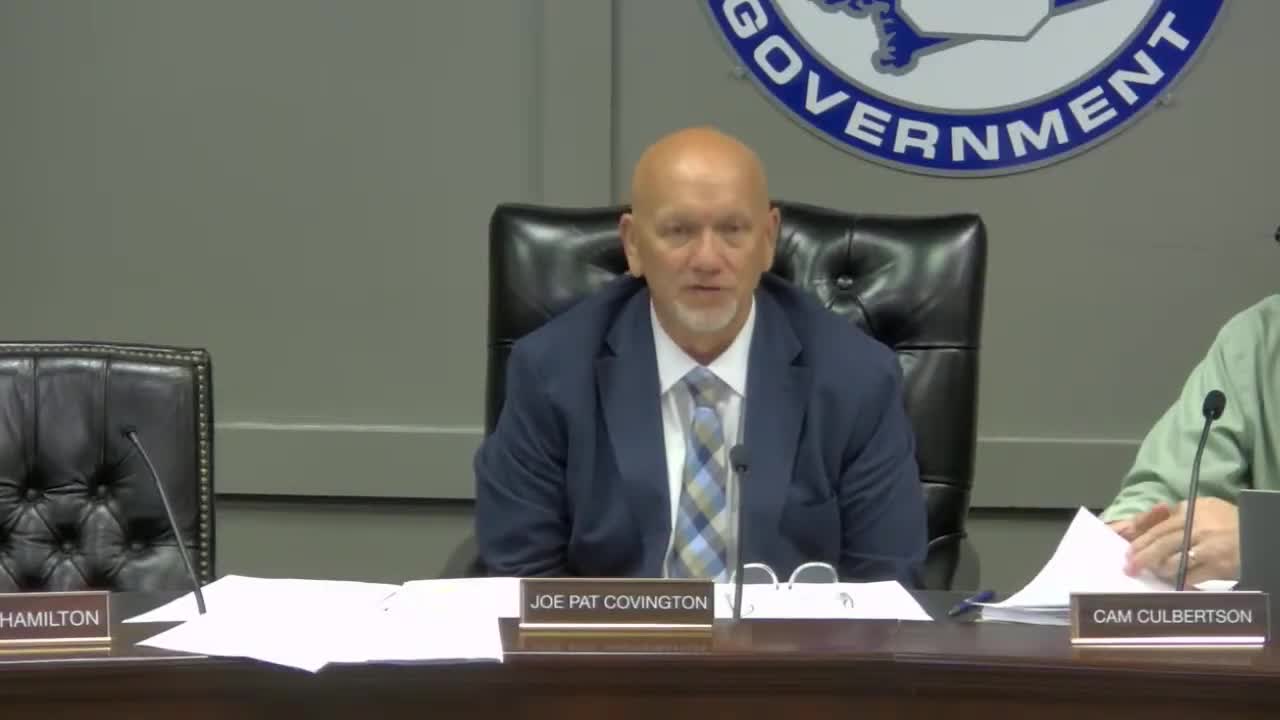
Summary
Scott Hall of the Revenue Commission reported $75.6 million in aggregate occupational-license tax collections for fiscal 2025— a county record—outlined compliance tools to close the ‘tax gap,’ and urged continued opposition to state proposals for centralized tax collection.
Scott Hall, representing the Revenue Commission, told the Scott County Fiscal Court on Aug. 1 that the commission recorded $75.6 million in aggregate occupational-license tax collections in fiscal 2025—an all-time high—and that the office has used compliance tools and outreach to increase collections while maintaining a low administrative cost.
Hall said the $75.6 million figure is unaudited and represents the first time the revenue commission exceeded $70 million in aggregate collections; the year-over-year increase from 2024 was about $11.9 million, he said. He also reported a multi-year rise in new business accounts and said the commission averages more than 100 new business accounts per month.
Why it matters: Occupational-license tax revenue provides a substantial share of county general-fund revenue; officials said the tax represented about 39.8% of general-fund revenues last year and that net profits accounted for about 16.5% of general-fund revenue. Court leaders cautioned that net-profit receipts are volatile and should not be relied on as a stable long-term funding source.
Hall described the commission's administrative efficiency: for every dollar collected in 2025, the commission spent roughly 1.8 cents, a return-of-investment figure the office presented to local leaders. He detailed compliance strategies aimed at the "tax gap," the difference between expected and collected revenues, dividing it into compliance among known businesses and discovery of unknown operators (for example, gig-economy or short-term rental operators).
On enforcement and voluntary compliance, Hall listed tools the commission uses: an online filing portal, voluntary-disclosure agreements (VDAs), targeted discovery through data exchanges with the Kentucky Department of Revenue and the secretary of state bulk data, canvassing by a field inspector, coordination with planning and permitting processes, penalty-and-interest abatement programs, payment plans and, where warranted, civil enforcement actions.
Hall said the commission has asked for and will use additional legal collection options in some cases, including wage garnishments and the possibility of liens, and that the office already has a dedicated counsel focused on occupational-tax work. He said the commission prefers voluntary compliance but will pursue civil collections for those who do not cooperate.
Several court members asked about state-level proposals to centralize collections. Hall and the judge said such a move would risk creating unfunded mandates and would not reduce the need for local compliance work; the draft legislation discussed in the meeting would require local governments to help build the system while leaving many collection and enforcement responsibilities local, Hall said.
No formal action was taken; Hall offered to provide additional sector breakdowns and to keep the court updated on compliance initiatives.
Ending: Court members thanked Hall for the report and discussed continuing outreach and legislative monitoring to protect local collection authority.