
Wayne County board hears Boomerang Design pitch for Rosewood classroom addition
Get AI-powered insights, summaries, and transcripts
Subscribe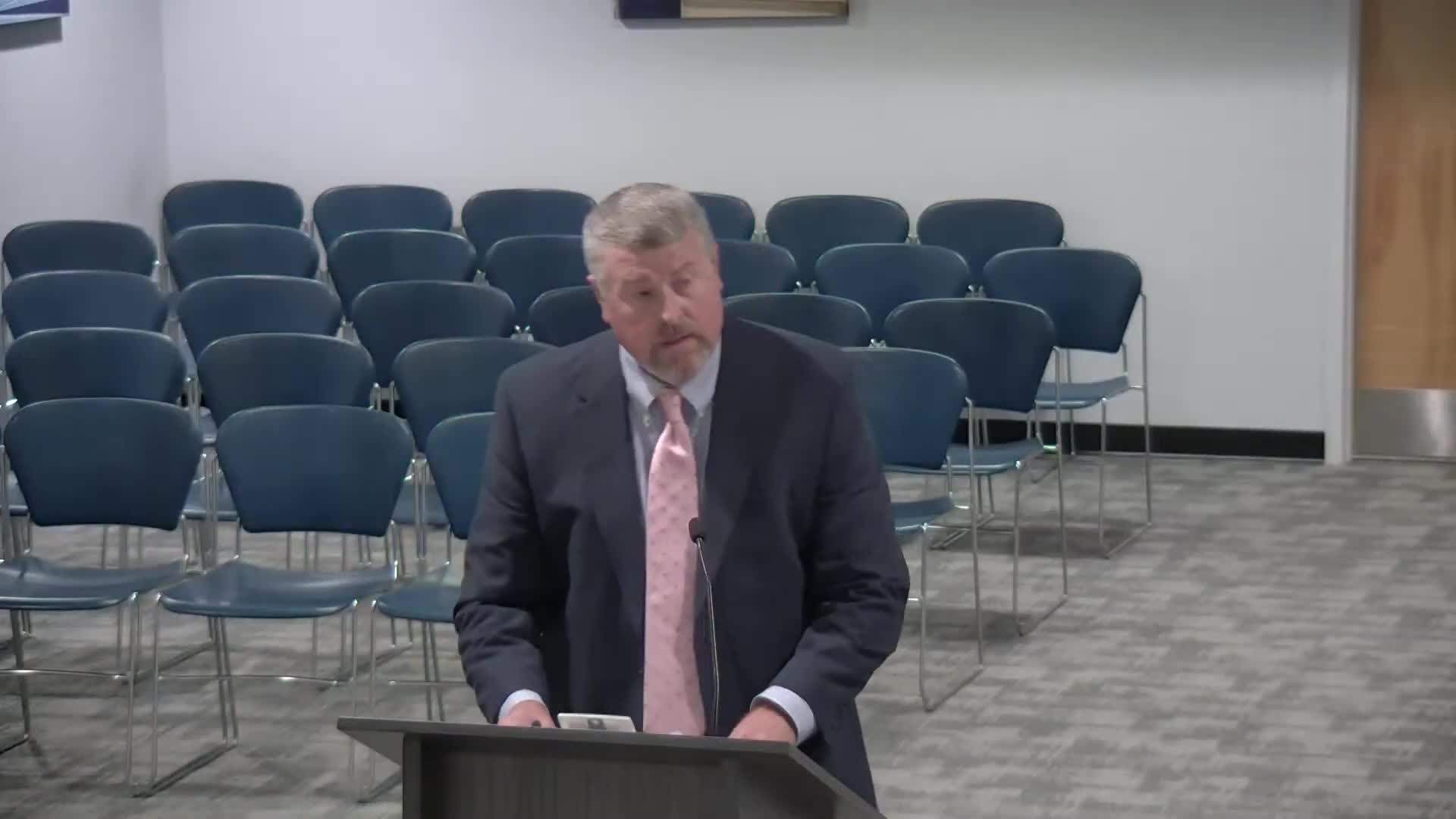
Summary
Wayne County Public Schools held a special called meeting July 31 to hear architect presentations for the Rosewood classroom addition, including a 30-minute presentation from Boomerang Design and its partners.
Wayne County Public Schools held a special called meeting July 31 to hear architect presentations for the Rosewood classroom addition, including a 30-minute presentation from Boomerang Design and its partners. The board approved the meeting agenda at the start of the session; the meeting record does not show a final selection of an architect.
Boomerang Design president Angela Crawford Easterday told the board the firm was founded in 1981, is "a employee owned woman led firm," and works across North Carolina, South Carolina and West Virginia. She said Boomerang and its partners bring K–12 experience, repeat-client relationships and an emphasis on cost control and site investigation. "We are small business and we love education," Easterday said during the presentation.
The presentation outlined the team and approach: Boomerang Design as lead, partner Progressive Design Collaborative (PDC) for regional K–12 experience, and Timmons Group for civil/site work. Kelsey Lemons of Timmons Group identified herself as the civil engineer who would lead site design and permitting. The team said it uses third‑party cost estimators and maintains an itemized, "good/better/best" approach to give clients explicit alternates and clearer budget choices.
The presenters cited recent projects as examples of their approach: Cooper Academy Elementary School (an addition that added 24 classrooms and about 34,000 square feet, presented as a case study of fitting additions into tight sites), work in Johnson County Schools, and multi‑grade capacity expansions in Currituck County, including Moyock Middle School, where construction had to proceed while the school remained fully operational. The team emphasized early investigation of existing mechanical and hydronic systems before tying additions to older equipment and described coordinating early with permitting authorities.
Board members asked detailed questions about safety during construction, budget honesty, litigation history and how the team resolves disagreements with owner-provided plans. On safety, Easterday and colleagues said they start planning day one for safe egress, ADA-compliant temporary paths and coordination with the fire marshal; they described temporary firewalls and egress paths used at Moyock Middle School as examples. On budgets, the team said they present alternates, use independent cost estimators and provide line‑item estimates so the school can choose where to prioritize spending.
When asked about active litigation, a Boomerang representative said the firm has not been involved in pending litigation over its projects and described earlier project problems that were resolved without going to court. Board members pressed the point that firms should be candid if they cannot meet a stated budget; one member said the board would prefer a firm to decline if it cannot deliver within the known budget rather than underquote and later exceed the amount.
The meeting record includes procedural action to approve the agenda (motion by Mr. Fogg, second by Mr. West; vote by hand/voice), but it does not record a selection vote for an architect in the provided transcript segment. The board said members had been given a rubric and sample questions for interviews; the session continued with additional presentations (Davis Kane Architects was scheduled next), and the transcript does not show a final decision or vote on architect selection during the excerpt provided.
The discussion combined project-level concerns — safety during active school construction, verifying capacity of existing systems, permitting and timing — with procurement concerns: clear, itemized cost estimates and honest communication about a firm’s ability to deliver within the board’s stated budget. The Boomerang team repeatedly emphasized early, thorough investigation of the existing building and communicating alternates to fit the budget.
Next steps were not recorded in the excerpt; the board continued to other firm presentations after Boomerang's time ended.