
Cheyenne police propose $3.7 million, five‑year subscription for body, in‑car cameras and digital tools
Get AI-powered insights, summaries, and transcripts
Subscribe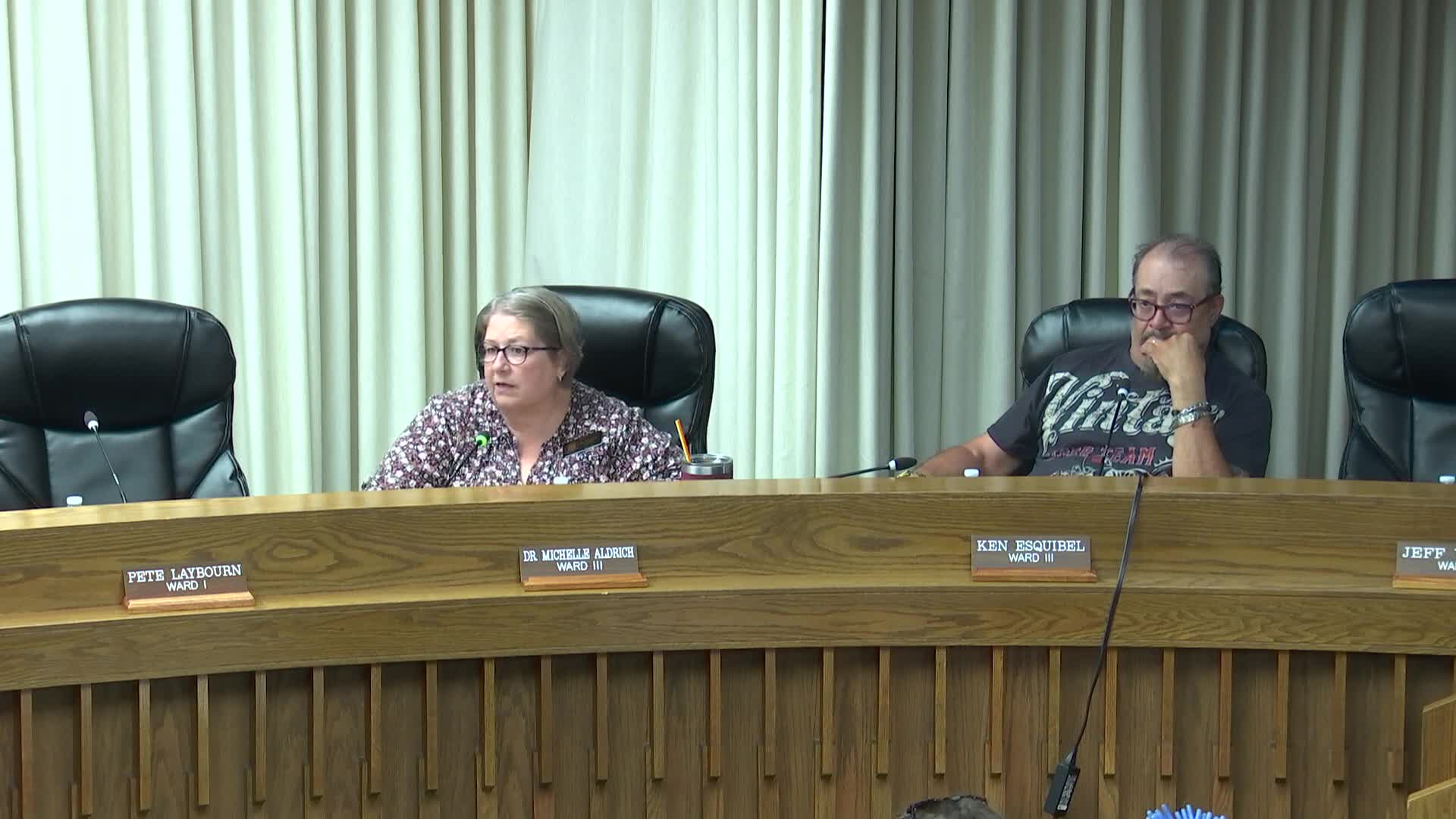
Summary
Chief Mark Francisco asked the council to fund a five‑year, $3.7 million subscription for Axon‑style body‑worn cameras, in‑car cameras, upgraded Tasers and add‑ons including unlimited cloud storage, AI report assistance and optional license‑plate reading.
Cheyenne Police Chief Mark Francisco asked the City Council during a work session for funding of a five‑year subscription, totaling $3,700,000, to replace aging body cameras, transition vehicle cameras and upgrade Tasers while adding cloud storage, an AI report‑writing tool and optional automated license‑plate reader (LPR) capability.
The funding request covers a package approach the department expects most vendors to sell on a subscription basis: hardware, unlimited cloud storage of video, automated tools that assist officers with report writing and optional services such as LPR. Francisco said the subscription model typically runs in five‑year terms with yearly billing.
If approved and funded, Francisco said the department would use the subscription to: finish integrating in‑car cameras with body‑worn footage; replace roughly 10‑year‑old Tasers that are no longer supported by manufacturers; centralize digital evidence in one cloud location; and optionally subscribe to automated LPR that would read license plates as a vehicle drives by. “It is automated. So as you’re driving down the road, it’s continually seeking out license plates and capturing them,” Francisco said.
Francisco described the AI report tool as a time saver that generates draft reports from recorded interviews and other captured audio/video; he referenced Fort Collins as a test market that saved about 20 percent of officers’ report‑writing time. Council members asked about storage limits, billing cadence and ownership. Francisco said storage through the proposed subscription would be unlimited and that the city would retain ownership of videos uploaded to the vendor cloud; the physical cameras would be effectively rented under the subscription model.
Councilman Bridal asked whether the $3.7 million is paid up front or annually; Francisco said the vendor bills yearly. Council President Rainey raised a budgeting concern, saying he views the city’s “6p” special‑purpose option tax as best used for nonrecurring projects and worried about creating a new recurring expenditure. Francisco acknowledged that subscriptions create ongoing costs but said nothing legally requires the city to maintain the service if funding later lapses: “It is best practice, and I would certainly hate to run a police department without it. But it is not like people. It’s not like other things that you just have to have.”
Councilwoman Emmons asked whether the city would “own anything” under the subscription; Francisco replied that uploaded video would remain the city’s but the hardware would be provided as part of the subscription and replaced or repaired during the contract. Councilwoman Aldrich asked whether the in‑car cameras can perform automated LPR without operator action; Francisco said yes and added that the department planned to seek LPR as an optional subscription add‑on.
The presentation did not include a formal motion or vote; council members indicated questions and budget concerns that they said would be part of a later decision. Francisco said the requested amount was intended to cover a typical five‑year vendor package and that the department would revisit technology choices if funding were delayed, since vendors and features can change over time.
Fiscal and procurement details, including whether the city would use general funds, the 6p tax, or a loan to accelerate purchases, were discussed but not settled during the session. Deputy City Treasurer Brenda Moreau later noted the city has in prior projects loaned against expected 6p collections to begin work earlier, and council members discussed that as a possible approach for timing if the package were approved.
Less critical details: the chief said Fort Collins’ test of the AI report assistance freed about two hours of work in a 10‑hour shift for officers; he also said the department’s current in‑car cameras and old Tasers have effectively zero trade‑in value.