
Parowan staff, council and public-works weigh crosswalk upgrades; MUTCD limits some options
Get AI-powered insights, summaries, and transcripts
Subscribe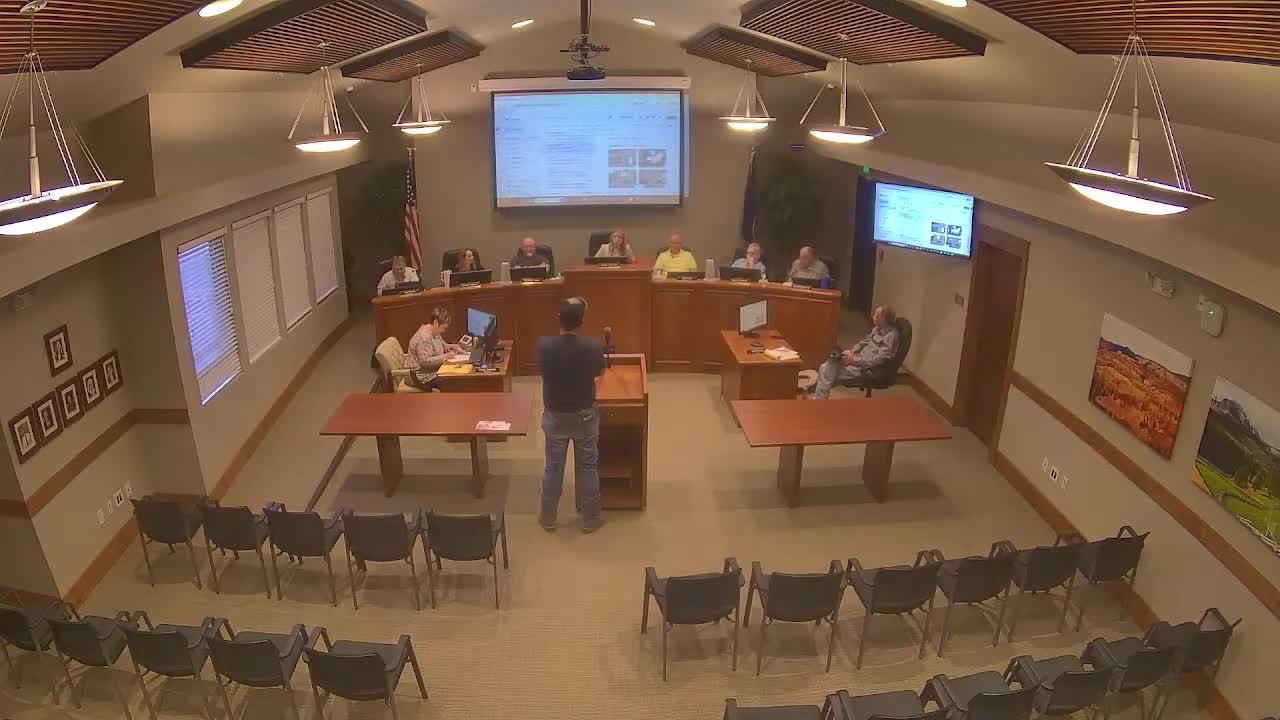
Summary
Council and public-works staff reviewed pedestrian-safety upgrades around schools and downtown, discussed MUTCD restraint on colored logos in crosswalks, and weighed thermoplastic markings versus paint, enforcement and tree trimming. Staff will prepare cost estimates and a prioritized map for council consideration.
Council members, the city’s operations staff and the public voiced support July 31 for stepped improvements to downtown and school-area crosswalks but ran into federal/manual constraints that limit some popular options.
Matt (operations/traffic staff) and public-works representatives told the council the Manual on Uniform Traffic Control Devices (MUTCD) and recent state guidance restrict use of logos or high-contrast colors in the travel lane, and the city has seen issues where painted logos became slippery or interfered with snow-plow operations. “We don’t allow it anymore,” Matt said, describing other Utah municipalities’ experience replacing painted logos because they created maintenance and safety problems.
Staff proposed alternatives that meet current traffic standards: thermoplastic ladder or emphasized crosswalk markings in white (thermoplastic lasts longer than paint in snowy conditions), removing sightline obstructions such as overhanging tree branches, and enlisting additional enforcement or timing changes at key intersections. The council and staff identified priority locations for enhanced crosswalk markings at Center and Main, Main and 200 North (near the school), the dairy-freeze crossing by the high-school path, and other school-area intersections.
Thermoplastic — a high‑durability white material with reflective beads — was discussed for high-use crossings. Staff cautioned thermoplastic is more expensive than painted markings but lasts years where paint can fade or be plow‑abraded within months. Staff also said some communities that used decorative color in crosswalks have moved away from that approach after slippery conditions and maintenance complaints.
Council member Rochelle Topham and others suggested a “workaround”: use city-owned streets adjacent to school routes where the city controls the right of way instead of state (U.S. 91/UDOT) highways to install more visible markings or limited logo elements that comply with MUTCD and local policy. Staff offered to draft a map of priority crossings, obtain price quotes for thermoplastic versus paint, and include maintenance/removal costs for different materials.
The council did not vote on expenditures at the meeting. Staff said they will collect bids and bring back estimated costs and a proposed implementation schedule; the council asked staff to try to tie any painting or thermoplastic work to planned maintenance work to reduce marginal cost.
Ending: Staff will prepare prioritized cost estimates (paint vs. thermoplastic), a maintenance agreement if unusual markings are proposed, and a map of school-area crosswalks to present at a future meeting.