
Utah wildlife board approves permit-surrender and extension options for Monroe unit hunters after wildfire
Get AI-powered insights, summaries, and transcripts
Subscribe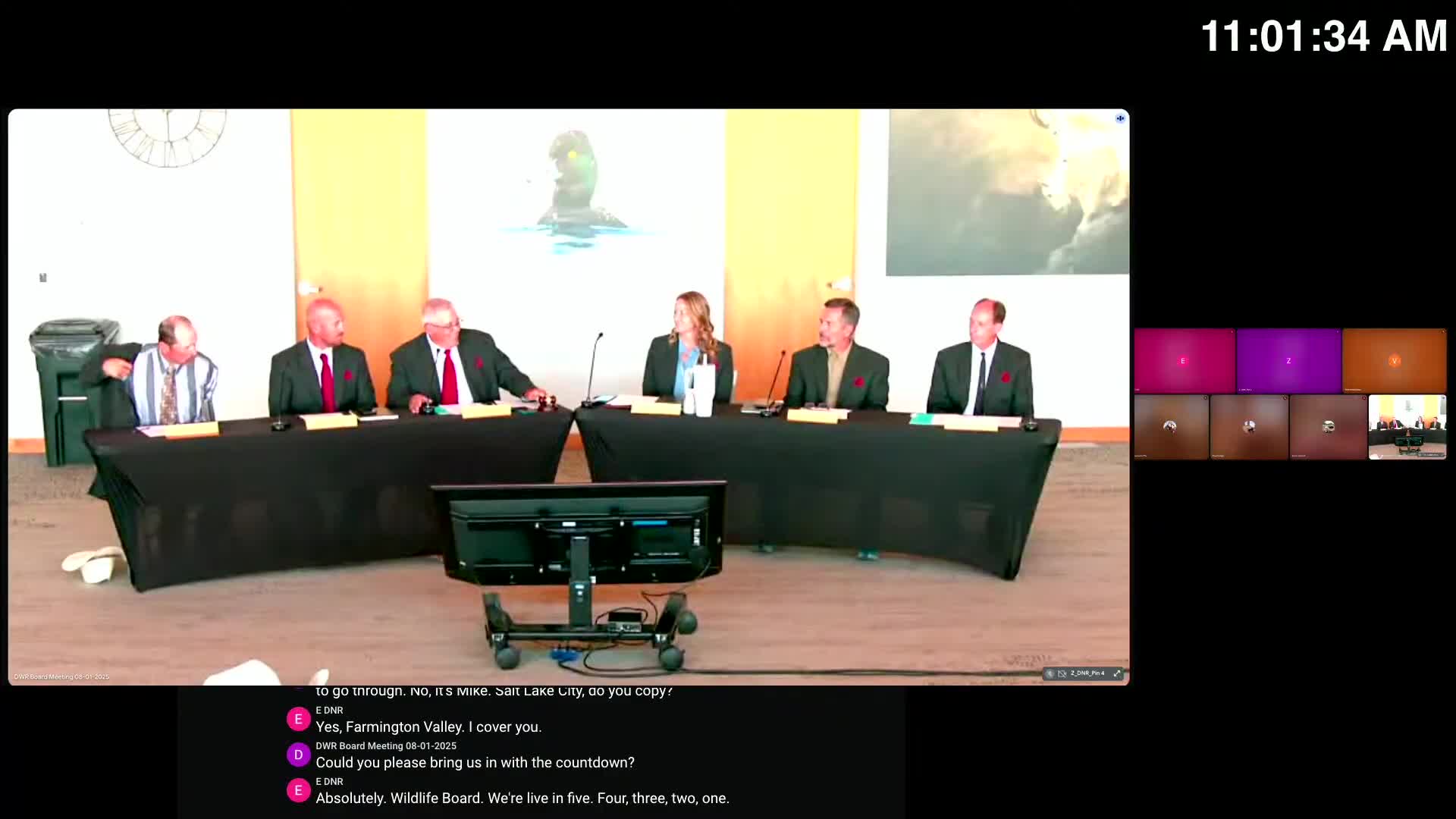
Summary
At an emergency meeting Aug. 1, the Utah Wildlife Board approved Division of Wildlife Resources options allowing Monroe unit hunters to hunt where access remains open, surrender permits for refunds and reinstated preference points, or surrender permits and extend hunts into 2026 amid closures from the Monroe Canyon fire.
FARMINGTON, Utah — The Utah Wildlife Board on Aug. 1 approved relief options for hunters on the Monroe unit after the Monroe Canyon fire prompted federal land closures that block access to large portions of the unit.
The Division of Wildlife Resources asked the board to give affected permit holders three choices: hunt where access remains open, surrender permits before the start of the permit holder’s season to receive reinstated preference points plus one and a refund minus a $25 handling fee, or surrender the permit and request that the hunt be extended into the 2026 season if they notify the division in writing. The board voted unanimously to approve the division’s proposal.
The options matter because the fire, discovered July 13, had burned more than 55,000 acres as of the morning of the meeting and was roughly 7 percent contained, Division staff said. Federal closures on the Monroe unit currently block access to much of the habitat: division staff estimated closures affect about 67 percent of mule deer habitat and about 72 percent of elk habitat and said about 80 percent of the animals for some seasons are within closed areas. The closures, issued by land management agencies, remain in effect through Oct. 31, 2025, unless changed.
“Because of the uniqueness and the intensity of the fire, the DWR is requesting that the board give hunters the following options,” Lindy Varney, licensing coordinator for the Division of Wildlife Resources, told the board. Varney explained administrative details for each option, deadlines and how the division would treat dedicated-hunter (COR) permits and multi-season tags.
Under the division’s proposal: permit surrender must occur before the start date of the affected hunt (for example, archery surrenders required by Aug. 15 for an Aug. 16 archery hunt). Hunters who surrender a permit before their hunt begins would have their preference points reinstated plus one for the current year, the waiting period waived, and receive a refund less a $25 handling fee. Hunters who choose to extend would surrender the permit and notify the division in writing to indicate they want the hunt slot held for the 2026 season; staff said those extensions would reduce the number of recommended permits available in the Monroe draw for 2026 by the number of people who extended.
Varney gave examples for dedicated-hunter (COR) permits: a first-year COR permit holder who surrenders would receive all points back plus one and a proportional refund less the handling fee; a second-year surrender would return two-thirds of points and two-thirds of the COR fee refund; a third-year (final-year) surrender would return one-third of points and one-third of refund, or the holder may extend instead of surrendering.
The division estimated roughly 1,218 permits across species are affected if all listed hunts are considered: about 1,130 general-season deer permits across seasons; elk archery 21, early any-legal-weapon 9, muzzleloader 12, midseason any-legal-weapon 25; multi-season 2; late any-legal-weapon 14; late archery 8; and 1 black bear tag. Varney said the division will treat permits already surrendered before the meeting the same as those surrendered after the board’s action, giving those hunters the same options.
Board members and staff discussed animal locations, mortality risk and likely timing for reopening. “Most of the elk…have already circled back, and they’re actually in the burnt zone,” a division biologist said when describing collar data, adding that no mortality associated with the fire had been observed in the collared animals to date. Asked whether the federal closures prohibit foot access, division staff said federal agencies have closed the areas “to access period…so you cannot walk in or drive in.”
Board members praised the three-option approach as fair and flexible. “I like all 3 options,” Northeast Region representative Bob Christensen said. Members asked that the division communicate directly with affected hunters about their choices and recommended the division include a link to the Fish Lake National Forest/Forest Service daily updates in emails to hunters so they can monitor closures and safety notices.
Director Peck also asked the division to develop a written set of guidelines or criteria for future emergency responses so the board would not need to convene emergency meetings in every similar event; Varney said the director has already asked staff to create such guidance. The board directed staff to contact affected hunters by email and outreach channels and to provide the Forest Service link for daily fire updates.
The formal motion to “approve the division’s proposal with regard to relief on the Monroe unit as presented” was made by Kent Johnson and seconded by Bob Christensen. The board voted unanimously in favor; the chair, Gary Nelson, declared the motion passed. The board held the emergency meeting specifically for the Monroe unit; members said any request covering additional units (for example Fish Lake) would require a separate board action.
The board noted the uncertainty about how long closures and access restrictions will remain. Division staff said reopening roads and foot access will depend on federal land managers’ safety assessments, and reopening could take weeks or months after the fire is controlled because of hazard mitigation work.
The board set its next regular meeting for Aug. 21, 2025. The emergency meeting adjourned after the vote.
(Reporting from the Utah Wildlife Board emergency meeting, Aug. 1, 2025.)