
Freestone County reviews Curative plan offering $0 deductibles and pharmacy limits for employee health coverage
Get AI-powered insights, summaries, and transcripts
Subscribe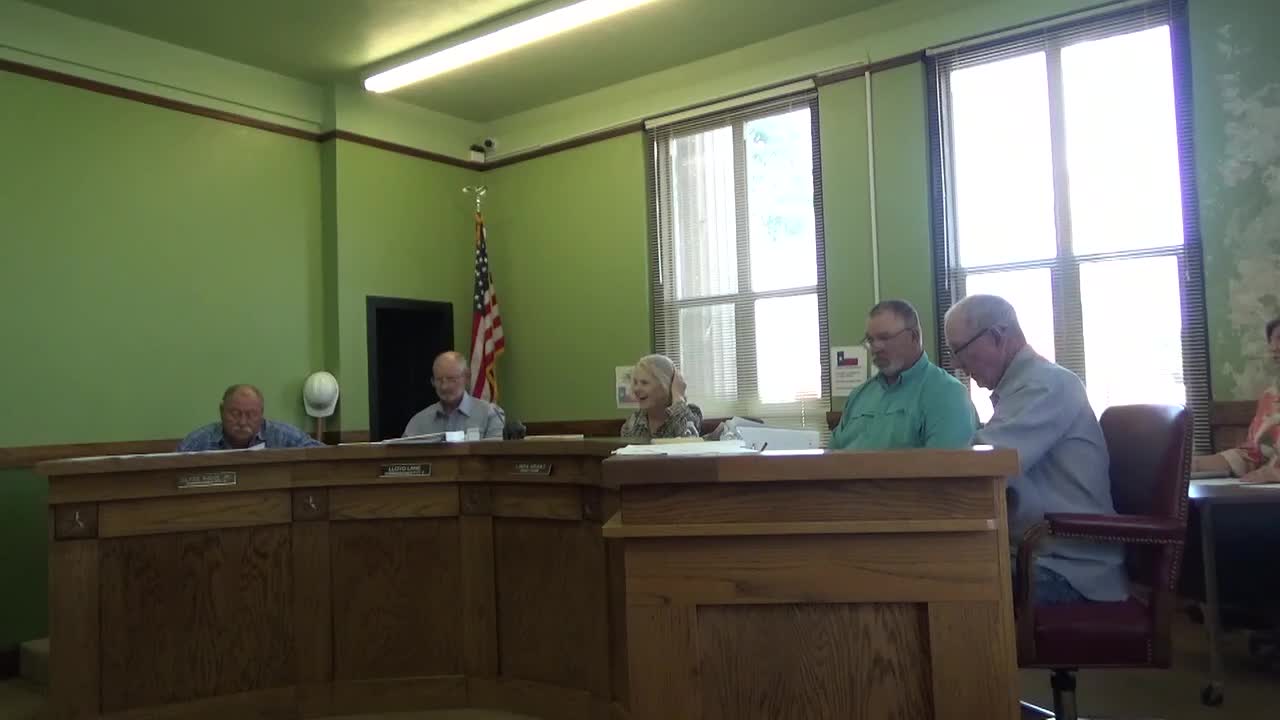
Summary
The Freestone County Employee Benefits Committee opened insurance proposals from UnitedHealthcare, Blue Cross Blue Shield, Baylor Scott & White and Curative and discussed switching to a Curative model that offers a $0 deductible and a cash-card benefit, while flagging pharmacy-network and prior-authorization risks.
Freestone County’s Employee Benefits Committee met to open and discuss four employee health insurance proposals and heard a detailed presentation about a Curative (also rendered in the transcript as “Curative/Cure”) plan that would offer $0 deductibles and an on-the-spot cash card for some out-of-network charges.
The committee convened with proof of posting under Texas Government Code Chapter 551 (the Open Meetings Act), then opened proposals from UnitedHealthcare, Blue Cross Blue Shield, Baylor Scott & White and Curative. An insurance broker who presented the proposals described Curative as a model the county had used previously and highlighted a required baseline health visit, pharmacy restrictions, and transition credits tied to moving off the county’s current “nonstop” arrangement.
The presentation focused on how Curative’s model works and why it might reduce premium expense for employees and the county. The broker said Curative requires enrollees to complete a baseline visit within the first 120 days; employees who do not complete that visit are moved to a higher cost share (described in the presentation as a $5,000 deductible and $7,500 out-of-pocket maximum for the affected enrollee). The broker said the baseline call typically lasts 45–60 minutes and may include coaching by a care navigator. "If you don't, the hundred and 20 first day, you get moved to a $5,000 deductible 7,500," the broker said.
The broker described core Curative features: a 0 deductible and 0 out-of-pocket plan design for many services; a “cash card” (a Visa-style card) that can be used when a provider does not recognize the plan; free preventive screening offerings including a multi-cancer test and hearing-aid benefits; and virtual visits and care navigation. The broker said Curative was offering a $25,000 premium credit in one proposal and also referenced a separate $3,000 transition credit that would help offset substantiation costs when moving away from the county’s current nonstop arrangement.
The presenter warned of pharmacy limitations and prior-authorization work. Under the Curative plan described, pharmacy fill locations in the county were limited to local outlets the presenter named in the meeting (reproduced from the transcript as “Hometown Pharmacy,” “HEB” and “Brocher Brothers”); regular mail-order delivery is available for maintenance medications. The presenter said employees should expect some prior-authorizations for high-cost drugs and that the county would need to assist during open enrollment to reduce disruption: "When we sit with employees at open enrollment, we're gonna ask what prescriptions you're taking... If it does pop up, say yes, it needs a prior authorization. We're gonna have that form right there with them."
Committee discussion highlighted two trade-offs. The presenter and other committee members noted Curative’s lower premiums and concierge care model but cautioned about the administrative burden of ensuring baseline visits are completed and of resolving pharmacy or prior-authorization problems during transitions. The presenter said some carriers had increased proposed rates because the county’s reserves for the nonstop account had gone negative; that reserve shortfall was driving part of the larger renewal increases on one carrier. "That increase that you're seeing from them is just upping the reserve amount to try to make sure we don't put a negative in that bucket," the presenter said.
Committee members asked practical questions about traveling or receiving care outside the county. The presenter said true emergencies transported by ambulance would be treated as in-network emergency care by any carrier, but routine out-of-area urgent care could be out-of-pocket if the site was not in-network. The presenter also said Curative’s online pharmacy lookup tool shows coverage, alternatives and whether prior authorization is required.
No formal motion or vote was recorded in the transcript. Committee members discussed next steps: the presenter offered to update pricing (some emailed quotes had changed after materials were printed) and the committee discussed adjourning or recessing to a later date to allow members time to review updated numbers. "If we needed to, we could recess until tomorrow," one committee member said.
The county’s options remain under review. The committee’s conversation documented possible financial credits and trade-offs (premium savings versus pharmacy and administrative disruption) and directed staff/presenter follow-up rather than taking a final vote during this session.
The transcript shows the insurance presentation and discussion as the substantive agenda item for the meeting; public comment or ceremonial items were not part of the recorded excerpt.