
Officials report $1.2 million shortfall; discuss transfers, health insurance and time‑clock costs
Get AI-powered insights, summaries, and transcripts
Subscribe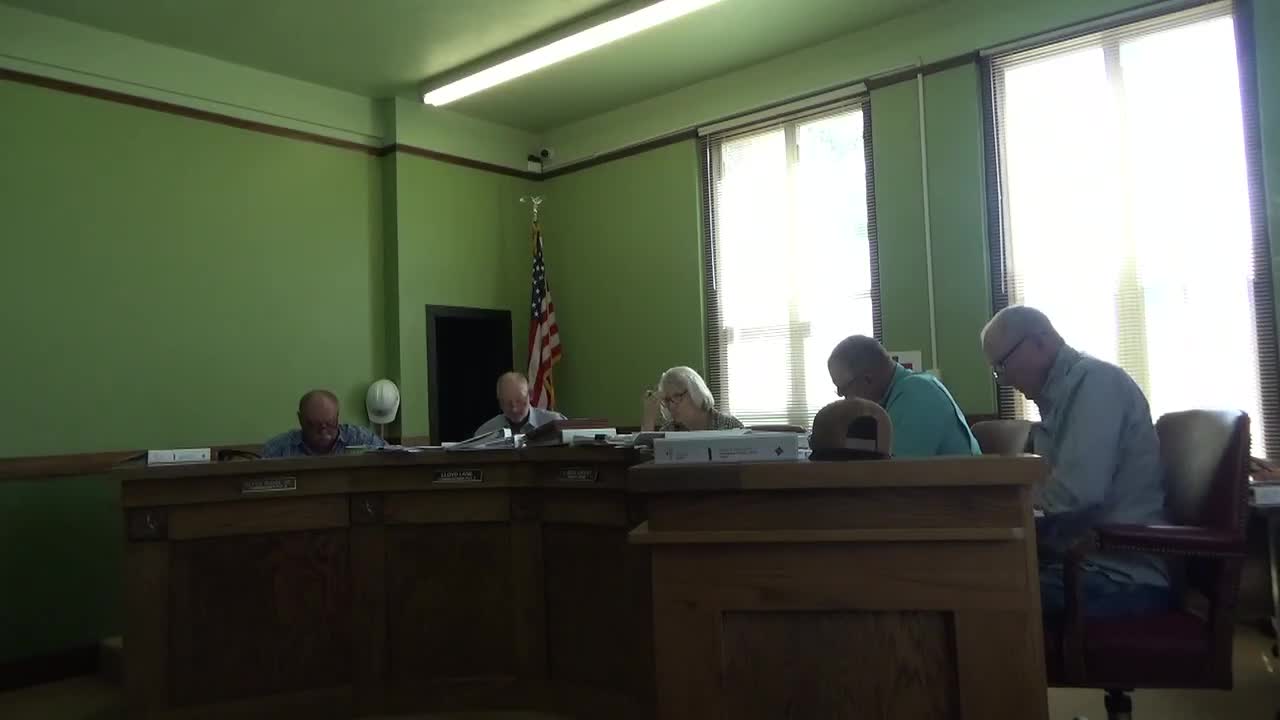
Summary
Meeting participants said the budget is $1.2 million “upside down” and reviewed possible transfers, recurring and one‑time payroll expenses, and timing for health‑insurance and time‑clock charges.
At the meeting, participants said the jurisdiction currently shows a $1.2 million shortfall and discussed using transfers and reserve funds to cover recurring and one‑time payroll costs. "We are upside down $1,200,000," one speaker said during budget review. "$6.79 50. It's at the bottom of page 42. It says transfer out," another speaker noted while reviewing line items. Staff and members discussed whether to transfer $400,000 and noted a $499,000 figure on the budget worksheet.
The discussion centered on which department lines would absorb costs and when charges would begin. A staff member said health insurance charges will start being allocated in October and that the department budgets will need to be reviewed to determine how much each should cover: "Starting in October, it will come out of the ... the department. All the different ones. Yes. We need to look at health insurance to see how much each one needs to be in charge for our table sheets."
Participants also reviewed proposed time‑clock equipment and related implementation costs. One participant said the quoted recurring amount equates to roughly $6,000 annually when spread over the contract term: "Yes. So 13, the $49.59 by 6 annual. Yeah. You're about right at 6,000 annual." The group discussed that some charges would be one‑time implementation fees while other costs would be recurring beginning with the fiscal year on Oct. 1. There was back‑and‑forth about proration for items that began earlier in the summer and how recurring monthly charges would be recorded.
Board members and staff discussed publication and notice timing related to budget actions. They agreed to table two items to the next meeting to permit required newspaper notice: they noted a two‑week public notice window and debated scheduling to ensure the notice runs in the paper. One speaker summarized the scheduling constraint: "That's gonna give us the two weeks to make sure it's in the paper and all that." The group set the items to be carried forward to the next meeting so the advertisements can run in the proper week.
Discussion only: the transcript shows deliberations over transfers, allocation timing, equipment costs and public‑notice scheduling; there was no recorded final vote or formal approval of transfers, raises or contract awards during the excerpt.
Next steps noted in the meeting included tabling two budget items to the next meeting and rechecking department allocations for health insurance and recurring payroll charges before any formal action.