
Carroll County commissioners warn state energy policy, transmission line and industrial solar projects are straining residents
Get AI-powered insights, summaries, and transcripts
Subscribe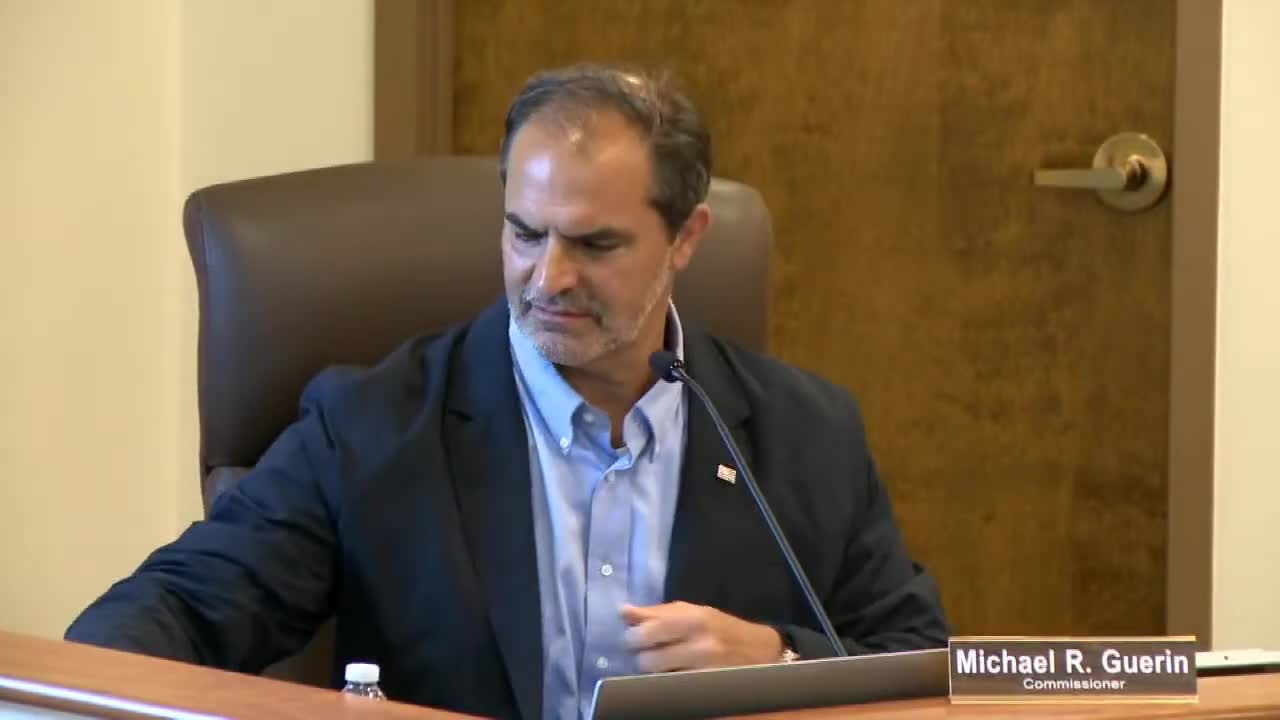
Summary
Commissioners raised concerns about statewide energy policy, rising electricity bills, a proposed transmission line and industrial solar projects on agricultural land that they say are affecting Carroll County residents' property and affordability.
Commissioner Garen said Thursday that rising summer electricity bills, debates between PJM and state leaders and new transmission and solar projects are creating affordability and land-use problems for Carroll County residents. Garen, a member of the Carroll County Board of Commissioners, told the board that “it is a very hot summer. So people's electric bills are generally increasing” and that state- and region-level decisions are driving complex outcomes for local customers. The commissioner said PJM Interconnection has publicly highlighted closure of coal and oil-burning plants while promoting a long transmission line project (referred to in remarks as NPRP/MPRP). He said the transmission work allows surveying of private property and that the claimed consumer savings from the project are not evident in documents he has seen: “They've been saying that NPRP is needed to lower people's energy bills. I'm not gonna call them liars, but I have not seen that written anywhere.” Garen and other commissioners also criticized the siting of industrial-scale solar on agricultural land. He reminded the audience that in 2023 the board voted unanimously to prohibit industrial solar projects on agricultural land and said that, in his view, that local policy is now being overridden by state-level processes. He cited two industrial solar projects near Fannie Dorsey Road in his district, saying the projects are roughly a mile-and-a-half apart and that “in some cases, the solar panels are less than 200 feet from people's front doors.” Commissioner Gordon, who followed Garen's remarks, stressed that the core problem is generation capacity, not only the transmission lines; she said “it's more power that we need not land for lines.” Commissioner Collier associated himself with colleagues' remarks and emphasized the need for leadership in Annapolis; he noted support for former Commissioner Rothstein’s new state-level role as Maryland’s secretary of veterans and military families but returned attention to energy needs. None of the commissioners proposed a formal board action on Thursday. The discussion served as a public statement of the board's position on transmission and industrial solar projects and an appeal to residents to follow state decision-making and advocacy channels. Why this matters: Commissioners said county residents are experiencing higher bills and that large transmission and industrial solar projects affect local property, land use and community character. They told residents the county's authority is limited and urged people to follow statewide proceedings and the Public Service Commission's actions. The board moved on to later agenda items without votes or formal direction specific to state energy policy or the transmission project.