
Gibson County seeks emergency funding to replace failing public-safety radio equipment
Get AI-powered insights, summaries, and transcripts
Subscribe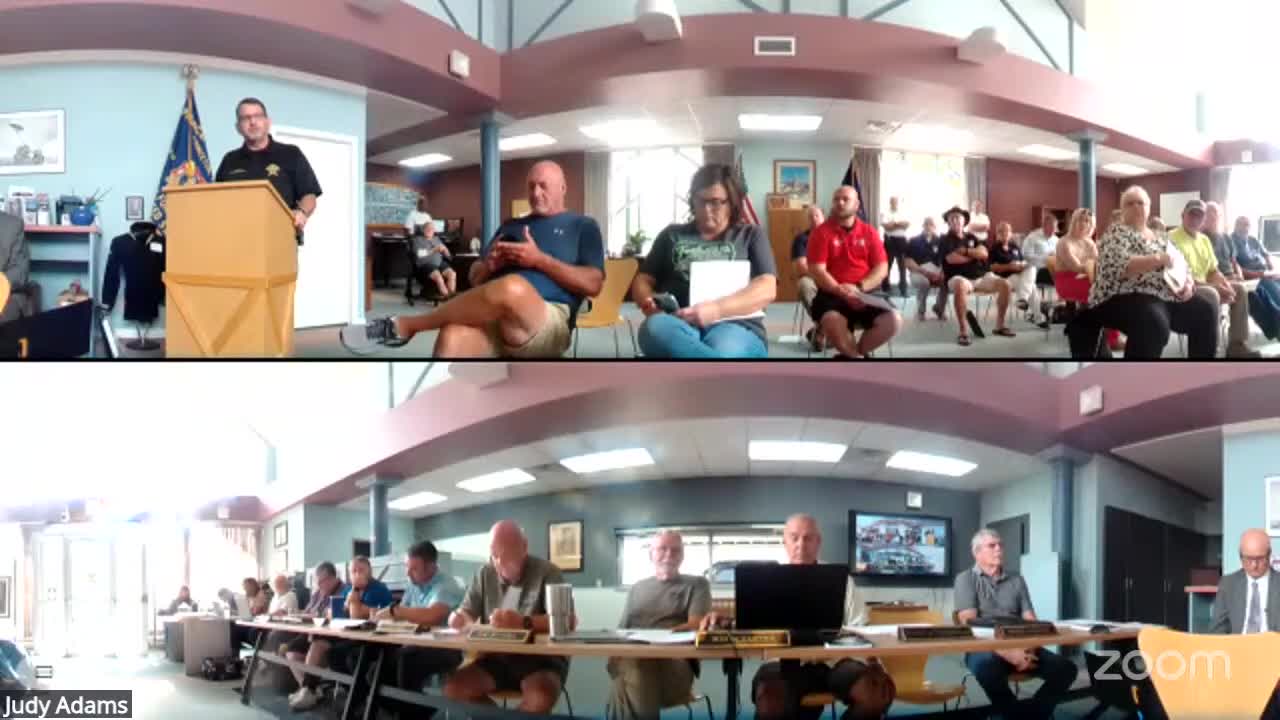
Summary
Sheriff’s office told commissioners aging console equipment and amplifiers failed during a recent move; officials requested Motorola consoles, paging and repeater upgrades and asked commissioners to advertise funding from E-911, EDIT and Riverboat funds.
Gibson County’s sheriff told the county commissioners that core components of the countywide public-safety radio system failed when the agency briefly shut the system down last month during a move, and he urged immediate replacement of consoles, repeaters and paging equipment.
The sheriff said two of three amplifiers “went down and did not come back up,” leaving operations dependent on a single console and a patchwork of adapters and workarounds. He described the equipment as decades old and said the failures create a “very, very bad” single point of failure for law enforcement, fire and EMS communications.
Why it matters: dispatch and field radios are critical to emergency response across the county. The sheriff’s presentation outlined risks at the jail, on fireground channels and for mutual‑aid interoperability — issues that could affect response to multiagency incidents and the safety of jail staff and inmates.
What commissioners were asked to do: the sheriff presented a vendor quote (Motorola, the county’s existing vendor and a state‑preferred supplier) for 10–11 new console radios, rack shelves, a VHF repeater for the jail, upgrades to paging and backup HF/VHF capability, and an expansion of the combiner that ties consoles to the tower system. He proposed a funding package using three local funds: $55,000 from EDIT (excess development funds), $70,000 from the E‑9‑1‑1 fund and approximately $110,000 from the Riverboat fund to complete the purchase and installation.
Commission action: commissioners agreed to advertise the two required appropriations (one for $70,000 from the E‑9‑1‑1 fund and one for $110,000 from the Riverboat fund) so the expenditures can be considered at a future meeting. The motion to advertise was made and seconded and passed on a voice vote. The sheriff and staff said Motorola will supply one console as part of the quote and that the county already has purchased one unit.
Next steps and caveats: staff said the purchases will still require advertising and formal appropriation before contracts are awarded. Commissioners asked staff to confirm exact bid/quote details, confirm what must be competitively bid versus what can be purchased from a state‑preferred vendor, and to bring back a final ordinance/advertisement for formal approval. The sheriff reiterated the request was for a safety‑critical, emergency repair rather than a discretionary upgrade.
Ending: commissioners approved advertising the requested appropriations so the items can be formally considered at the next business meeting; staff will return with the advertised ordinances and final contract language.