Volusia County explains how to apply for Homeowner Recovery Program
This article was created by AI summarizing key points discussed. AI makes mistakes, so for full details and context, please refer to the video of the full meeting. Please report any errors so we can fix them. Report an error »
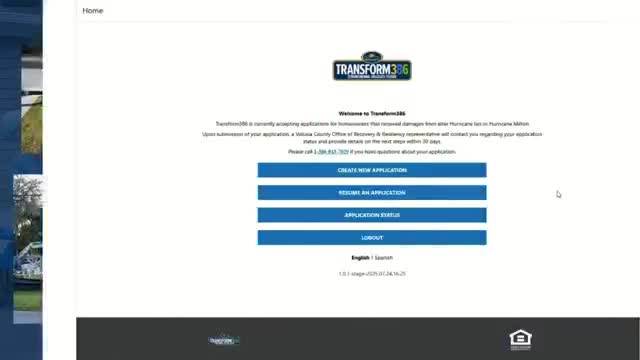
Volusia County released an instructional video that explains how homeowners can apply for the Volusia County Homeowner Recovery Program, outlining eligibility questions, required documents, types of assistance and the submission process.
The video matters because the program provides several forms of recovery aid — including rehabilitation, reimbursement, reconstruction and buyouts — and requires specific documentation and disclosures that determine eligibility and payment amounts.
The narrator, identified in the video as a program presenter, shows viewers how to start a new application, resume a saved application and check application status. The presenter says the application typically takes about "15 to 20 minutes" to complete and instructs applicants to have a driver's license and Social Security number ready. The video states that collection of Social Security numbers is required under program guidelines and includes a direct assurance that "Your information is safe, protected, and is never shared or released to outside parties." The video directs applicants to select the type of assistance sought: rehabilitation (repairs needed), reimbursement (payment for work already completed), reconstruction (demolition and rebuild) or buyout (selling the home). It also explains a "match funding" option to cover required cost shares for some state or federal housing programs.
The presenter goes step-by-step through required personal and property information, including name, contact details, Social Security number, date of birth, mailing address, damaged property address, property type, year built, mortgage status, liens, and property tax status. The video instructs applicants to list household members and to indicate disabilities if applicable, noting that documentation will be required to verify disabilities. It also explains how to record tenant information and monthly rent for units that were rented at the time of the storm.
Applicants are asked to report insurance and other recovery funds received. The video lists possible outside funds to report, including FEMA, the National Flood Insurance Program (NFIP), the Small Business Administration (SBA), Increased Cost of Compliance (ICC), charitable organizations and other sources, and notes that these amounts affect total assistance and eligibility. The presenter demonstrates the document-upload page and shows how to upload identification (such as a birth certificate), insurance documents and proofs of other recovery funds.
The video shows how to complete required digital certifications and authorizations, including drawing or entering a signature, and how to complete a tenant disclosure form. It instructs applicants to review the application before submitting and says applicants will receive a confirmation email with a case number after submission. The presenter also identifies a dedicated technical help desk for application assistance and an office contact for program questions.
The video does not state specific dollar amounts available through the program, eligibility income limits, or application deadlines; those items are not specified in the video.
For technical help, the presenter directs viewers to the program's help desk; for program questions, the presenter directs viewers to call or email the program office.
The video matters because the program provides several forms of recovery aid — including rehabilitation, reimbursement, reconstruction and buyouts — and requires specific documentation and disclosures that determine eligibility and payment amounts.
The narrator, identified in the video as a program presenter, shows viewers how to start a new application, resume a saved application and check application status. The presenter says the application typically takes about "15 to 20 minutes" to complete and instructs applicants to have a driver's license and Social Security number ready. The video states that collection of Social Security numbers is required under program guidelines and includes a direct assurance that "Your information is safe, protected, and is never shared or released to outside parties." The video directs applicants to select the type of assistance sought: rehabilitation (repairs needed), reimbursement (payment for work already completed), reconstruction (demolition and rebuild) or buyout (selling the home). It also explains a "match funding" option to cover required cost shares for some state or federal housing programs.
The presenter goes step-by-step through required personal and property information, including name, contact details, Social Security number, date of birth, mailing address, damaged property address, property type, year built, mortgage status, liens, and property tax status. The video instructs applicants to list household members and to indicate disabilities if applicable, noting that documentation will be required to verify disabilities. It also explains how to record tenant information and monthly rent for units that were rented at the time of the storm.
Applicants are asked to report insurance and other recovery funds received. The video lists possible outside funds to report, including FEMA, the National Flood Insurance Program (NFIP), the Small Business Administration (SBA), Increased Cost of Compliance (ICC), charitable organizations and other sources, and notes that these amounts affect total assistance and eligibility. The presenter demonstrates the document-upload page and shows how to upload identification (such as a birth certificate), insurance documents and proofs of other recovery funds.
The video shows how to complete required digital certifications and authorizations, including drawing or entering a signature, and how to complete a tenant disclosure form. It instructs applicants to review the application before submitting and says applicants will receive a confirmation email with a case number after submission. The presenter also identifies a dedicated technical help desk for application assistance and an office contact for program questions.
The video does not state specific dollar amounts available through the program, eligibility income limits, or application deadlines; those items are not specified in the video.
For technical help, the presenter directs viewers to the program's help desk; for program questions, the presenter directs viewers to call or email the program office.
View the Full Meeting & All Its Details
This article offers just a summary. Unlock complete video, transcripts, and insights as a Founder Member.
✓
Watch full, unedited meeting videos
✓
Search every word spoken in unlimited transcripts
✓
AI summaries & real-time alerts (all government levels)
✓
Permanent access to expanding government content
30-day money-back guarantee
