
Working group discusses tree‑planting minimums, enforcement limits and neighbor recourse
Get AI-powered insights, summaries, and transcripts
Subscribe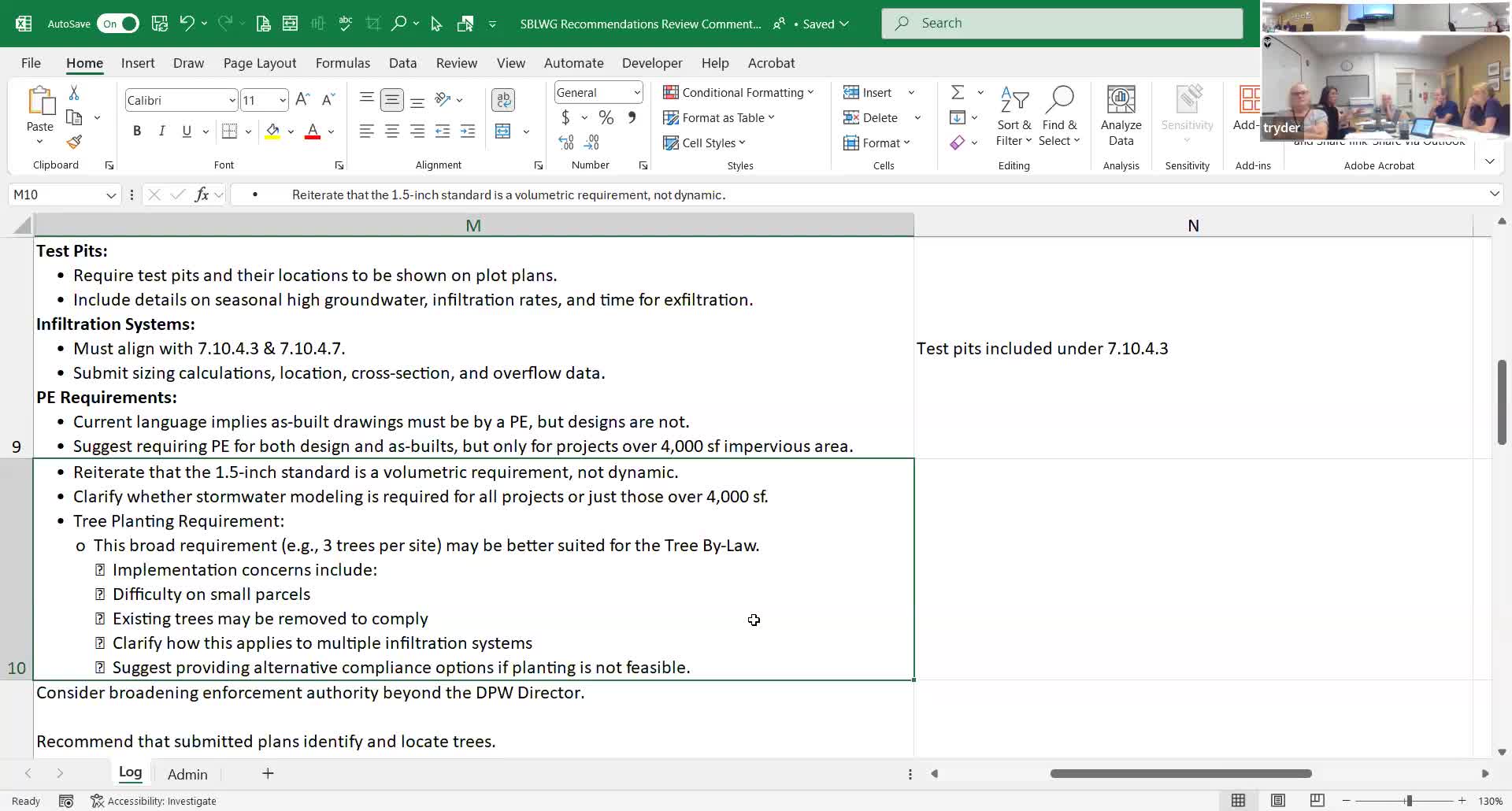
Summary
The working group considered tree‑planting standards tied to infiltration systems, and clarified enforcement and neighbor recourse: permit compliance is primarily a DPW responsibility; claims about permitted past construction are generally civil matters.
The working group discussed landscaping, tree‑planting and enforcement matters connected to the stormwater bylaw.
Tree and planting requirements - The draft proposes a planting requirement tied to infiltration systems (for example, three trees per system was discussed as an objective and an easily applied counting method). Members considered minimum planting size (2 to 2.5‑inch caliper trees was discussed) and whether planted trees could be counted toward conservation replacement obligations. The group noted that other towns use 6‑inch or 8‑inch DBH thresholds for mapping existing trees on plans and that tree details (species, native/noninvasive lists and replacement ratios) are better located in regulations or the separate tree bylaw.
Enforcement and neighbor recourse - The group clarified how residents can raise concerns about existing properties and new construction. For potential noncompliance during construction, residents should report concerns through DPW’s channels (including the town’s online reporting form) so staff can inspect. Where work was permitted and a project complied with the rules and had a certificate of occupancy, the town has limited authority and aggrieved neighbors may need to pursue civil remedies (for example, civil court) if they claim damage from a compliant, permitted project. The working group emphasized that the bylaw is not retroactive — it applies to projects moving forward after adoption.
Point discharges and emergencies - Members discussed how to respond to suspected illicit discharges or chemical sheens. The DPW director is the local authority for emergency action on municipal infrastructure; residents were advised to notify DPW (or police in obvious hazardous dumping cases) to trigger an investigative/response visit.
Ending: The group agreed to refine planting language in the regulations (species, caliper, replacement standards) and to include clear public instructions about how to report construction‑related concerns, while noting the town’s limits where prior permits remain valid.