
Campbell County School District adopts $174.8 million proposed budget; funds set aside for high school replacement and other capital projects
Get AI-powered insights, summaries, and transcripts
Subscribe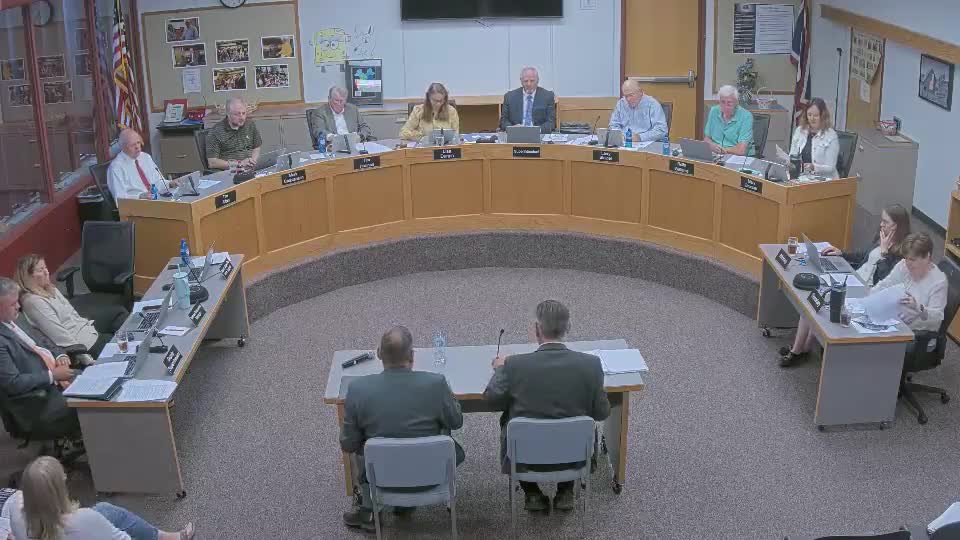
Summary
The Campbell County School District Board approved its fiscal 2026 proposed budget after a public hearing and discussion of enrollment declines, revenue shifts and major capital projects including a new Campbell County High School, an aquatic center delay and transportation facility design.
The Campbell County School District Board of Trustees voted unanimously to approve the district’s proposed all-funds budget for fiscal year 2026 after a public hearing and extended staff presentation. The budget increases the district’s general-fund revenues modestly while shifting resources to meet planned capital projects and to cover higher personnel costs. Board members and district staff described why the budget matters: enrollment is expected to fall, local assessed valuation is down, state reimbursements for special education rose, and a multi-phase high school replacement will drive capital spending. The proposal also assumes the district will continue to absorb federal grants through contingencies until the U.S. Department of Education completes reviews. District staff presented the budget book and summaries at the meeting. The district projects a 1.7% drop in enrollment (about 250 students), local assessed valuation down approximately 9%, local revenues falling from about $145 million to $133 million and county revenues declining from about $35 million to $32 million. State revenue is projected to rise from roughly $25.4 million to $27 million, a nearly 6.7% increase primarily tied to higher special-education reimbursement. Overall, the district’s general fund grew by about $4.1 million year over year. The board discussed personnel cost drivers: the board-approved salary schedules include a 6.7% increase to the certified pay base, a 6.67% increase for ESP, supervisors, managers and administrators, and a one-time step/experience pay element for eligible employees. Health insurance costs were estimated to rise about 4.5%. Capital and major projects were a central focus. Staff outlined several projects included in the capital plan: - Campbell County High School (CCHS) replacement: design work is underway; staff reported the current schematic exceeds state square-footage allowances by roughly 7,000–7,500 square feet and said the district is evaluating reductions and optional enhancements (stadium seating, concessions, restrooms, expanded gym or circulation) that would require local funding. The district expects a multi-phase approach (stadium relocation, main building replacement, G-Building renovation/demolition) and said initial funds ($20 million) are available up front with the remainder on a later draw. - Transportation replacement facility: schematic design resumed; staff trimmed elements to lower cost estimates and noted a funding gap that may require additional state or local requests. - Aquatic center: tile, deck and pool work continue; water testing and curing steps delayed expected final completion into the fall. Staff said they are evaluating schedule adjustments with the contractor and may consider contract remedies for late completion while protecting final quality. - Little Powder Elementary: construction ahead of schedule, furnishings bids came in slightly under budget. Staff also described component and major-maintenance projects including HVAC work at Cottonwood Elementary, roofing, elevator replacements, playground installations and safety repairs across the district. Board members pressed staff on reserves and “recapture” (the state’s school-finance mechanism that returns local revenue above the state’s foundation guarantee). Staff reported the district ended FY2024 with approximately $7.08 million in available cash (down from higher prior-year balances) and explained accrual accounting, recent budget amendments and a prior transfer of roughly $7 million into reserves that affect how year-end amounts look on paper versus cash. Staff said the district currently has about $24 million in reserves on an accrual basis and is watching a statutory cap (15% of the foundation guarantee) that was temporarily raised to 30% during the pandemic and that will revert in 2028. Trustees asked for follow-up information on the district’s audited year-end figures; staff said the audit will finalize in December and will provide the definitive accrual-based numbers. The board voted to approve the proposed budget as presented following the public hearing. The motion passed unanimously. Staff noted next steps: finalize design and cost estimates for capital projects, return to the board with refinement of enhancement requests tied to the CCHS replacement, continue grant monitoring (Title I/II/III/IV) and report audit results when available. The district’s finance staff emphasized the budget remains conservative on utilities and contingency planning and that one-time funds will be used for reserves, capital and component projects rather than recurring personnel costs.