
Councilors, union and EMS officials press for upgrade to Boston EMS dispatch phone and CMED systems
Get AI-powered insights, summaries, and transcripts
Subscribe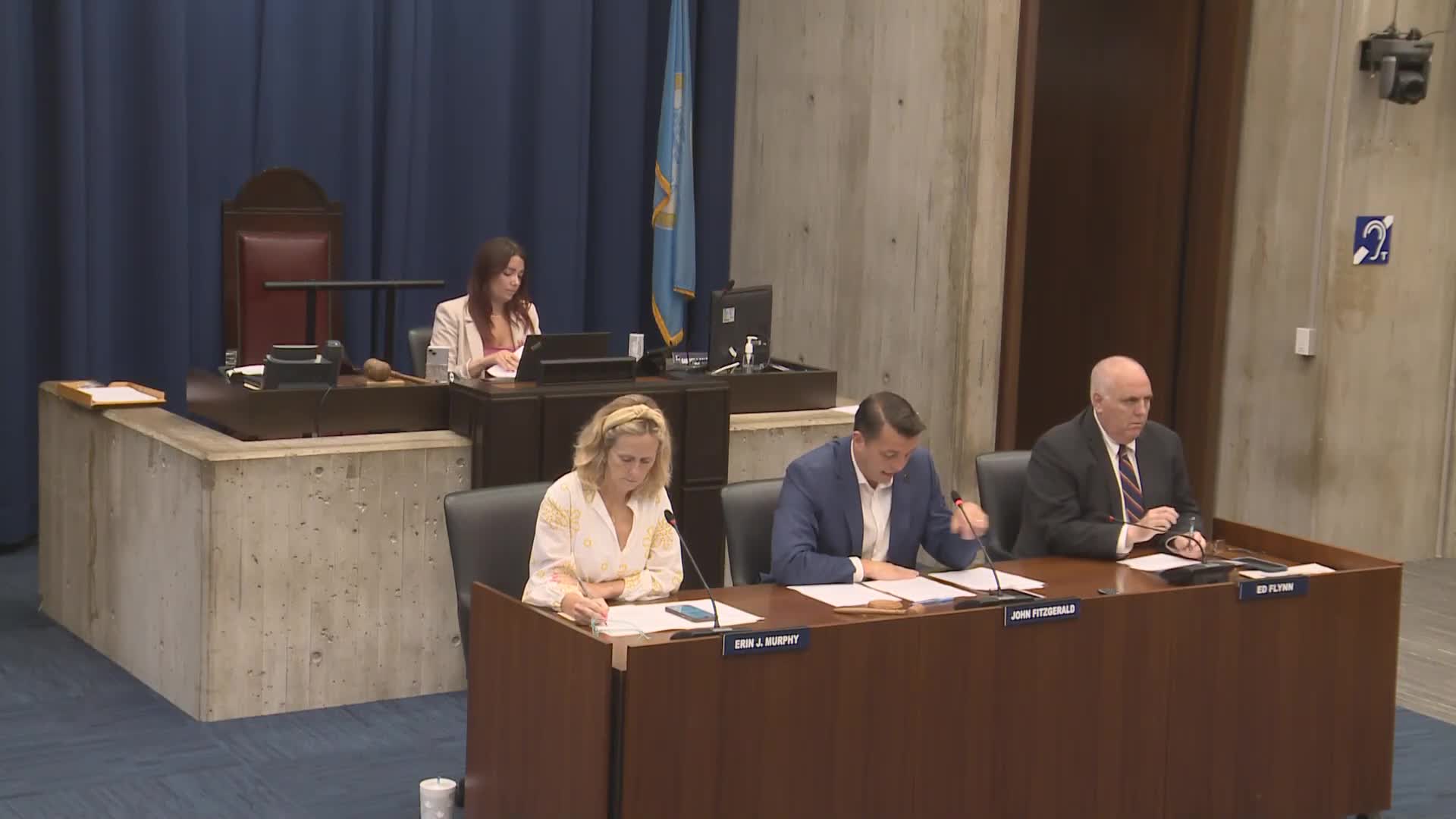
Summary
John Fitzgerald, district 3 city councilor and chair of the Boston City Council Committee on Public Health, Homelessness and Recovery, convened a July 31, 2025 hearing on docket number 1372 to review plans and timelines for modernizing Boston EMS’s dispatch phone system and related communications infrastructure.
John Fitzgerald, district 3 city councilor and chair of the Boston City Council Committee on Public Health, Homelessness and Recovery, convened a July 31, 2025 hearing on docket number 1372 to review plans and timelines for modernizing Boston EMS’s dispatch phone system and related communications infrastructure.
The hearing drew testimony from Boston EMS leadership and representatives of the Boston EMS union. Jason Yekins, a Boston paramedic and president of the BBPA EMS division, told the committee that dispatch personnel are certified EMTs who provide clinical guidance over the phone and are operating on a patchwork system that can drop or misroute calls. "When 9 1 1 calls are dropped, misrouted, delayed because of system failures, it puts lives at risk," Yekins said. "The difference between properly routed calls and the ones mishandled can be the difference between life and death." Councilor Aaron Murphy framed the issue as broader than equipment: "This hearing is not just about modernizing a phone system. It's about ensuring that every Bostonian ... receives timely, high quality emergency care when they call 911. It's about equity, safety, and respect for the professionals who answer that call."
Why this matters: witnesses and elected officials said technology problems combine with staffing and pay disparities to strain Boston’s emergency medical response. The union said EMS dispatch staff work clinical calls on older analog and improperly installed equipment while police and fire use more modern systems; the union also said pay disparities of about $25,000 a year compared with other dispatch workers undercut morale and retention. Councilors described firsthand examples, including a family report of a 13-minute dispatch delay and another 10 minutes for ambulance arrival on a July call, and they pressed for departmental data to assess how often response targets are missed.
Key facts and department responses
- Systems in use: Boston EMS witnesses described five distinct communication layers in daily operations: the state-managed 911 call handling system (Motorola Next Generation 911 used statewide), a shared computer-aided dispatch (CAD) system used across police, fire and EMS, a radio network that the city is upgrading, the regional CMED (Central Medical Emergency Direction) terminals that link hospitals and ambulances across 61 cities and towns, and standalone administrative telephone lines. Boston EMS said the state 911 terminals and the shared CAD are maintained by the Massachusetts 911 office or other regional entities, while some administrative phone lines and console equipment are city- or region-funded.
- Recent outage and workarounds: union witnesses and EMS staff said a statewide 911 outage on June 18, 2024 forced calls through older administrative lines that lack modern call-hold and transfer features. Union testimony described workarounds such as routing calls via staff cell phones and manually logging locations when automated routing or caller ID failed.
- Radio infrastructure: Boston EMS said the city has invested more than $20,000,000 in a multi‑phase radio upgrade to improve portable radio coverage and dispatched consoles. Officials said phase 2 work is underway and further phases remain.
- CMED and terminals: Boston EMS engineers said a regional CMED console upgrade was purchased and equipment is in Boston, but a vendor software issue—exacerbated by COVID-era delays—has kept some CMED functionality offline; the department said the vendor expects a software resolution in the third or fourth quarter of 2025.
- Administrative phones and short-term fixes: Boston EMS said Verizon-discontinued digital phones led to a stopgap solution; new Webex/Cisco VoIP phones are on order and the department said 15 instruments have been received and a phased roll-out is expected in September 2025. Officials said the temporary mix of analog and patched VoIP equipment has produced phantom callback numbers, transfer delays and dropped calls.
- Response-time goals: Boston EMS leadership said the operating target for typical priority calls is about 7–8 minutes, but acknowledged that high call volumes and staffing shortages can produce longer waits. Councilors requested more detailed performance data.
Union and workforce concerns
Union leaders testified about operational and workforce effects from outdated equipment and staffing levels. Yekins said dispatch work is clinically demanding and that burnout is increasing as employees run mandatory overtime to maintain minimum staffing. He described situations in which dispatchers and EMTs use cell phones or other informal workarounds to complete critical exchanges when the phone or console systems fail. "This unreliable system forces us to find workarounds," Yekins said, describing manual callbacks and ad hoc transfers.
Councilors pressed on two workforce issues: pay parity and mandatory overtime. Councilor Aaron Murphy and others noted that EMS dispatchers are certified EMTs who perform clinical tasks but are paid at a lower scale than some other 911 dispatch staff; Murphy repeated the union estimate of about a $25,000 annual gap. Union testimony and council questions documented instances of long shifts, mandated overtime and staffing shortages; committee members asked for data on how often employees worked more than 8 and more than 16 hours in the last 12 months.
Requests, next steps and committee direction
- Data requests: Councilor Murphy asked the committee to obtain all 911 incidents requiring EMS ambulance response that exceeded 7 minutes in arrival time for the 12-month period 08/01/2024–07/31/2025, and a breakdown of EMS worker shifts longer than 8 hours and longer than 16 hours in the same period. The chair agreed to follow up and to request those datasets from Boston EMS.
- Procurement and installation questions: Committee members pressed Boston EMS on procurement status and what has delayed installation of consoles and phones. Boston EMS said administrative phone instruments have arrived and are being configured with Verizon/Cisco Webex; CMED equipment is present but awaiting vendor software fixes. The department said the CMED upgrade was funded regionally and that the vendor anticipates resolving outstanding software issues later in 2025.
- Budget and capital planning: Councilors discussed elevating communications and capital funding for EMS in the upcoming municipal budget cycle. Councilor Braden said members would “hit the reset button” on capital planning and indicated a commitment to elevate the issue during the next budget process.
Quotes from the record
"This hearing is not just about modernizing a phone system. It's about ensuring that every Bostonian ... receives timely, high quality emergency care when they call 911. It's about equity, safety, and respect for the professionals who answer that call," Councilor Aaron Murphy said.
"When 9 1 1 calls are dropped, misrouted, delayed because of system failures, it puts lives at risk," Jason Yekins, Boston paramedic and president of the BBPA EMS division, told the committee.
"The updated phones are expected to be rolled out this September," Boston EMS Superintendent Lee Alexander said about the administrative phone replacement project.
Ending
Committee members, union leaders and Boston EMS agreed the issues deserve follow-up. The chair closed the hearing and said the committee will pursue the data requests and work to elevate capital needs in the next budget cycle; the hearing on docket 1372 was adjourned on July 31, 2025.
(For provenance: the hearing was docket number 1372; the committee took no formal votes at the July 31 hearing and requested follow-up information from Boston EMS.)