
Riverside trustees decline to adopt local 1% grocery tax for 2026, will revisit next year
Get AI-powered insights, summaries, and transcripts
Subscribe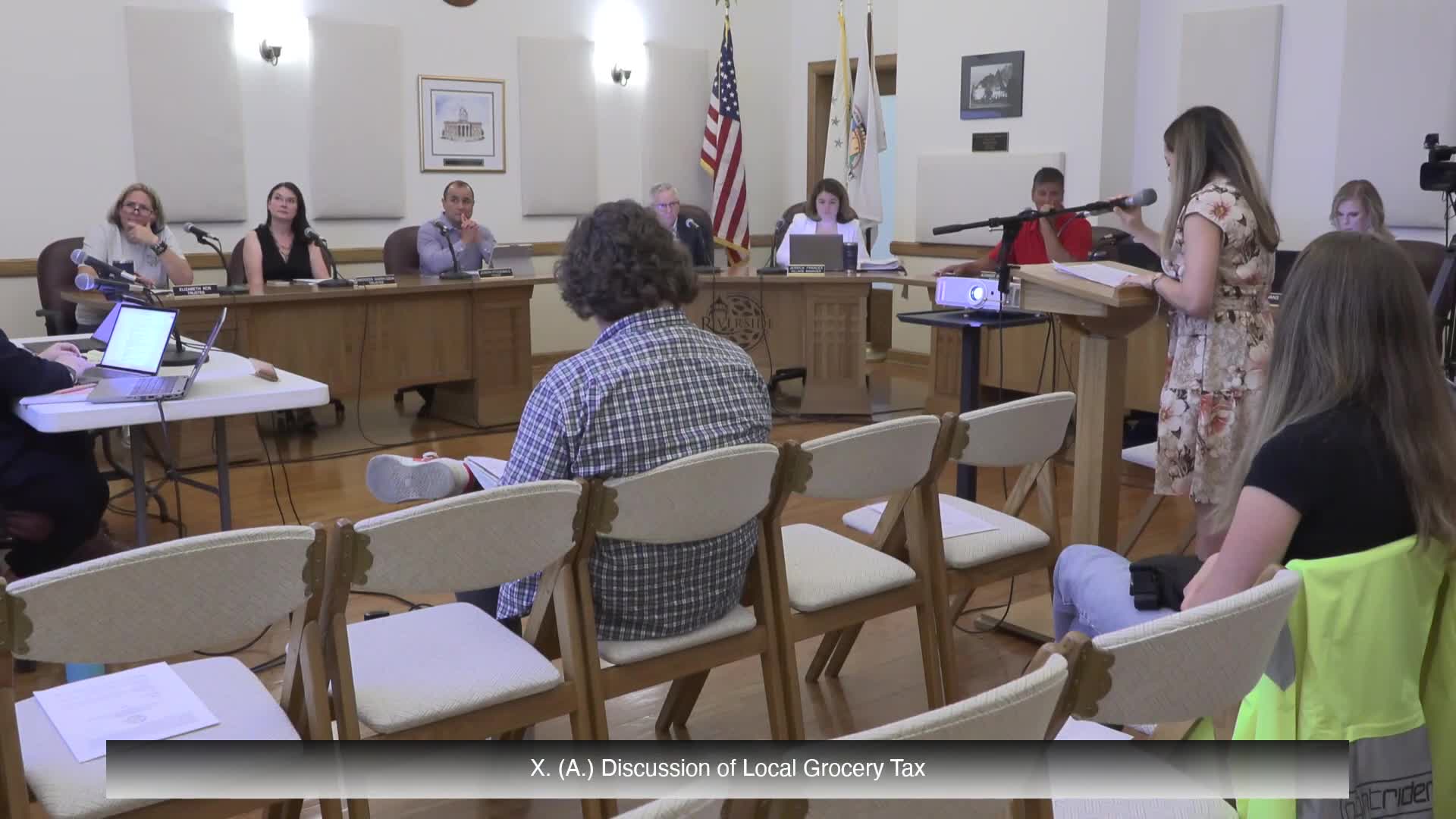
Summary
After a staff presentation on the state repeal of the statewide grocery tax, trustees signaled consensus not to adopt a local 1% grocery-sales tax for calendar year 2026 and asked staff to return with budget alternatives and more resident feedback.
The Village of Riverside Board of Trustees on July 17 agreed by consensus not to adopt a local 1% grocery-sales tax to replace a statewide tax scheduled to be repealed on Jan. 1, 2026, and directed staff to return with budget alternatives and additional resident outreach.
Director Zavala told the board the statewide 1% grocery sales tax repeal takes effect Jan. 1, 2026, and that the law allows municipalities to adopt an identical 1% locally imposed grocery tax by ordinance. “In order to have the tax maintained for January 1, the village would have to adopt and send an ordinance to [the Illinois Department of Revenue] by 10/01/2025,” Zavala said. He told trustees the village received $42,525 in grocery-sales tax revenue last year and estimated roughly $502,000 over 10 years if the tax were retained locally.
The village president said he had asked Manager Francis to contact the owner of Riverside Foods; the owner emailed recommending the board not impose the tax. The president also expressed “hesitancy” about adopting the tax and noted equity concerns, saying the state eliminated the tax because it is regressive and “the less money household income you have, the more it impacts you.”
Trustees who spoke during the discussion emphasized those equity concerns and said they would prefer to avoid a regressive grocery tax for residents. Trustee Evans asked whether staff could provide a short-term financial forecast and possible alternate revenue options before a final decision. Manager Francis and finance staff said the village is compiling financial-forecast data and that preliminary budget work will begin in August, but that complete figures were not yet available.
There was no formal vote; the board’s direction was to not proceed with drafting and filing an ordinance for the local grocery tax before the Oct. 1 filing deadline and to revisit the issue next year after further budget analysis and public input.
Staff clarified next steps: the village can still adopt an ordinance in a future year under current state law, the filing deadline for implementation in the following January is Oct. 1, and finance staff will aim to present alternatives and preliminary budget forecasts during the upcoming budget discussions.