Get Full Government Meeting Transcripts, Videos, & Alerts Forever!
Get email alerts on the Icwa Implementation topic
No spam. Unsubscribe anytime.
Montana ICWA community narrows priorities to cultural connections, preferred placements and tribal foster recruitment
Summary
At a February Montana Indian Child Welfare Act community-of-practice meeting, participants harvested a short list of priorities — including strengthening cultural connections, finding preferred placements and recruiting tribally enrolled foster caregivers — and agreed to return April 17 to select one or two topics for concentrated work.
Facilitators and community members at the Montana Indian Child Welfare Act (ICWA) Community of Practice meeting in February identified cultural connection, preferred placements and tribal foster-family recruitment as the group’s top priorities to address over coming meetings.
“The purpose of this community of practice is to foster meaningful, culturally humble collaboration among people involved in and affected by ICWA in order to preserve and empower Indian families and their connection to their culture,” said Ashley Chaney McNeil, the meeting facilitator, describing the group’s mission and framing the session’s collaborative exercises.
Members spent most of the meeting in guided small-group exercises that asked participants to list local ICWA-related challenges, converge on two priorities in pairs, then narrow to a single priority after successive enlargements of the discussion groups. The exercise produced roughly six to seven “harvested” topics that the facilitator said the group will revisit at the next meeting to choose one or two for focused work.
Participants repeatedly raised the need to identify and place children with preferred placements that keep them culturally connected, and to recruit and expand tribally enrolled qualified experts and foster caregivers. “The need for more tribally enrolled QEWs. Preferred placements, finding them, assisting in clearing old background issues,” was captured in the meeting chat as a top item from one breakout group. Several participants also called for tribal community outreach and for more tribal foster families.
“I think we all relate to cultural connection and identity,” said a participant identified as Birdie, summarizing a pattern others noted in chat responses. Jennifer, a participant who described having family on a reservation, described the effect of losing cultural ties: “That’s my home. I never actually lived there, but that’s where my people are… I would be so lost.”
Other practitioners at the meeting underscored barriers to converting discussion into practice, citing limited time and resources. “It seems like there’s not enough time and not enough resources and money to…try to get it into implementing it and to doing it,” said Lana Paige, describing a common implementation concern and urging realism about staffing and funding constraints.
Several participants named allies and external partners — including foundations and multi-state coordination — as supports for work on placement and cultural connection. One participant who works on out-of-state cases for the Northern Cheyenne tribe said allies such as the Casey Family Foundation help that work function across state lines and that the children on her caseload motivate her practice.
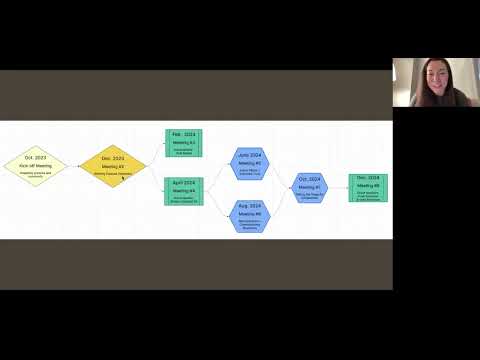
The meeting also reviewed the group’s history: organizers said the Community of Practice began meeting in October 2023, has hosted guest speakers (including Kyle Spang, Sheldon Spotted Elk, Vivek Sankaran and Sherry Fremont) and used past sessions to explore “active efforts,” trust-building and compassion in ICWA implementation. Julie Burke of the Court Improvement Program was cited by the facilitator as a current member of the design team supporting the series.
No formal votes or policy actions were taken at the meeting. Instead, the group adopted a process to return the harvested list to the next session, where members will narrow the topics and discuss what the community has power to accomplish together and where it needs external resources or partnerships. The facilitator said the next meeting will be Thursday, April 17, with registration to be shared in advance.
The community of practice will revisit the harvested list and then plan “implementable, either small and large scale action items” that build on the group’s expertise, the facilitator said.