Get Full Government Meeting Transcripts, Videos, & Alerts Forever!
Get email alerts on the Syringe Service Programs topic
No spam. Unsubscribe anytime.
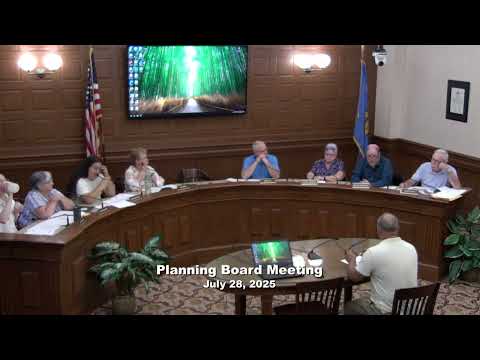
Planning board generally backs draft zoning for syringe service programs, urges licensure and operational safeguards
Summary
The Lewiston Planning Board generally supported draft zoning that would permit licensed syringe service providers in several non‑residential districts and recommended operational safeguards and consistency with licensing, while members expressed differing views on neighborhood placement and mobile units.
The Lewiston Planning Board reviewed a draft ordinance that would license syringe service program (SSP) providers and designate where such providers could operate; it told City Council staff the board is generally supportive of permitting SSPs in several non‑residential zones while leaving many residential and downtown areas restricted.
Planning staff said the draft ordinance is modeled in part on licensing language used for a methadone clinic and that the council requested the planning board’s professional opinion on permitted zones and buffer distances. The original draft used 1,000‑foot buffers from schools, day cares and libraries and limited permitted districts; staff presented a revised map that reduces buffers to 500 feet and would permit SSPs in highway business, community business, neighborhood business, urban enterprise and industrial zones. On that basis staff said the map’s white areas would allow SSP operations and blue/green areas would remain prohibited.
Board members debated land‑use placement, pedestrian access and nuisance concerns. Member Alexander Pine and others urged the board to frame its review as a land‑use question — what building types and access patterns an SSP would need — while leaving operational conditions (hours, good‑neighbor obligations, reporting) to the licensing process. Member Michael Marcotte and other board members voiced strong objections to permitting SSPs near neighborhoods or along commercial corridors; Marcotte said he preferred a more restrictive approach.
Two providers spoke in support of the draft zoning and described their operations. Catherine Bridal, senior director of strategic initiatives at Spurwink, asked the board to visit Spurwink’s clinic at 1155 Lisbon Street and said the program offers more than syringe exchange. "I would love, and so would Ernestine, to invite you all to come do a walk through of our program so that we can show you what we do, how we do it, how we educate the people that we work with," Bridal said.
Ernestine Peralta, supervisor of community outreach for Spurwink, described the clinic as a full‑service harm‑reduction program with outreach workers, wound care supplies, hygiene and nutrition supplies, recovery coaching, a staffed facility and an outdoor drop box for anonymous returns. Peralta reported that statewide overdose deaths trended down 16.7 percent and that Lewiston recorded a 28 percent reduction in overdose deaths last year; she attributed part of Lewiston’s decline to local outreach and clinic work.
Board members also discussed mobile SSP operations. Staff said the council is considering permitting licensed mobile units subject to separate permits with time‑and‑place conditions; several board members favored allowing mobile services with a case‑by‑case permit, while others strongly opposed mobile operations. Members asked that any mobile permitting be consistent with how the city regulates other mobile services (for example, food trucks) and that licensing include good‑neighbor policies, cleanup responsibilities and reporting.
Outcome: Planning staff asked for the board’s recommendation to the council on the proposed permitted districts and buffers. The board recorded a general, majority view in favor of the presented permitted zoning districts and the reduced 500‑foot buffers, while noting members’ divergent views and requesting that council and the licensing authority include operational guardrails. The board did not adopt a formal ordinance; staff will include the planning board’s comments in the council workshop packet.