Get Full Government Meeting Transcripts, Videos, & Alerts Forever!
Get email alerts on the City Property Disposition topic
No spam. Unsubscribe anytime.
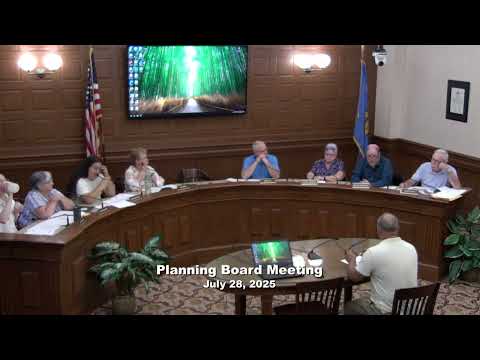
Planning board recommends favorable disposition of tax‑acquired city lots to council
Summary
The Lewiston Planning Board voted to forward a favorable recommendation to the City Council on disposal of multiple city‑owned properties, after a lengthy discussion about undersized lots, sale procedures and state rules affecting proceeds from tax‑acquired sales.
The Lewiston Planning Board voted to send a favorable recommendation to the City Council for disposition of a packet of city‑owned properties, many of which were acquired for unpaid taxes.
Staff provided the board with a packet listing each parcel’s size, assessed value, zoning district, back taxes owed and a brief description of existing structures or vacancy. Several board members raised specific concerns about undersized or landlocked parcels and about the city’s process for marketing and selling tax‑acquired property under recent state law changes.
Board discussion highlighted that some parcels are effectively unbuildable under current zoning. Staff said an abutter can merge an undersized lot with an adjacent parcel to create a buildable lot, or otherwise the city commonly markets such parcels for parking or other limited uses. Board member comments singled out 32 Horton Street as an undersized lot and 1499 Main Street as a parcel with a structure now subject to a dangerous building hearing; staff said demolition bids were being solicited for that structure.
Staff explained the sales process: the city typically lists tax‑acquired properties through a realtor at market value; the council approves sales. Under recently changed state statute and court guidance discussed in the meeting, any sale proceeds above taxes due and reasonable sale costs are remitted to the prior owner. Staff said that practice means the city’s net recovery is generally limited to the back taxes owed (plus reasonable costs). The board discussed whether the council should prioritize recovering taxes due rather than maximizing sales price, and whether different marketing approaches (RFP, bids, realtor listing) remain available; staff said tax‑acquired property is now commonly marketed through a realtor, per current practice.
Motion and vote: The board moved to send a favorable recommendation to the City Council, citing Article 7, Section 4(h) of the zoning and land use code. Michael Marcotte seconded the motion. In a roll call the board recorded unanimous support: Roger Dupree, Michael Marcotte, Lucy Bisson, Mark Roy, Amy Smith, Alexander Pine and Penthea Burns voted yes.
Board members asked staff to note specific concerns for the council — including questions about recoverable tax amounts on several parcels, whether marketing prioritizes abutters, and how the council considers proposed uses for parcels — but the board’s formal action was limited to a recommendation to the council. The council will review the recommended dispositions and approve sales according to the city’s and state’s statutory process.