
Massachusetts governor announces $400 million DRIVE initiative to bolster research, jobs
Get AI-powered insights, summaries, and transcripts
Subscribe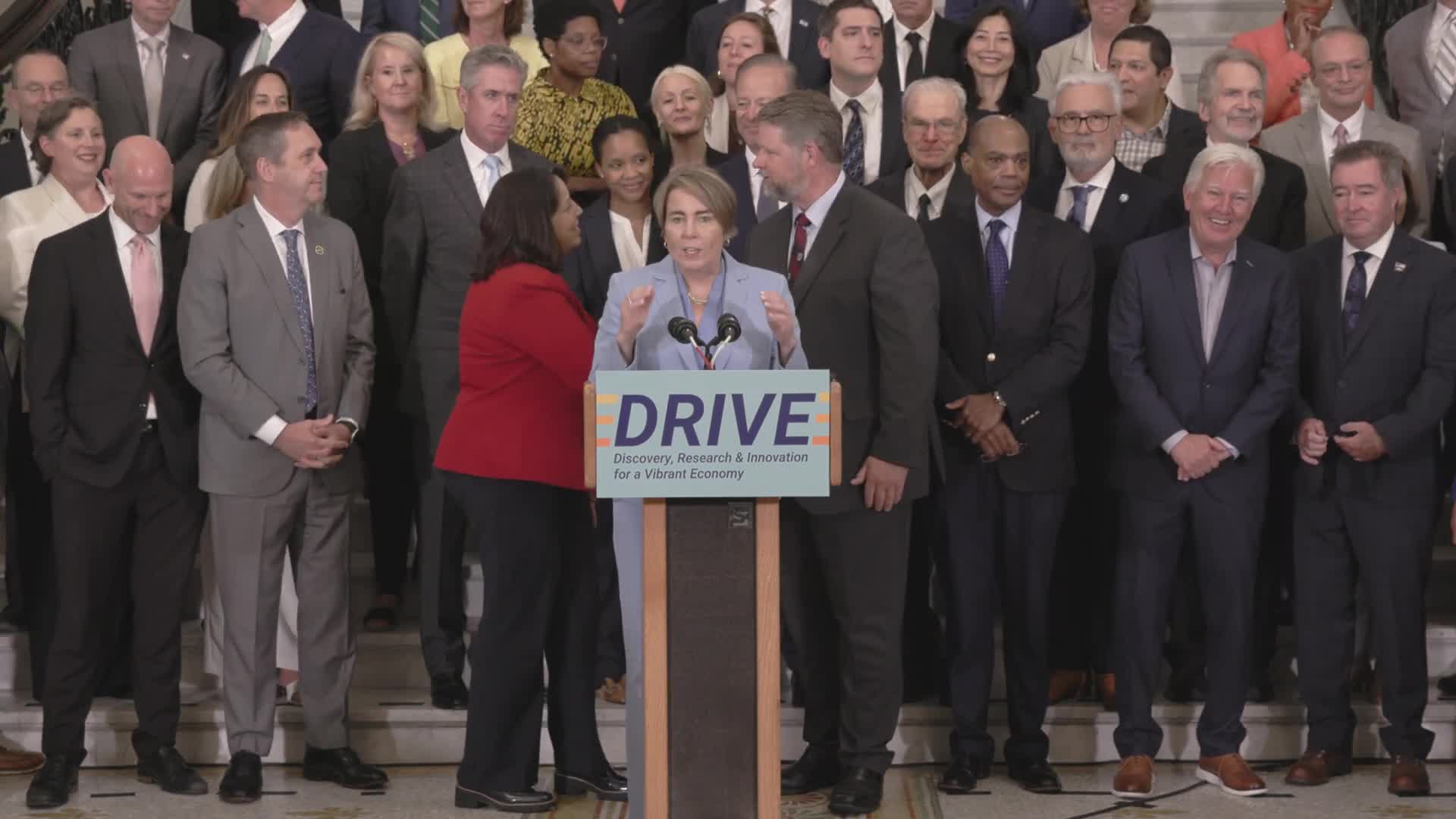
Summary
Governor Maura Healey announced the DRIVE initiative, a proposed $400 million state investment to support research at universities and hospitals, spur life-sciences manufacturing and create jobs statewide; the plan is a legislative proposal that requires approval by the Legislature.
Gov. Maura Healey on Sunday announced the DRIVE initiative, a proposal to invest $400 million in discovery, research and innovation to “grow the Massachusetts economy, create jobs across our state, and ensure that Massachusetts remains the global leader” in research and development.
The initiative, Healey said, would fund research projects at public and private universities, hospitals and institutes that deliver “clear public benefit and create jobs,” and create mechanisms to leverage public dollars with private investment. “The DRIVE initiative. A $400,000,000 investment in discovery, research, and innovation for a vibrant economy,” Healey said.
Why it matters: state officials and industry leaders told reporters the funding aims to protect research jobs and the state’s life-sciences ecosystem amid federal funding uncertainty and recent grant cancellations. Marty Meehan, president of the University of Massachusetts system, said the proposal “will show the nation that Massachusetts is willing to take a stand to protect discovery, research, and innovation, and our state's economy.”
Most important facts: the governor described the package as legislation the administration will advance with the Legislature. Healey and speakers said the money would support university and hospital research programs, workforce development, and facility builds, and help the health-care safety net respond to Medicaid funding changes. “This is an investment in talent and research and know how and innovation,” Healey said.
Supporting details and evidence: the announcement cited a Donahue Institute analysis attributing nearly $9 billion in federal research funding to more than $16 billion in economic activity and support for roughly 80,000 jobs statewide; Meehan repeated similar figures, citing more than 81,000 jobs. Healey and others highlighted examples of statewide impact, including a roughly $200 million, 200,000-square-foot biomanufacturing facility in Norton that officials said created construction jobs and hundreds of permanent positions that do not require advanced degrees.
Voices at the event: Marty Meehan said the state risks losing researchers after recent federal grant terminations and described the proposal as a potential national model. Kevin Churchwell, president and CEO of Boston Children’s Hospital, said the hospital’s clinical work is “constantly driven by our research mission” and described the state’s ecosystem as vital to translating discoveries to patient care. Frank Callahan, president of the Massachusetts Building Trades, emphasized the jobs and apprenticeships the initiative would create for construction and trade workers.
Limits and next steps: the DRIVE initiative was presented as proposed legislation; no vote or formal adoption occurred at the announcement. Healey said the administration will work with legislative leaders to move the bill forward. The announcement does not specify a legislative timeline, the exact mechanisms for distributing the $400 million, or how much will be state general revenue versus leveraged public–private financing.
Additional context: speakers at the event pointed to life-sciences companies rooted in Massachusetts research as examples of returns on investment; the governor and others stressed that benefits are statewide, not only concentrated in Boston and Cambridge. Officials also cited recent federal actions that they said have created unpredictability for research funding, but the specific federal grants or statutes prompting the proposal were not legislatively described during the announcement.
What was not decided: officials did not vote on the proposal and provided no final appropriation language. Details on program governance, eligibility criteria for grants, procurement or contracting rules, and specific funding sources were not specified at the briefing.