
Police chiefs support adding law‑enforcement councils to Massachusetts Tort Claims Act; attorneys warn civil‑rights change could increase litigation
Get AI-powered insights, summaries, and transcripts
Subscribe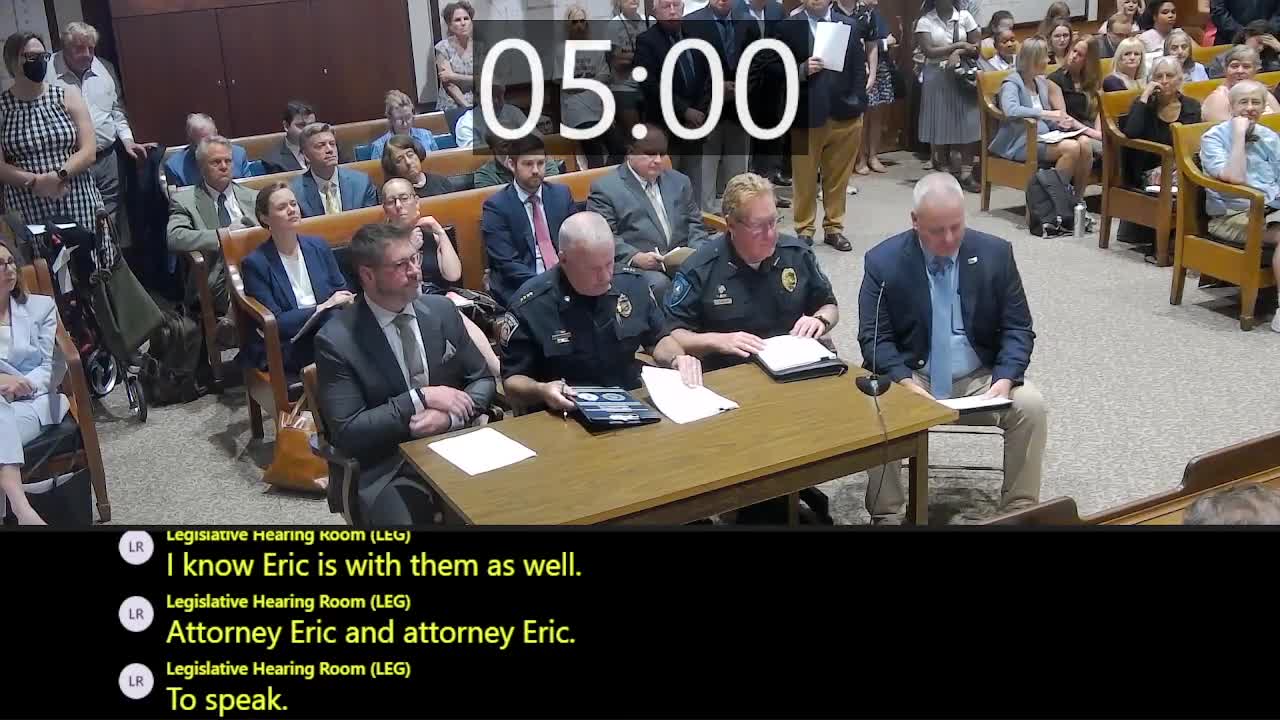
Summary
Chiefs and the Massachusetts Chiefs of Police Association urged the joint committee to add regional law‑enforcement councils (LECs) to the Massachusetts Tort Claims Act to reduce legal uncertainty and liability exposure for mutual‑aid collaboratives. The association also opposed changing the Massachusetts Civil Rights Act’s coercion threshold for
A panel representing municipal police chiefs asked the Joint Committee on the Judiciary to add law‑enforcement councils (regional mutual‑aid collaboratives) to the Massachusetts Tort Claims Act, saying the change would provide clearer coverage and reduce the risk of large judgments against councils that operate regionally.
Attorney Art Gasparapenis and several police chiefs described 44(j) mutual‑aid opt‑in arrangements and said courts currently treat councils inconsistently because of differences in structure or corporate form. They asked the committee to adopt language in S.11‑99 that would make coverage explicit and thereby reduce litigation uncertainty and potential multimillion‑dollar exposure for municipalities that participate in mutual‑aid LECs.
“LECs routinely provide essential regional services — SWAT, crisis negotiation, K‑9, search and rescue and school‑safety training,” said Chief Thomas Fowler (paraphrase), adding that 223 communities currently participate in some mutual‑aid arrangements and that standardized coverage would reduce legal risk and promote regional cooperation.
The association also testified in opposition to H.16‑41, a bill that would remove the threats‑and‑coercion element from claims under the Massachusetts Civil Rights Act when the defendant is a law‑enforcement officer. Massachusetts Chiefs argued that removing that requirement would shift cases into state court where the local judiciary lacks the procedural tools of federal courts, could increase costs and settlements driven by litigation pressure, and might exacerbate retention problems in police ranks.
Attorney Art Gasparapenis said federal 42 U.S.C. §1983 already provides a federal remedy without the needs for a state‑level change, and he urged caution in altering the civil‑rights standard given court resource constraints and the risk of encouraging cost‑driven settlements rather than resolving cases on the merits.
Committee members pressed chiefs on specifics about qualified‑immunity‑related reforms and asked whether statutory direction requiring courts to explain rationale in qualified immunity rulings would be problematic. Chiefs said their principal concern was the removal of the coercion element and the potential chilling effect such a change could have on recruitment and retention.
No committee action was taken during the hearing. The chiefs asked the committee to advance the Tort Claims Act amendment for LECs while opposing the civil‑rights change as written.
Speakers included: Chief Michael Bradley Jr., Chief Thomas Fowler, Attorney Art Gasparapenis (Massachusetts Chiefs of Police Association), and other municipal law‑enforcement representatives.