
Lawmakers hear requests to soften MBTA Communities Act for small, adjacent and rural towns
Get AI-powered insights, summaries, and transcripts
Subscribe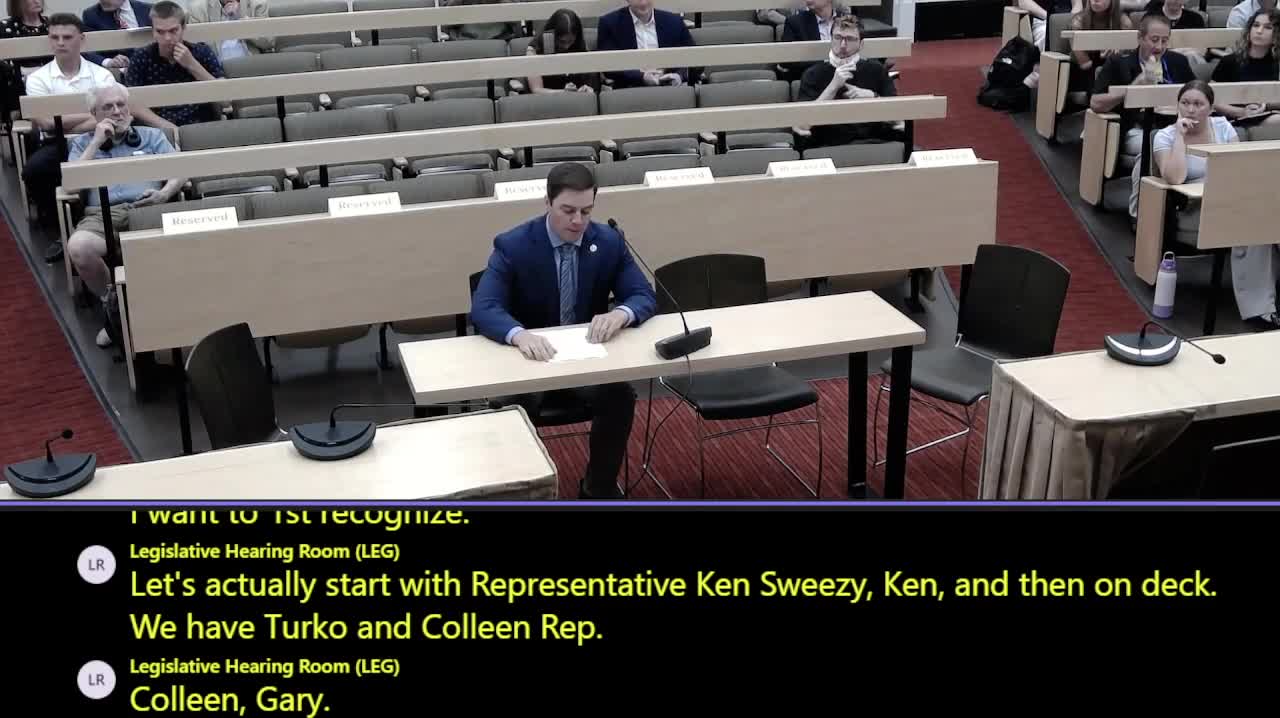
Summary
Municipal leaders and legislators asked the joint committee to adopt exemptions or an appeals pathway to the MBTA Communities Act, telling lawmakers that small adjacent towns and communities with limited water, sewer or transit access cannot safely or feasibly meet a uniform zoning mandate.
Town officials, state legislators and residents told the Joint Committee on Municipalities and Regional Government that parts of the MBTA Communities Act (commonly referred to as “Chapter 40A/MBTA Communities” or “3A” in testimony) impose a “one‑size‑fits‑all” zoning mandate that fails to account for local infrastructure, environmental constraints and municipal capacity. Representative Ken Sweezy, Representative Jeffrey Turco and several municipal leaders asked for exemptions or an appeals pathway for “adjacent” small towns and for communities lacking municipal water, wastewater or adequate firefighting capacity.
Representative Sweezy described three bills he filed (H.2338, H.2339, H.2340) designed to exempt certain adjacent communities and adjust the timing of MBTA Communities Act requirements for small towns. Representative Turco testified in support of House bills (H.2343, H.2344, H.2345 in testimony) that would repeal or exempt communities under different criteria, including small geographic area and existing affordable‑housing stocks.
Senator Dooner and other speakers cited public‑safety and fire response concerns for towns without municipal water systems. Senator Dooner described three towns in his district — Carver, Berkley and Rehoboth — that largely lack municipal water and rely on tanker trucks for firefighting; he told the committee that trucks take roughly eight minutes to refill and that a house fire in those towns can require mutual aid over long distances. Similar testimony came from select board members and planning board chairs in Halifax and Oakley, who said large infill mandates would be impractical or harmful in places without sewer or enough transportation access to MBTA stations.
Some municipal officials asked for a formal appeals process tied to quantifiable constraints: drinking or wastewater capacity, transportation capacity limitations, environmental or historic resources or other documented limits. Representative Turco and others proposed that appeals be adjudicated with clear standards so communities could demonstrate demonstrated inability to meet zoning mandates without undue harm.
Supporters of the MBTA Communities Act who testified at the hearing said the law is working in many larger communities (139 of 177 communities have enacted compliant zoning as of the testimony) and that statewide housing production depends on local zoning changes. Citizens Housing and Planning Association noted that more than 4,000 homes were already in MBTA districts’ development pipelines. Committee members and staff made no final determination; legislators left the record open and collected written comments.
Why it matters: The MBTA Communities Act is a state regulatory tool intended to increase multifamily zoning near transit to boost housing production. Municipal officials argued it can produce unintended consequences — especially in small, rural or infrastructure‑limited communities — and asked for narrow, evidence‑based exemptions or an administrative appeals mechanism to avoid public‑safety and environmental harm.