
Survivors and legal aid groups press Judiciary Committee to create civil remedies for coerced debt
Get AI-powered insights, summaries, and transcripts
Subscribe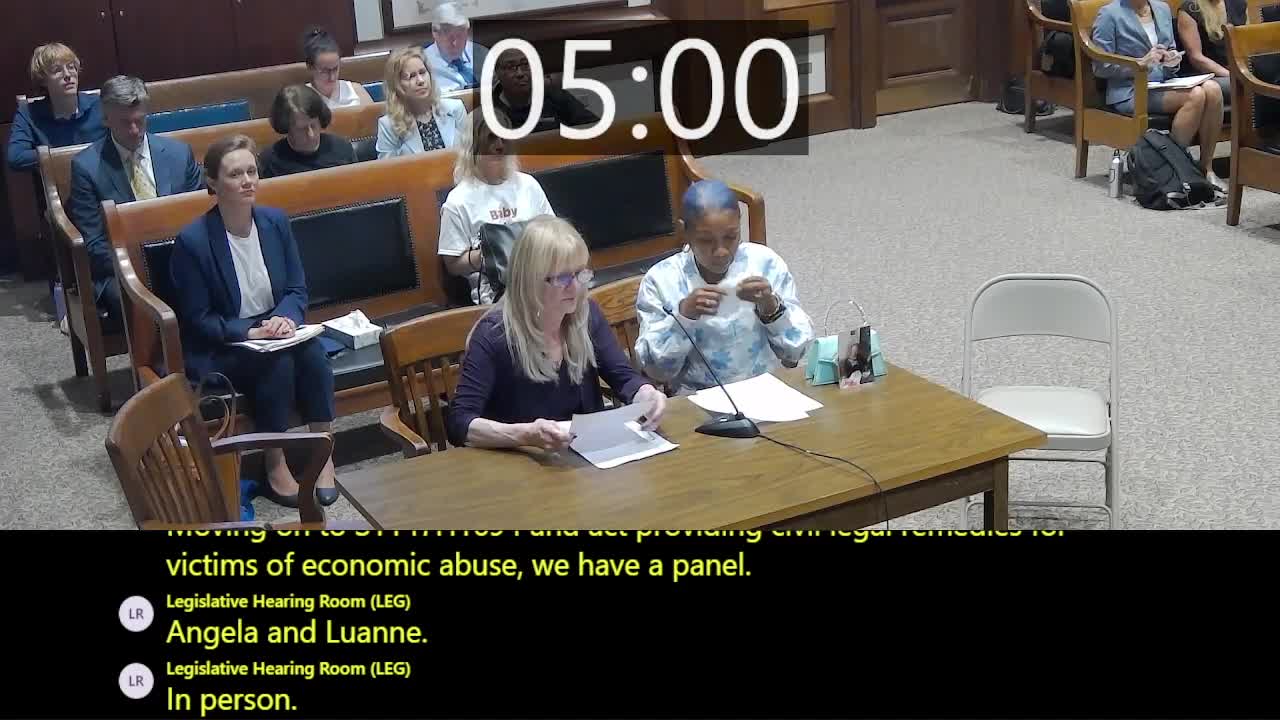
Summary
Lawmakers on the Joint Committee on the Judiciary heard sustained testimony urging passage of bills (H.16‑94 and S.11‑47) that would give survivors of economic abuse a civil legal pathway to address coerced debt.
Lawmakers on the Joint Committee on the Judiciary heard sustained testimony urging passage of bills (H.16‑94 and S.11‑47) that would give survivors of economic abuse a civil legal pathway to address coerced debt.
Lived witnesses described partners who used coercion, fraud or threats to obtain credit and then left survivors liable for thousands of dollars in debt tied to housing, cars or business expenses. Attorneys and advocates said the debts often bar survivors from obtaining housing, jobs or other basic services and that current consumer‑protection remedies are inconsistent and often slow.
"Coerced debt is a form of economic abuse that traps survivors in dangerous relationships and blocks their ability to leave," said Sanai Enriquez of Jane Doe Inc., the Massachusetts coalition against sexual and domestic violence. "This bill creates a survivor‑centered civil process to pause collection and seek removal of debt incurred through force, fraud or coercion."
Key proposals testified to the committee included: - A statutory procedure allowing survivors to petition a court to designate specific accounts as coerced debt, triggering a stay on collection and a requirement that creditors seek redress from the perpetrator or accept court‑ordered relief. - A requirement that creditors and credit reporting agencies remove or block coerced debt from consumers’ credit reports where the court finds the debt was incurred through economic abuse. - Confidentiality and protective‑order provisions to prevent retaliation and harassment by abusers or debt collectors.
Multiple speakers said five states (including Maine and Connecticut) have enacted laws addressing coerced debt and reported positive practical results. Greater Boston Legal Services, the National Consumer Law Center and other advocates provided a survey showing many local providers encounter coerced‑debt survivors frequently and rarely have an effective statutory remedy today.
Survivors described the human cost: Luanne, who testified in person, said her husband controlled payments and used her name for large debts; after leaving she faced repeated collection suits and a ruined credit score that undermined housing and employment options. Several attorneys said existing tools — family court orders, bankruptcy, or consumer disputes — can help some survivors but do not provide a consistent, trauma‑informed remedy statewide.
Creditors’ rights and collection industry views were not present in force at the hearing; however witnesses noted the bills explicitly preserve creditors’ remedies against perpetrators while providing survivors a civil path to relief. The measure would not immunize perpetrators from collection — rather it would create a legal finding that the debt was nonconsensual and furnish a procedure to allocate responsibility.
No committee vote occurred at the hearing. Advocates asked for the Judiciary Committee to report the bills favorably and to include outreach and implementation funding so survivors can access legal assistance and courts can process petitions promptly.
Speakers included survivors, attorneys from Greater Boston Legal Services and other legal‑aid organizations, representatives from Jane Doe Inc., the National Consumer Law Center and Second Step, and members of the legislature.