
Environmental health reports inspections, shellfish monitoring and new air-quality partnership
Get AI-powered insights, summaries, and transcripts
Subscribe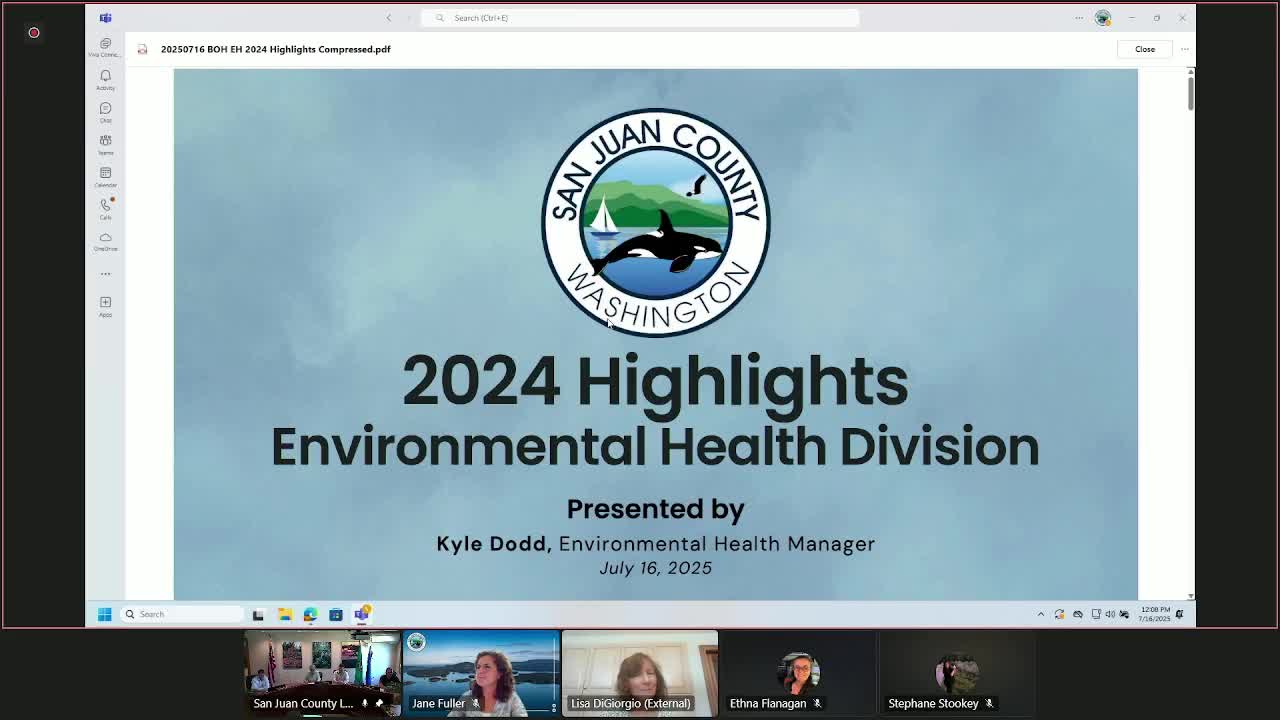
Summary
FRIDAY HARBOR, Wash. — Kyle Dodd, deputy director and environmental health manager for San Juan County, presented a summary of environmental health programs on July 16, reporting 2024 permit and inspection activity and several program updates including shellfish biotoxin monitoring and a new air-quality partnership.
FRIDAY HARBOR, Wash. — Kyle Dodd, deputy director and environmental health manager for San Juan County, presented a summary of environmental health programs on July 16, reporting 2024 permit and inspection activity and several program updates including shellfish biotoxin monitoring and a new air-quality partnership.
Lede details Dodd said environmental-health staff issued 211 food-service permits and completed 217 food inspections in calendar year 2024; 40% of inspections found no violations and 17% identified two or more high‑risk items on the state inspection form (items directly linked to foodborne illness such as improper holding temperatures or inadequate handwashing). Dodd emphasized the food-worker-card turnover that affects many island establishments and described the department’s quarterly newsletter and active listserv used for quick operator communication.
Shellfish monitoring and public communication The department collects samples at 10 monitoring sites across the county every two weeks from April through October and ships those samples to the state lab for biotoxin testing. Dodd said the state can close individual sub‑geographic areas based on high biotoxin levels rather than issuing blanket county closures; the department updates its shellfish safety map and issues targeted public notices when conditions require it.
On-site sewage and maintenance Dodd reported the department reviewed 109 applications for new septic systems and 61 repair applications in 2024. He described the operation-and-maintenance program requiring periodic inspections (annual for more complex systems; every three years for conventional gravity systems) and noted the county’s use of the statewide CRAFT 3 program and Department of Ecology funding to expand repair financing where feasible. He said the department has trained about 4,500 homeowners over multiple years to perform basic septic checks and is resuming an active postcard reminder campaign for inspections.
Drinking water and other programs Ethan Schmidt (drinking water lead, named in the presentation) oversees water availability approvals for building permits, sanitary surveys for Group A and B systems, and well‑site inspections under contract with the state. Dodd posted program metrics including 118 certificates of water availability and routine sanitary surveys in 2024.
Solid waste, zoonotics and harmful algal blooms The department issues annual permits for six permitted solid waste facilities and performed 18 inspections and nine complaint investigations last year. Zoonotic work focuses on animal-bite follow-up and rabies testing when required. Harmful algal bloom testing is coordinated with state labs and local land managers and relies on their signage and monitoring to protect public users of beaches and freshwater sites.
Outdoor air quality partnership Dodd announced San Juan County joined the Northwest Clean Air Agency; the county anticipates one fixed air-quality monitor sited in Friday Harbor for the county’s population size, with PurpleAir and other community sensors providing supplemental coverage on other islands. Dodd said Northwest Clean Air plans to begin regulating a small number of local sources (gas stations and larger standby generators) starting in mid- to late 2026, with phased public education and outreach prior to implementation.
Communications and outreach Dodd credited county communications staff for producing one‑page resource materials (examples: power‑outage guidance for food operators; explanation of recreational vs commercial shellfish sampling) and emphasized the department’s use of newsletters, listservs and timely notices to regulated businesses and the public.
Board reaction Board members praised the presentation and asked clarifying questions about town coordination on food safety, septic-training availability, and air-monitor siting. Dodd said the county acts as the local health department for town food and air quality programs and coordinates routinely with town building staff and environmental stewardship staff on waste contracts and facility operations.