
District presents roughly $60.5 million balanced budget; board to review raising reserve target to 8%
Get AI-powered insights, summaries, and transcripts
Subscribe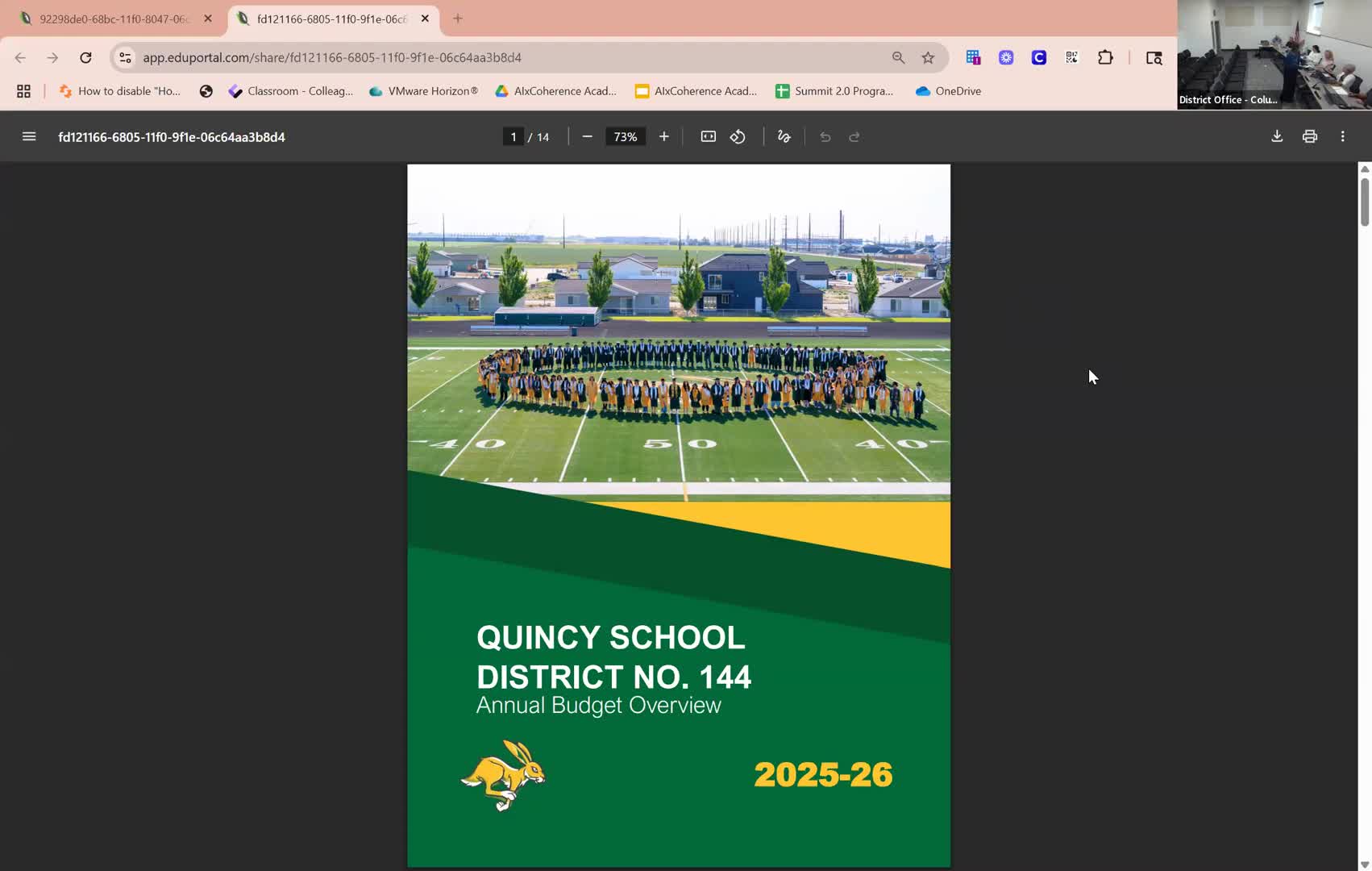
Summary
School district staff presented the 2025–26 budget, showing a roughly $60.5 million balanced plan, explained revenue sources and spending pressures, and prompted board discussion about increasing the district's minimum fund balance from 5% toward 8% and placing related policy up for review.
School district finance staff presented the proposed 2025–26 budget to the Board of Directors, describing a roughly $60,500,000 balanced plan and outlining revenue and cost pressures that prompted discussion about raising the district's minimum reserve from 5% toward 8%.
The budget presenter said, "I budgeted a balanced budget, and that is our goal," and explained that the district is working to hold spending to current-year revenues while absorbing higher insurance, MSOC and labor costs and lower one-time federal COVID-era funds. The presenter also told the board the district is budgeting conservatively for enrollment and has included $1.5 million in revenue and $1.5 million in expenditures as enrollment capacity contingencies.
Why it matters: reserves protect payroll and cash flow during revenue shortfalls and unexpected costs; several board members said they want a clearer multi-year plan to reach a higher minimum fund balance and asked staff to place the reserve policy (policy 60-22) on an upcoming review agenda.
Supporting details: staff said the proposed budget relies on several revenue streams including a local levy (budgeted at about $9,000,000), state apportionment (described as "close to $32,000,000") and federal grants, and that the revenue mix is sensitive to enrollment and state/federal program changes. The presenter reported that employee salaries and benefits in the general fund are budgeted at about 84.69% of expenditures and described insurance and the SEBB medical program as major cost drivers.
Staff outlined capital and special funds: the capital projects fund carries projects and retainage for recently completed mechanical and roofing work at Mountain View and Pioneer; the transportation vehicle fund is funded primarily by depreciation and has two buses on order. The presenter said selling the old district office is expected to create additional capital capacity but is not yet complete.
The board discussed the minimum fund balance. A member summarized the audit guidance the district has received: districts are commonly advised to hold the equivalent of two months' payroll (roughly 8% to 12% of the budget) as a prudent target. Board members asked staff to bring policy 60-22 up for review and discussed a stair-step approach (move from 5% to 6% now, then 7% next year, toward an 8% goal).
Other program notes from the presentation: special-education allocations from the state increased compared with last year; Title I and other federal program funding have declined over recent years (staff said the district's Title I allocation fell about $15,000 this year and that federal program totals have declined by roughly $300,000 over several years). Staff cautioned that ESSER (COVID-era) one-time funds have ended and that continues to affect long-term budgeting decisions.
Next steps: staff will place reserve-policy review on an upcoming agenda as requested and may bring a revised policy resolution back to the board. No formal budget adoption vote was recorded during the portion of the meeting in the transcript provided.
Ending note: staff encouraged board members to raise follow-up questions; presenters said they will return with supplemental detail on particular line items, capital-project retainage releases and the timing of potential property sale proceeds.