Get Full Government Meeting Transcripts, Videos, & Alerts Forever!
Get email alerts on the Housing topic
No spam. Unsubscribe anytime.
Evanston council adopts language to increase affordable housing choices after hours of public comment
Summary
After more than three hours of public comment and council discussion, the Evanston City Council voted to adopt revised language calling for increased housing supply and affordable housing choices at all income levels as part of the Envision Evanston 2045 draft plan.
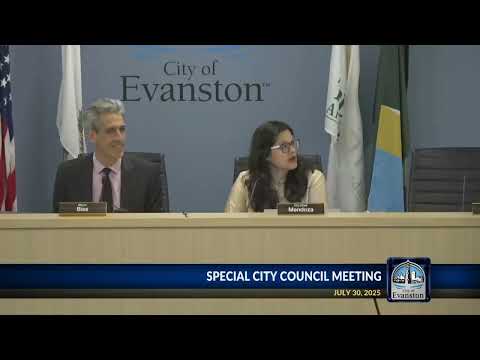
The Evanston City Council voted July 30 to adopt revised language in the draft Envision Evanston 2045 plan directing the city to increase housing supply and affordable housing choices at all income levels, following an evening of public comment and extended council discussion.
The vote matters because the language will guide forthcoming zoning and policy work tied to the comprehensive plan. Supporters said the change is needed to expand housing options and mitigate rising costs; opponents warned that loosening land-use constraints without other protections could drive displacement.
Dozens of residents addressed the council in a packed chamber and online; the public-comment period centered on housing policy, zoning and the planned strategic housing study. Real estate broker Roger Williams told the council, “surging rents and soaring home prices are acting as the ultimate catalyst for the out-migration of Black residents,” and urged action on housing affordability. Frank Hill, a Seventh Ward homeowner, said he supported “adopting option 2 under h 2.1” to allow multiunit housing by right in residential areas. Sheree Mershavanis, associate director of advocacy at Connections for the Homeless, urged council members to “adopt edits that'll allow Evanston to expand its housing supply and create more affordable housing options without unnecessary barriers.”
Council members debated competing aims in the draft: whether the plan should prioritize increasing housing supply rapidly, retain existing “naturally occurring” affordable homes, or both. Several speakers urged the council not to treat the comprehensive plan as a zoning ordinance and to await the city’s strategic housing plan for more detailed data; others said immediate policy changes are required to prevent further displacement.
After debate, councilors adopted a version of the housing language described in the packet as “option 3,” with an amendment inserting the word “affordable” before “housing choices.” The roll-call on that motion recorded the following positions: Rogers — no; Hedekaris — yes; Kelly — no; Ailes — yes; Nussma — yes; Burns — yes; Suffredan — no; Davis — yes. Mayor Biss cast the tie-breaking vote in favor; the amended motion carried 5–4.
Council members and public speakers repeatedly referenced the strategic housing plan the city is drafting. Several residents and advocates urged the council to use the strategic plan’s data to refine how many and what types of housing units are needed, while others said language in the comprehensive plan should be specific enough to direct zoning changes that increase housing options near transit and in mixed-use areas.
The council also heard repeated public concern about process and transparency — who submitted edits, how items were selected for the discussion agenda and whether the Land Use Commission’s language should be retained. City staff noted that many of the items on the discussion list were recommended by multiple council members and that some suggestions were excluded because they were outside the scope of a comprehensive plan or factually inaccurate.
What the motion does and does not do: the council vote adds policy language to the comprehensive plan stating the city’s intent to increase housing supply and affordable housing choices at all income levels. It does not itself change zoning or immediately enact specific permits or regulations; those will be addressed later in zoning updates and the strategic housing plan work. Several council members and public commenters asked that the council preserve existing affordable housing stock and to craft specific protections — for example, community land trusts and other tools — during the implementation phase.
Next steps: staff said the council will reconvene to consider remaining draft language and to review the formatted comprehensive plan on Aug. 18. The council also directed staff to return with a refined draft that incorporates the council’s policy decisions and other requested changes.
Votes at a glance
- Motion: Adopt modified option 3 for housing policy language (final wording: increase housing supply and affordable housing choices at all income levels). - Mover/Seconder: not specified in roll call - Vote (by name): Rogers — no; Hedekaris — yes; Kelly — no; Ailes — yes; Nussma — yes; Burns — yes; Suffredan — no; Davis — yes; Mayor Biss — yes (tie-break) - Tally: Yes 5 — No 4 - Outcome: approved
Ending
Council members said more work will follow: the adopted language will guide zoning and program-level decisions but is not itself a zoning change. Staff and several council members reiterated that the council will use the strategic housing plan and further zoning analysis to identify specific tools and locations for new housing or protections for existing affordable units. The council scheduled follow-up work and signaled it will reconvene to finalize remaining chapters and implementation steps of Envision Evanston 2045.