Get Full Government Meeting Transcripts, Videos, & Alerts Forever!
Get email alerts on the Ems Ambulance Ownership topic
No spam. Unsubscribe anytime.
Flandreau group unveils municipal ambulance model; council to decide June 2
Summary
City staff presented a framework for the city to assume Moody Countyambulance operations in 2026, outlining staffing, revenues, facility options, billing changes, capital replacement and projected deficits of roughly $60,000—120,000 annually in early years.
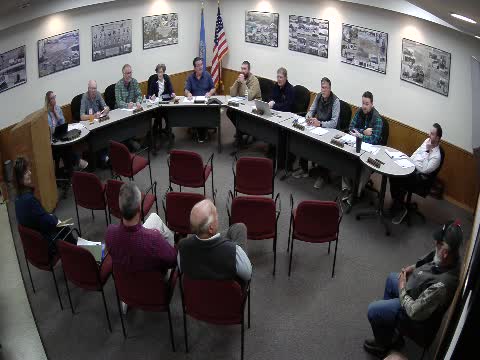
Flandreau city staff presented an operational and financial framework for the city to assume ownership and operation of Moody Countyambulance services, and the Flandreau City Council scheduled a decision on whether to accept Moody Countyoffer at its June 2 meeting.
The model, presented by Cole (city administrator) and supported by a volunteer subcommittee, anticipates a municipal ambulance department staffed by four full-time paramedics, two ambulances, and part-time volunteers; it projects roughly 650 calls per year and estimates initial collected revenue at about $399,579 with additional partner subsidies. "The city of Flandreau ambulance model is intended to support a sustainable EMS future for the community," Cole said, describing the document as a "framework" rather than a final policy manual.
Why it matters: ownership would shift operational responsibility and costs from Moody County to the city while keeping local EMS staff and assets in service to the same coverage area. Council members and staff emphasized the financial and performance risks the city would inherit, including an anticipated annual deficit in early years and the need to enroll the service with Medicare and other payers before full operations.
Key proposals and findings
- Staffing: The model proposes four full-time paramedic/EMT positions (one serving as ambulance director) to guarantee two-person coverage on each 24-hour shift, plus reliance on paid part-time and volunteer staff for additional hours. Cole said the model "seeks to minimize the use of volunteer labor" by adding the additional full-time position.
- Call volume and clinical performance: Consultant Justin Faber of Faber Public Safety Systems Analytics reviewed Moody County EMS data and said the county averages "right around 800" calls annually in recent years, though the model uses a conservative 650-call projection for planning. Faber reported that Moody County crews document runs well (state standard is 72 hours for report entry) and praised the local crews for clinical documentation and care.
- Revenues and partner subsidies: The model counts two primary revenue streams: fee-for-service billing and subsidies from partner governments/organizations. Moody County has offered to transfer assets (valued by the presentation at about $428,000) and pledged a $35,000 annual subsidy. The Flandreau Santee Sioux Tribe historically contributed $10,000 and the model assumes an increase to $25,000 subject to tribal discussions. Avera (health system) is included as a $15,000 annual contributor in the 2026 budget. With a proposed fee schedule increase (presented as a 45% illustrative increase), the model projects collected EMS charges rising from an earlier figure of about $328,000 to $399,579.
- Billing transition: The presentation retains a contract with PCC for ambulance billing in the near term but recommends evaluating internalizing billing and moving it to city finance staff by fiscal year 2028 to reduce contractor costs (PCC currently collects ~8% of charges).
- Facilities and capital: Two facility options were presented: renovate the vacant Old Fire Hall (206 E. Third Ave.) for near-term use, or build an addition to the new fire station (higher cost and longer schedule). The model proposes an ambulance replacement fund that sets aside roughly $36,000 annually to replace an ambulance every seven years rather than every five, to smooth capital expenses.
- Expenditures and deficits: The 2026 model projects total expenditures of about $579,740 and anticipates a budget shortfall in the first year of roughly $100,000 (the presentation later framed a likely ongoing deficit range of about $60,000—120,000 annually under current assumptions). Cole and committee materials said some early-year shortfalls could be mitigated by partner one-time payments and by phased implementation of billing changes.
Discussion, risks and next steps
Speakers flagged two primary risks: financial strain on the city general fund and operational performance risk if staffing or supervision proved inadequate. Cole recommended immediate next steps if the council accepts Moody County's offer: advertise and hire an ambulance director (ideally this summer), work with existing Moody County EMS staff for transition, enroll the service with Medicare and private payers, transfer equipment, and begin building reserved capital and renovation funds.
Council members asked technical and operational questions about shift schedules, use of volunteers, ambulance replacement timing, remounting boxes versus purchasing new rigs, and how fee changes interact with Medicare/Medicaid fee schedules. Justin Faber clarified that about 60% of Moody Countyambulance reimbursements are fee-schedule payers (Medicare/Medicaid) and roughly 40% are private payers where increased charges can yield higher reimbursements.
No formal council vote on the model occurred at the presentation; the item was placed on the council agenda for the June 2 meeting for formal consideration. The packet and meeting recording are posted on the city's website.
Ending
Council members and staff described the model as a starting framework that will need specific policy development, partner negotiations and detailed operational work if the council chooses to accept Moody County's offer. "If adopted, it will require continued leadership, community engagement, and strategic oversight," Cole said. A formal decision is expected at the council meeting on June 2, 2025.