Get Full Government Meeting Transcripts, Videos, & Alerts Forever!
Get email alerts on the Personal Property Tax Exemption topic
No spam. Unsubscribe anytime.
Salem committee backs $1,000 personal-property tax exemption for small businesses
Summary
The City of Salem Committee on Administration and Finance recommended that the City Council adopt Massachusetts General Laws Chapter 59, Section 5, Clause 54 to exempt personal property accounts valued below $1,000, offering estimated relief to 187 small businesses and modest revenue shift to larger taxpayers.
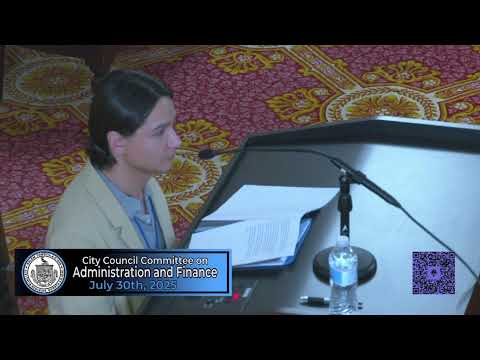
Salem — The City of Salem Committee on Administration and Finance, meeting with the Committee of the Whole on July 30, recommended that the City Council adopt Massachusetts General Laws Chapter 59, Section 5, Clause 54 to exempt personal property accounts with a taxable value below $1,000. The committee voted unanimously to recommend the order after a presentation from the city’s assessing office.
The recommendation, if approved by the full City Council, would exempt roughly 187 small business personal property accounts with a combined assessed value of about $97,900, according to Stephen Cortez, the city’s director of assessing. Cortez told the committee the change is intended to provide targeted tax relief to micro and small businesses and to reduce administrative costs when collecting very small balances.
Cortez said personal property includes ‘‘anything tangible and movable that isn't part of land or building,’’ such as furniture, equipment and machinery. He told the committee that 230 Massachusetts municipalities — about 65 percent — have adopted some version of the exemption and that state law allows cities to set a minimum taxable value up to $10,000.
Why it matters: Cortez said the exemption would remove only the smallest accounts and help the city avoid spending more to bill and collect than the tax receipts are worth. He estimated the 1,000-dollar threshold would reduce the city’s personal property roll by about $97,900 and, at the FY25 commercial rate, would lower revenue by approximately $2,214.50. Cortez characterized the fiscal impact on the overall commercial, industrial and personal property (CIP) tax base as minimal: he gave an arithmetic estimate of about 0.006% of the CIP levy and elsewhere described the shift as ‘‘less than half a percent.’’
Committee discussion focused on timing, outreach and administrative efficiency. Councilor Merkel, chair of the Administration and Finance Committee, called the proposal ‘‘a great opportunity’’ to assist small businesses within the city’s legal authority. Councilor Hopworth, appointed a temporary member for the meeting under committee rules, asked why the measure was brought forward this year; Cortez said the city is in a revaluation year and the Board of Local Assessors assigned a Department of Revenue representative in June, prompting the department to present the option now.
Councilor Davis, who moved the recommendation and secured a second from Councilor Hopworth, praised the department’s data and said the change can be adjusted later if the committee wants to expand the threshold after observing its effects.
Cortez outlined planned outreach if the council approves the order: the assessing office can mail notices to affected account holders, post information on the assessor’s webpage and consider inserts with tax bills. He also described administrative context: quarterly personal property mailings cost about $1 each to print and mail; demand fees for unpaid balances are $30; and personal property taxes lack the strong enforcement mechanisms of real estate tax because liens do not automatically attach.
Formal action and next steps: Councilor Davis moved that the committee recommend adoption of the order setting the minimum taxable personal property value at $1,000; Councilor Hopworth seconded. The committee chair recorded three affirmative votes (Merkel, Davis and Hopworth) and the recommendation carried unanimously. The committee noted that the measure requires a majority vote of the full City Council to take effect and asked staff to coordinate with the city clerk on scheduling a council meeting in August for final action.
Discussion versus decision: The committee’s vote is a formal recommendation to the City Council; it does not itself change the tax code. Staff direction from the meeting includes outreach to affected account holders and coordination with the clerk to schedule the council vote. No amendments to the proposed $1,000 threshold were made in committee.
Additional context: Cortez said the assessing department enforces filing deadlines and abatement procedures under state law; taxpayers must file abatement applications during the statutory window in January and remain responsible for tax bills while abatement requests are processed. He also referenced prior local exemptions for veterans and seniors and recent senior-related adjustments as examples of the city’s existing relief programs.