Get Full Government Meeting Transcripts, Videos, & Alerts Forever!
Get email alerts on the Employee Benefits topic
No spam. Unsubscribe anytime.
Council approves healthcare benefits for mayor, law department staff under ordinance 39-2025
Summary
Council passed ordinance 39-2025 on July 29 to extend healthcare benefits to the mayor, law director and two assistant law directors; outside counsel and Ohio federal statutes were cited in support of legality.
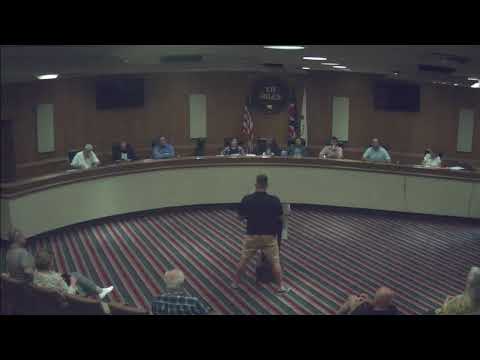
The City of 7 Hills City Council on July 29 approved ordinance 39-2025, amending codified ordinances to extend health-care benefits to the mayor, the law director and two assistant law directors. Council voted to adopt the ordinance as an emergency measure.
City officials presented a written opinion from outside counsel Joseph Diemer stating that (1) federal rules under the Affordable Care Act require employers with 50 or more full-time-equivalent employees to provide coverage to employees who work 30 or more hours per week and (2) the mayor and law-office employees in this city provide more than 30 hours per week in practice. The outside opinion concluded the ordinance would be legal and enforceable.
Council President Curiosa read the outside opinion into the record and council then moved through the first reading, emergency clause and final passage of ordinance 39-2025. Several council members and the mayor noted the city already employs more than 200 people, a figure cited in the legal memorandum to support the applicability of the Affordable Care Act threshold.
Why it matters: Adding health benefits for elected and appointed officials changes the city—s employee-benefit structure and has recurring budget implications. City staff said the law department employees and mayor meet the practical-hours test for coverage, citing both federal ACA rules and local practice.
The ordinance passed with the emergency clause; council members requested administrative follow-up to document how coverage will be administered and to confirm effective dates and costs in forthcoming communications to council and the public.