
Clay County sheriff’s office reports year‑end school‑safety numbers, highlights training and vaping challenge
Get AI-powered insights, summaries, and transcripts
Subscribe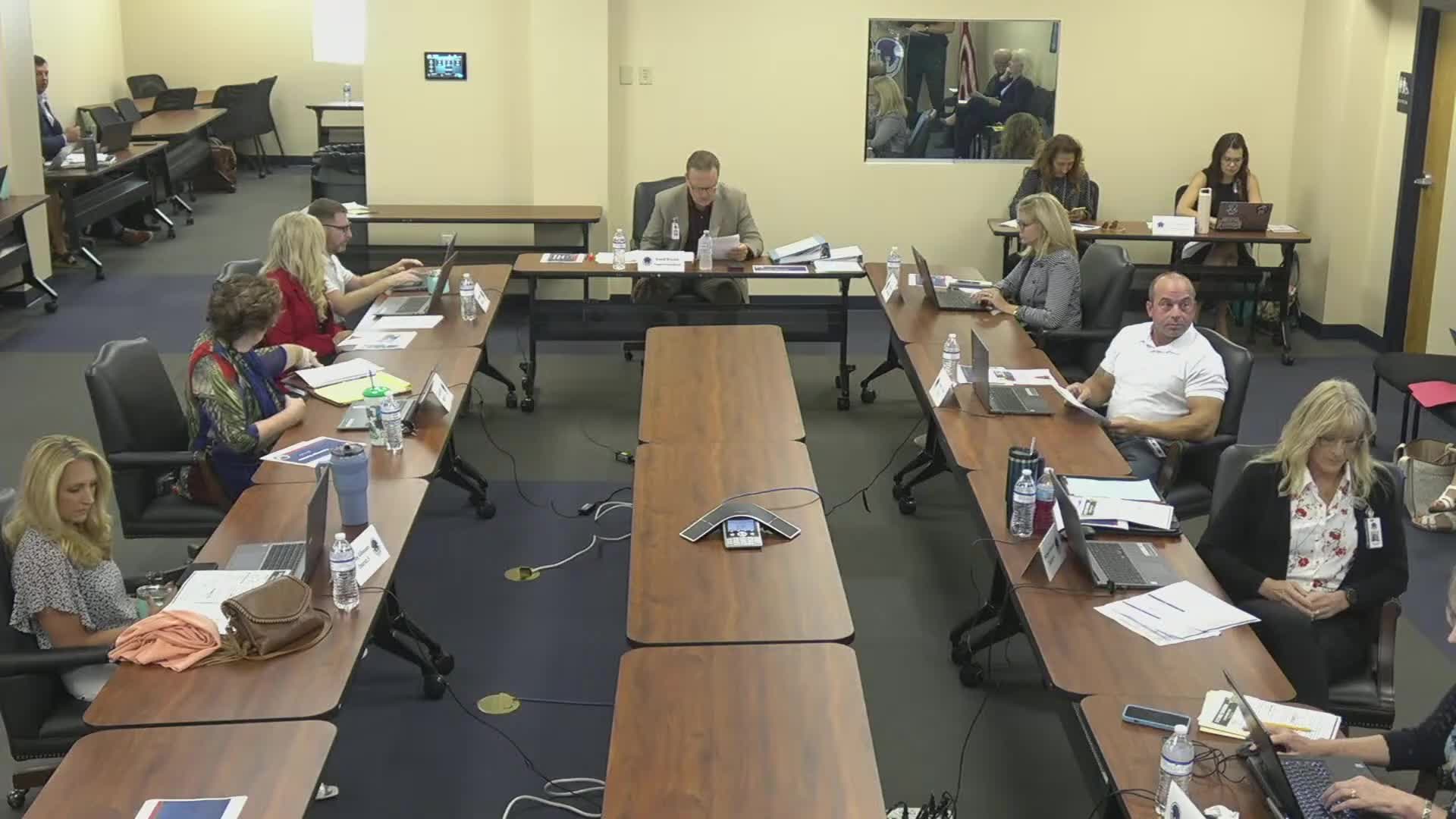
Summary
The Clay County Sheriff’s Office told the school board on July 29 that deputies handled thousands of school‑related contacts, ran hundreds of threat assessments and completed thousands of training hours; officials and board members flagged vaping and THC‑laced products as a growing on‑campus concern and discussed parent education and enforcement.
The Clay County Sheriff’s Office presented a year‑end review at the Clay County School Board’s July 29 workshop, reporting thousands of school‑related contacts, expanded training for school resource officers (SROs) and a continuing effort to integrate SROs, patrol and school staff in incident planning.
The review covered calls for service, threat assessments, contraband seizures and training. “If we gave ourselves a report card, I’m gonna give us a generous … a minus,” the CCSO school‑safety lead said while summarizing the first year of the office’s consolidated school safety unit.
Why it matters: the sheriff’s office said SROs and patrol deputies are the first responders for many school incidents and that increased training and interagency planning aim to reduce chaos if a critical incident occurs. Board members pressed the office for more information and for joint parent education after deputies described a surge in vaping and THC‑infused products in student populations.
CCSO reported 7,877 total calls for service related to schools in the year reviewed and said it logged 504 calls that required a deputy response. The office recorded 183 threat assessments during the year; officials said eight of those assessments resulted in arrests. The CCSO presenter said NIBRS (the National Incident‑Based Reporting System) statistics differed from the agency’s internal counts because NIBRS tracks a narrower set of reportable offenses.
The presenter said deputies cleared several hundred cases for reporting purposes (the transcript cites figures such as 592 or 621 cleared cases), and provided a breakdown that included 28 cleared by arrest, 106 handled through school discipline, 97 juvenile delinquency citations and 10 other paper dispositions. Contraband seized in the year included three bladed weapons, one firearm, just over 8 grams of cocaine and 59 grams of marijuana, the presenter said.
On training, the office said SROs logged more than 9,000 hours of training overall, including multi‑disciplinary active‑assailant and incident‑command exercises, crisis intervention, firearms proficiency and an annual field training program. The office said it led an incident command system (ICS) management team for the district’s multiple high‑school graduations and coordinated rehearsals and staging with fire rescue and dispatchers.
Vaping and parental outreach drew extended discussion. Board members and administrators described students hiding vapes in bathrooms and backpacks and said parents often are unaware that many products are THC‑infused. The school safety presenter said vaping‑related delinquency citations have risen and offered to supply a separate count of vape incidents by email. “We’re doing everything we can to get it out of their hands,” the CCSO speaker said of vaping products.
District staff and board members proposed a joint parent‑education event and outreach during preplanning and suggested partnership opportunities with Tobacco Free Clay and local prosecutor offices to cover health and legal consequences. District officials said they are planning a streamed event focused on drugs and student safety for the 2025–26 year and will coordinate guest speakers from the sheriff’s office and the assistant state attorney’s office.
On interjurisdictional information‑sharing, CCSO said it works with the Northeast Florida Fusion Center and juvenile justice partners and that some gaps remain for students coming from other states where information is not always shared. The district noted it now receives a quarterly DJJ (Department of Juvenile Justice) list showing students under supervision.
The sheriff’s office also told the board it will seek FEMA reimbursement for overtime costs when deputies staffed shelters during hurricanes and that the office maintains school hazard and reunification plans (referred to in testimony as CHIRP) on agency systems accessible to patrol and school staff.
Ending: district and CCSO officials asked the public to expect continued collaboration: the sheriff’s office said it would provide requested counts on vaping incidents and that SROs and guardians (district‑trained school defenders) will be increasingly integrated into ongoing training and tabletop exercises.