Get Full Government Meeting Transcripts, Videos, & Alerts Forever!
Get email alerts on the Employee Benefits Health Insurance topic
No spam. Unsubscribe anytime.
City of Clearwater faces 13.1% health-plan renewal; committee weighs sharing part of increase with employees
Summary
The City of Clearwater Benefits Committee heard on June 30 that a consultant’s projection for the city’s self‑insured health plan renewal calls for a 13.1% increase, driven by higher medical and pharmacy claims and several very large cases.
The City of Clearwater Benefits Committee heard on June 30 that a consultant’s projection for the city’s self‑insured health plan renewal calls for a 13.1% increase, driven by higher medical and pharmacy claims and several very large cases.
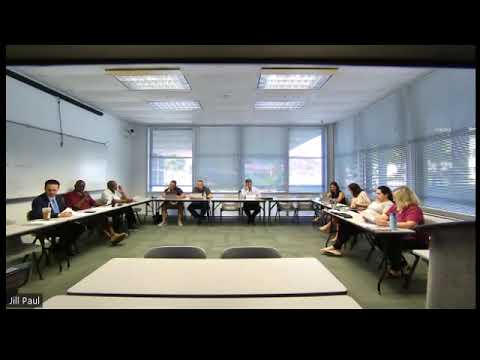
The recommendation and its possible effects on employee contributions were the focus of the meeting because the committee must decide what to recommend to city council. Committee members did not vote at the June 30 meeting because the committee lacked a quorum; staff said the item will move to a follow‑up meeting in late July to produce a formal recommendation for council.
Sean Fleming, the benefits consultant leading the presentation, said the plan’s prior 12‑month gross claims totaled just under $21 million and that, after removing capitation and five large claims (about $2.3 million), net medical claims were about $17.4 million. Fleming said actuaries applied a 5.3% medical trend and a 14.1% pharmacy trend (pharmacy represents roughly a quarter of plan cost) to arrive at a projection that produces an overall 11.6% trend when weighted and then a renewal increase that the consultant summarized as 13.1% for the plan year.
Fleming also described plan mechanics that affect exposure: the plan’s individual stop‑loss attachment point is $300,000 (the city pays claims up to that level and the insurer reinsures amounts above it), administrative fees to Cigna were cited (about $68,000 year‑to‑date), and the consultant noted an Embark program offered by Cigna that covers very high‑cost gene therapies in exchange for a small per‑member fee.
Committee members debated how to allocate the renewal increase between the city and employees. Staff presented two scenarios: (1) absorb the full increase within the city’s current contribution formula, or (2) split the increase for employees with dependent coverage roughly in half so affected tiers would see about a 6.5% increase instead of 13.1%. Staff indicated these dependent tiers total about 200 employees on employee‑plus‑one coverage and about 169 on family coverage, roughly 370 employees who would see a premium change under the split scenario. Staff said approximately 1,100 employees would see no change under the proposed scenarios because they carry single coverage.
Several committee members urged greater use of existing wellness and prevention programs — including the Omada diabetes and hypertension management program — as a long‑term cost‑containment strategy. Committee members and staff discussed utilization rates and HIPAA/privacy limits on granular claims reporting by department: staff said they do not track claims by department because small department sizes could create a privacy risk and that utilization data are aggregated for program evaluation.
Staff said the committee previously used reserves last year to partially subsidize the plan and that most of that surplus was used; as a result, staff recommended avoiding using remaining reserves for ongoing subsidies so funds would be available for a larger adverse year if needed. The committee agreed to schedule a follow‑up meeting in July to finalize a recommendation for council; no formal recommendation was made at the June 30 meeting.
Staff offered to provide additional breakdowns or alternative plan scenarios (for example, changes to deductibles or copays) for the July meeting if the committee requests them in advance so actuaries have time to model those options.
The committee adjourned after agreeing to reconvene to prepare a funding recommendation for the council.