Get Full Government Meeting Transcripts, Videos, & Alerts Forever!
Get email alerts on the Housing Equity topic
No spam. Unsubscribe anytime.
Deltona launches housing equity plan process, seeks public input on fair housing
Summary
The City of Deltona this week launched a public process to draft a housing equity plan intended to identify barriers to fair housing and set measurable goals to address them, city staff and a consultant said at a community meeting.
The City of Deltona this week launched a public process to draft a housing equity plan intended to identify barriers to fair housing and set measurable goals to address them, city staff and a consultant said at a community meeting.
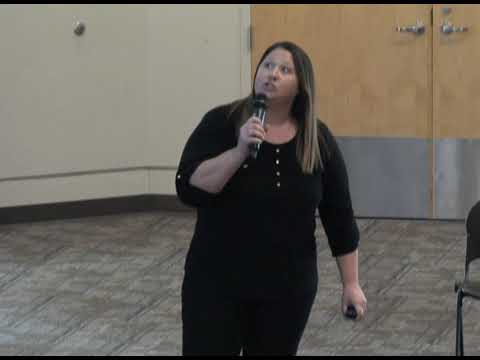
City of Deltona community development manager Angela Bridal opened the session and introduced Carter Burton, director of housing and community development at the Florida Housing Coalition, who outlined the plan’s scope and the public participation process. “Community engagement is really the reason why you’re here today because we can’t develop these documents and we can’t get… fair housing without your input,” Burton said.
The plan will analyze patterns of segregation and integration, disparities in access to opportunity (for example transportation, employment and health care), distribution of affordable housing and homeownership opportunities, and local laws or policies that might impede housing access, Burton said. She described the effort as aligned with HUD’s proposed rule on Affirmatively Furthering Fair Housing (AFFH) and said the city is preparing the plan in a similar format so it will be ready if the rule is finalized.
Why it matters: Deltona receives Community Development Block Grant (CDBG) funds from HUD and therefore has a federal obligation to address fair housing issues tied to program eligibility. Burton said the housing equity plan’s findings will be integrated into the city’s consolidated plan — the document communities submit to HUD that can guide use of federal allocations — so the analysis could influence where funding is prioritized.
What the plan will examine - Protected classes and discrimination: Burton summarized the federal Fair Housing Act of 1968, which bars discrimination in sale, rental and financing on the basis of race, color, religion, sex, familial status, national origin and disability. She said the city currently does not add local protected classes beyond those seven. - Segregation and R/ECAPs: HUD identifies racially or ethnically concentrated areas of poverty (R/ECAPs) on national maps; Burton said Deltona does not have designated R/ECAPs on HUD’s prepopulated map but the plan will still assess local patterns of segregation. - Access to opportunity and resources: The analysis will look at how affordable housing relates to access to transit, jobs, grocery stores and health care, and whether local resource allocation (for example CDBG or State Housing Initiative Partnership funds) is distributed equitably. - Local laws and permitting: The team will review zoning, land‑use codes, permitting, fees and other local policies that could impede development of affordable units. - Enforcement history: Staff will collect fair‑housing complaints and enforcement records (for example from the Florida Commission on Human Relations, HUD and the U.S. Department of Justice) over the past five years to look for patterns or unresolved issues.
Public participation and data sources Burton described several engagement channels: in‑person public meetings (the consultant held a second session the following week in the council chambers), a virtual engagement platform (FHC Connect) with a fair‑housing survey, poll, discussion forum and a guest book for comments, and direct consultations with local housing and homeless partners, lenders, landlords and public‑housing residents. She also pointed participants to HUD’s mapping site (egis.hud.gov) for prepopulated data and said staff can provide HUD maps on request.
“How do you plan to get the community engaged?” an audience member asked. Burton responded that the outreach plan uses public notices, social media, press releases, stakeholder emails, virtual engagement, and partner events; she said the team aims to make materials accessible and to attend community gatherings where possible.
Next steps and decision points Burton said the project timeline will include data collection, prioritization of identified fair‑housing barriers, measurable goal setting, and drafting the housing equity plan. The city will post a draft for a 30‑day public comment period and hold a public hearing where the City Commission may consider adopting the plan. She emphasized the housing equity plan itself is not a funding request, but its findings will be incorporated into the consolidated plan that guides HUD funding decisions for the next five years.
Participants split into small groups for a listening session to identify priorities and provide qualitative input that will be treated alongside quantitative data in the analysis. The meeting closed with instructions for how to submit feedback through the FHC Connect site and an encouragement to attend follow‑up engagement activities.
The city did not take formal legislative action at the meeting; staff described the consultant contract and public‑engagement schedule and said the Commission will review the draft and any adoption would occur at a later public hearing.