
Carmel leaders say state tax changes leave city revising budget; public briefings planned
Get AI-powered insights, summaries, and transcripts
Sign Up Free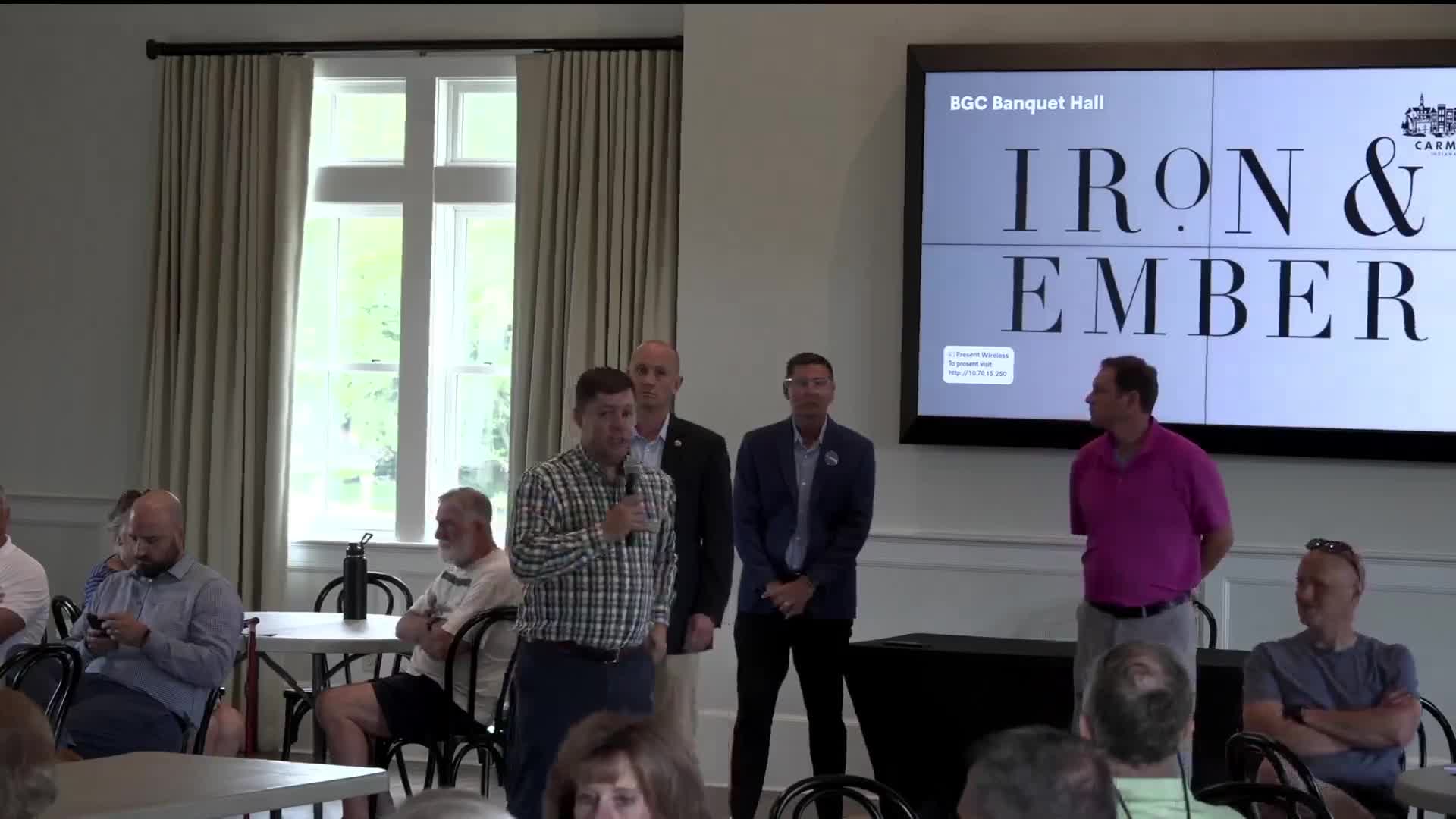
Summary
City officials told a Brookshire town hall that Senate Enrolled Act 1 and related property-tax changes will reduce assessed values and alter revenue streams; council finance chair and the mayor said the city expects to present a first draft Sept. 1 and to hold public briefings in August and September.
Carmel officials warned residents at a Brookshire town hall that changes to state law affecting property-tax assessments will reduce the city’s near-term revenue and require adjustments in the 2026 budget. "Right now, we are approaching our budget time of year, which is probably some of the most important things we do as the city council," said Rich Taylor, at‑large city councilor.
The matter stems from changes lawmakers adopted in what officials called "Senate Enrolled Act 1," which, Taylor said, provides a $300 credit for homestead homeowners and an assessed‑value deduction that will phase in through 2031. Taylor explained that the municipality’s revenue is tied to a formula — rate times assessed value — and that lower assessed values can require rate changes or spending reductions to maintain revenue.
Why it matters: City leaders said the changes shift the mix of revenue between property taxes and other sources and could require the city, school district and library to change planned spending. Mayor Finkham told attendees the administration is awaiting detailed assessed‑value numbers but expects the city’s net revenue to be roughly flat when local income‑tax receipts are included. "Our budgets came in 16,900,000.0 above what our revenue is," the mayor said, describing the scale of the gap the administration is addressing before the council’s formal budget vote.
Officials outlined next steps: the mayor’s office will deliver the administration’s first draft budget on Sept. 1; the council plans a public series of budget meetings and an informational Zoom for residents on Aug. 28 with city, school and library leaders. Taylor said the administration has already identified multi‑million dollar unappropriations from last year’s budget to cushion the change and that the city hired an independent financial advisor to vet developer pro formas and other fiscal decisions.
Discussion versus action: speakers characterized the session as informational and preparatory. No formal budget ordinance or tax-rate vote was taken at the town hall; councilors said decisions will occur in the fall budget process after assessed‑value data arrive.
Clarifying details disclosed at the meeting include the $300 homestead credit and an assessed‑value deduction tied to the state law, the administration’s Sept. 1 target for a first budget draft, the Aug. 28 public briefing, and that a portion of last year’s unappropriated funds will be used to reduce immediate impacts on services.
Residents seeking more detail were told the city will publish meeting dates and financial materials online and that staff would provide copies of the Monon Community Center and parks financial packets on request. The mayor and council encouraged residents to attend upcoming budget meetings for the school, library and city to see the combined revenue impact.
The budget process will continue through the fall with additional council review and public comment before any final tax‑rate or appropriation votes.