
Court Grants Deferred Adjudication to Joe Anthony Grant, Orders Treatment, Community Service and Testing
Get AI-powered insights, summaries, and transcripts
Subscribe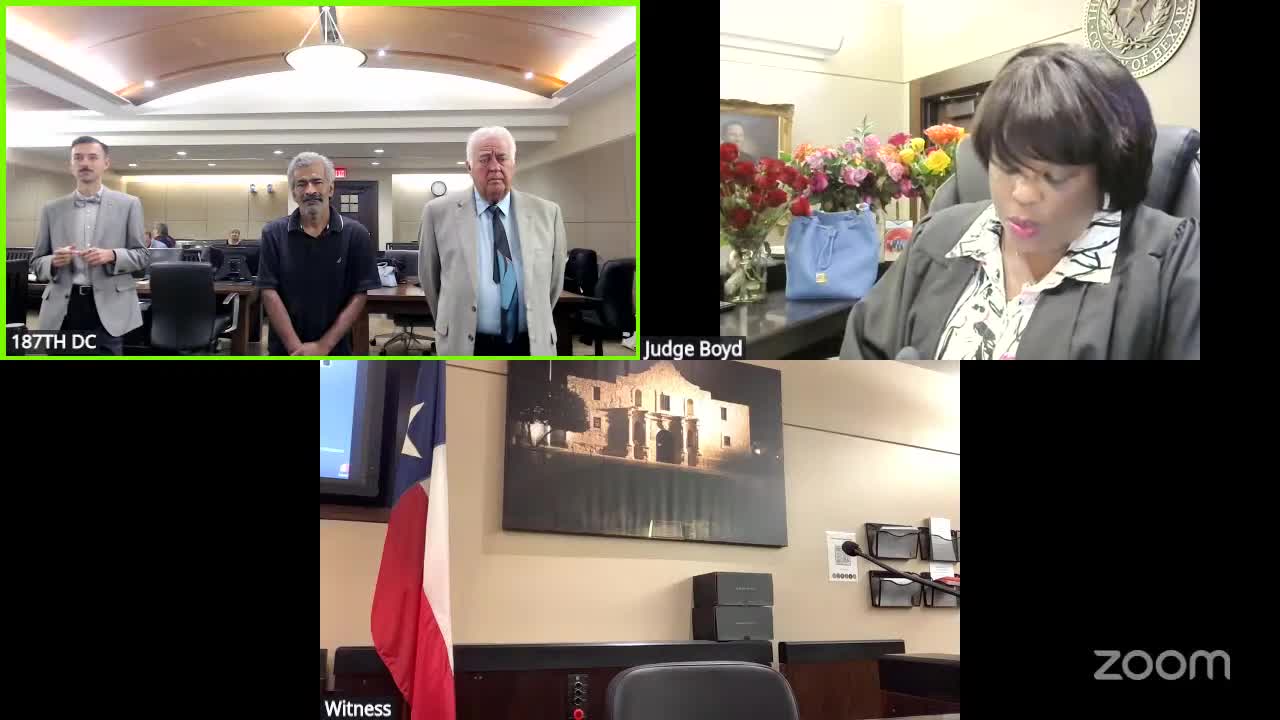
Summary
The court accepted an application for deferred adjudication from Joe Anthony Grant on a possession charge (penalty group 1, 1–4 grams) and ordered three years of deferred adjudication with treatment, testing and community‑service conditions.
The court accepted an application for deferred adjudication from Joe Anthony Grant on a possession-of-a-controlled-substance charge (penalty group 1, alleged 1–4 grams). After reviewing the plea paperwork and stipulations, the court deferred adjudication and set terms intended to support treatment and supervision.
Under the court’s order, Grant will receive a three-year term of deferred adjudication. Conditions the judge announced include proof of employment within 30 days; no employment as a home-health provider or in positions working with minors; an out‑of‑custody TAP (treatment assessment and placement) evaluation; 60 sober meetings in 60 days (the judge said successful attendance would reduce the required 200 hours of community service by two hours per meeting once the court‑ordered meetings had been met); random urine analyses and regular reporting (either by Zoom or in person); monthly field visits; and 200 hours of community‑service restitution. The court also ordered $60 restitution to the Bexar County crime lab to cover drug-testing lab fees; the state said that amount is a standard lab fee.
The plea form before the court included a recommended $800 fine as part of the plea package; the transcript records the plea and the court’s acceptance of the deferred adjudication application and conditions described above. The court reviewed and entered the trial-court certification of defendant’s rights to appeal on the record and advised Grant how to contact probation if he faced challenges complying with conditions.
The judge told the defendant that the court could order drug testing at the hearing and emphasized that communication with probation would be important for success on deferred adjudication. The court also advised that probation conditions would be enforced through regular monitoring and that failure to comply could lead to revocation and imposition of the underlying punishment range for a third-degree felony (2–10 years in prison and up to a $10,000 fine).