
Duvall hears consultants on a potential property tax levy to cover police, parks and deficit
Get AI-powered insights, summaries, and transcripts
Subscribe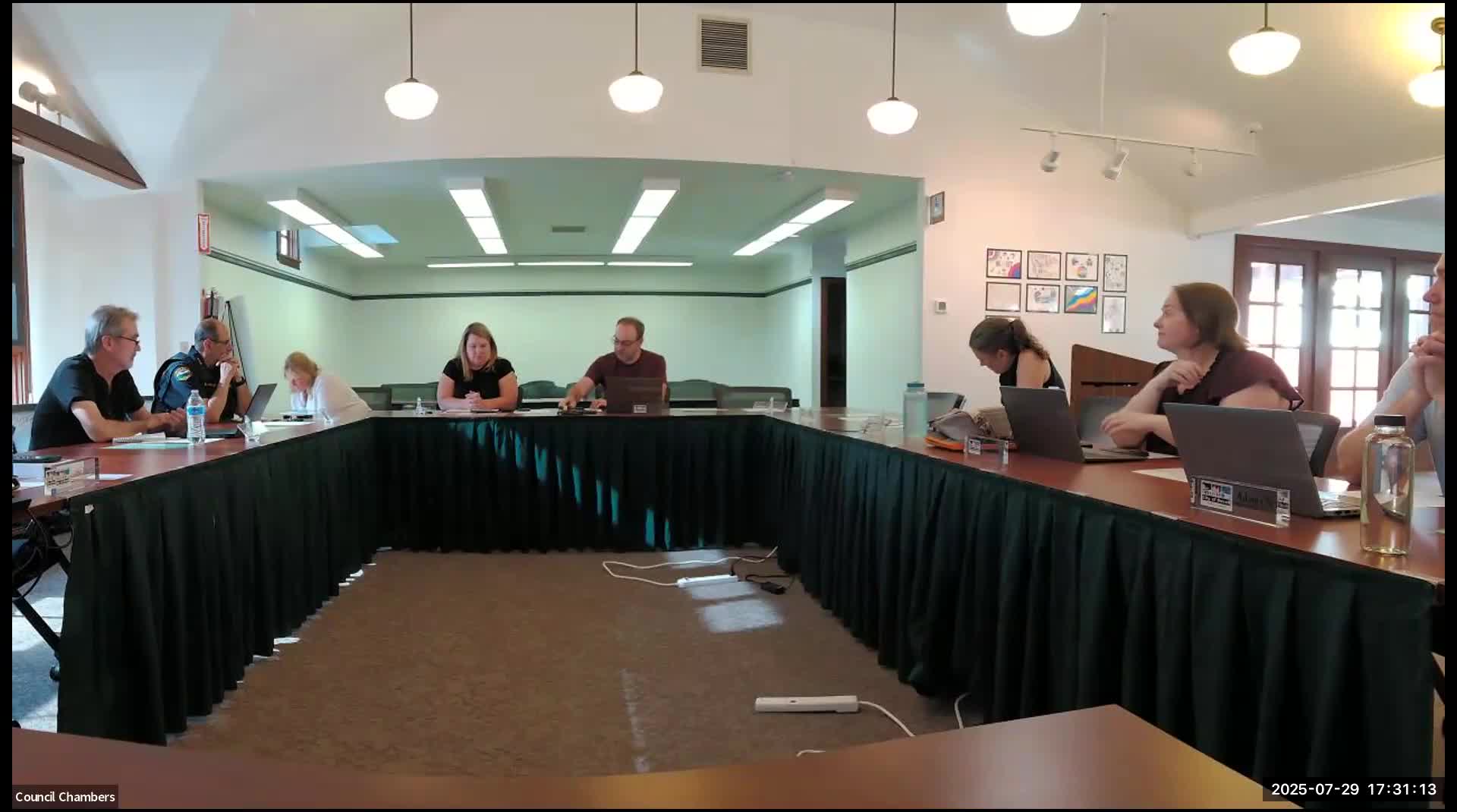
Summary
Consultants from NWP presented a step-by-step approach for Duvall officials considering a property tax levy, outlining electorate demographics, polling and a timeline; council members flagged concerns about an existing $2 million operating gap and whether voters would accept another operational levy rather than capital projects.
Duvall officials on Tuesday held a working session with consultants from NWP Consulting to discuss whether and how the city might place a property tax levy on a future ballot to fund police staffing, parks and other needs.
The consultants said the process should begin with stakeholder interviews and polling to gauge what voters will support and to shape an appropriately sized proposal. "You typically don't put something out to vote that you don't feel pretty confident about winning," Christian Zimmerman, lead strategist with NWP Consulting, told the Special Committee of the Whole.
The meeting centered on three planning topics: who comprises the likely electorate, how to test support through interviews and polls, and a practical timeline for referral to an upcoming election. Brian (surname not provided), the consultant who presented turnout models, estimated roughly 1,500 voters in a hypothetical April special election, about 3,000 in a primary and roughly 4,000 in a November general election from the city's pool of about 5,600 registered voters. "As you get from a special to a primary to a general, the audience really shifts younger," Brian said.
Council members pressed on likely uses for levy revenue. Consultants said earlier levies in the city had paid for a Cedar Crest High School resource officer and other capital items, and that the current conversation could include operations — for example, covering rising police department costs or parks work — or capital investments. "Having a suite of services or offers that we can provide to voters can oftentimes be very beneficial," Erin Schultz, a consultant working with ballot measures, said.
One council member warned that the city is already covering increased staff and programming and faces an approximately $2,000,000 operating shortfall. That member said past levies had funded mostly capital work and that asking voters to fund routine operations after the city expanded services could exhaust voters' willingness to approve future capital projects. A council member clarified that no decision has been made to define the prospective measure as an operational levy: "This is the groundwork for what may happen," the council member said.
Consultants described polling as the critical next step to test both willingness to pay and priorities among possible levy elements. They recommended stakeholder interviews first, then a poll informed by those conversations. "You start with some generic questions about what issues are important to you and your family," Ryan, a NWP consultant, said. The presentation noted polling firms often recommend sample sizes in the several-hundred range — the consultants said past work suggests 400–600 responses yields useful, statistically meaningful results in small jurisdictions, though the final sample size would be set with a research vendor.
On timing, consultants noted a statutory referral deadline about 120 days before an election and recommended working backward from the desired ballot. For example, aiming for an August primary would require council direction and policy decisions earlier in the year; a November general election gives more runway. "If a decision was made to go for a special election ballot like April, you would need to make that decision much earlier," Zimmerman said.
The consultants also discussed campaign boundaries. They advised that city staff may conduct neutral public education prior to a referral, but once the council formally refers a measure, campaign activity by staff or paid consultants on behalf of the ballot question is restricted. Paid consultants can assist with polling, drafting the ballot language and stakeholder outreach, but volunteer-led pro or con campaigns (independent political action committees or volunteer committees) must handle advocacy work after referral. "Their only job is to help you write the ballot initiative. After that, it becomes a campaign of volunteers," a staff member said.
Council members asked about accountability and safeguards to increase voter confidence. Consultants recommended built-in accountability such as independent audits or an oversight committee and noted exemptions for qualifying low-income or senior property owners are commonly included in levy proposals. "It's never a bad thing to say, 'we're tightening our belts'...but the accountability framework of the levy is also important," Ryan said.
Several council members said they found the presentation useful to set a deliberative timetable. No formal action or vote was taken at the workshop; consultants and staff will follow up on stakeholder interviews and, if directed, prepare polling and draft language for future council consideration.