
Judge uses breakout rooms and bodycam review in virtual bench calendar; technical access caused short delays
Get AI-powered insights, summaries, and transcripts
Subscribe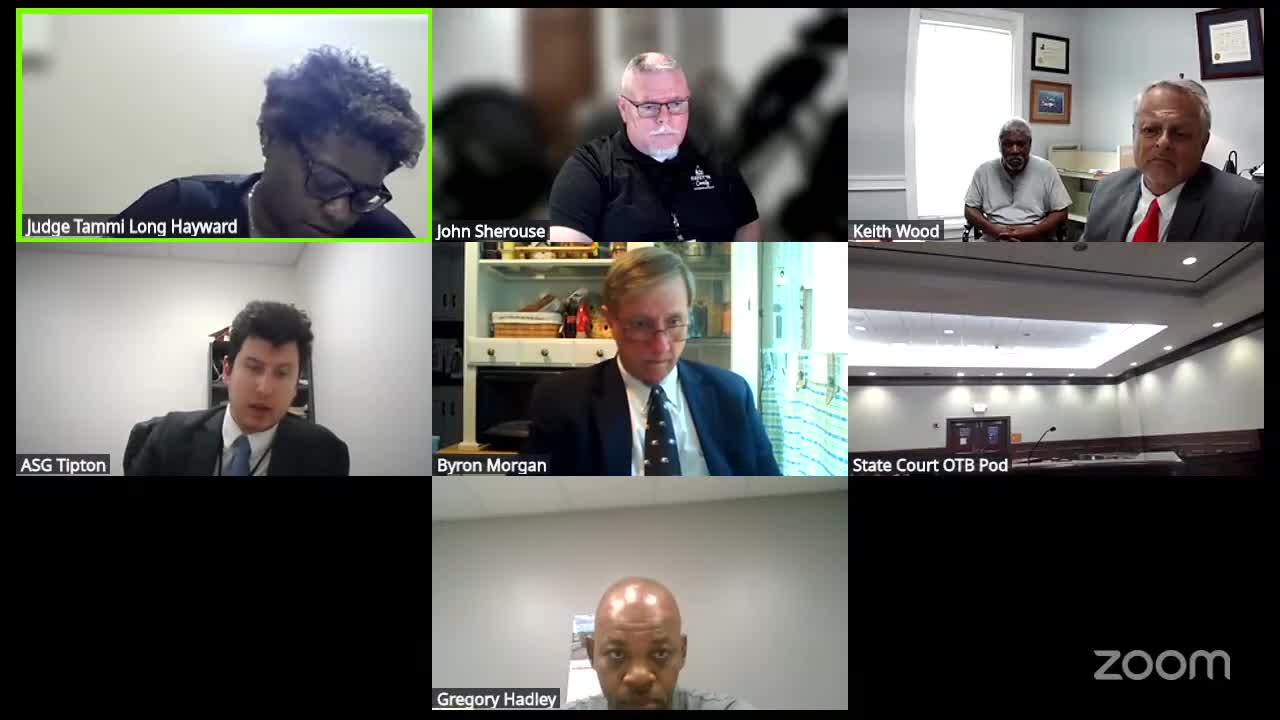
Summary
During the July 30 calendar, defense counsel, prosecutors and the court used virtual breakout rooms to review body-worn camera footage before a plea; parties reported limited breakout-room access and short delays as staff worked to connect participants.
July 30, 2025 — During the Clayton County State Court bench trial calendar, the court used video-conference breakout rooms to permit counsel and clients to review body-worn camera footage and to conduct brief pretrial conferences. The court briefly delayed one trial while a defendant reviewed an 18-minute video in a breakout room. Judge Tammy Long Hayward directed court staff to place defense counsel, the prosecutor and the defendant into a breakout room so the defendant could view the video before deciding whether to proceed to trial or enter a plea. The state told the court the footage was relevant because “the state is going to use some of his statements out of court,” and defense counsel asked to show the recording to his client before the client made an election. Defense counsel and a prosecutor reported trouble accessing breakout rooms earlier in the session. One attorney said, “we didn't have access to breakout rooms,” and the judge noted the court had provided time for pretrial conferences and urged counsel to be prepared before trial time. The state estimated the recorded video was 18 minutes long but that it could be reviewed in about five minutes for purposes of the plea discussion; the judge placed the parties into Breakout Room Number 2 for that review. The court repeatedly reminded participants to mute their devices during private conferences and to notify the clerk when they had announcements. After the video review in the breakout room, the defendant Gregory Hadley returned to the main session and entered a no-contest plea that the court accepted. The session illustrates how virtual court tools — breakout rooms and remote evidence review — are being used to preserve defendants' rights to review evidence before making plea decisions, while also creating short logistical delays when participants lack access or when staff must manage breakout-room connections.