
Planning staff propose code fixes for density, streets, alleys and addressing to aid infill projects
Get AI-powered insights, summaries, and transcripts
Subscribe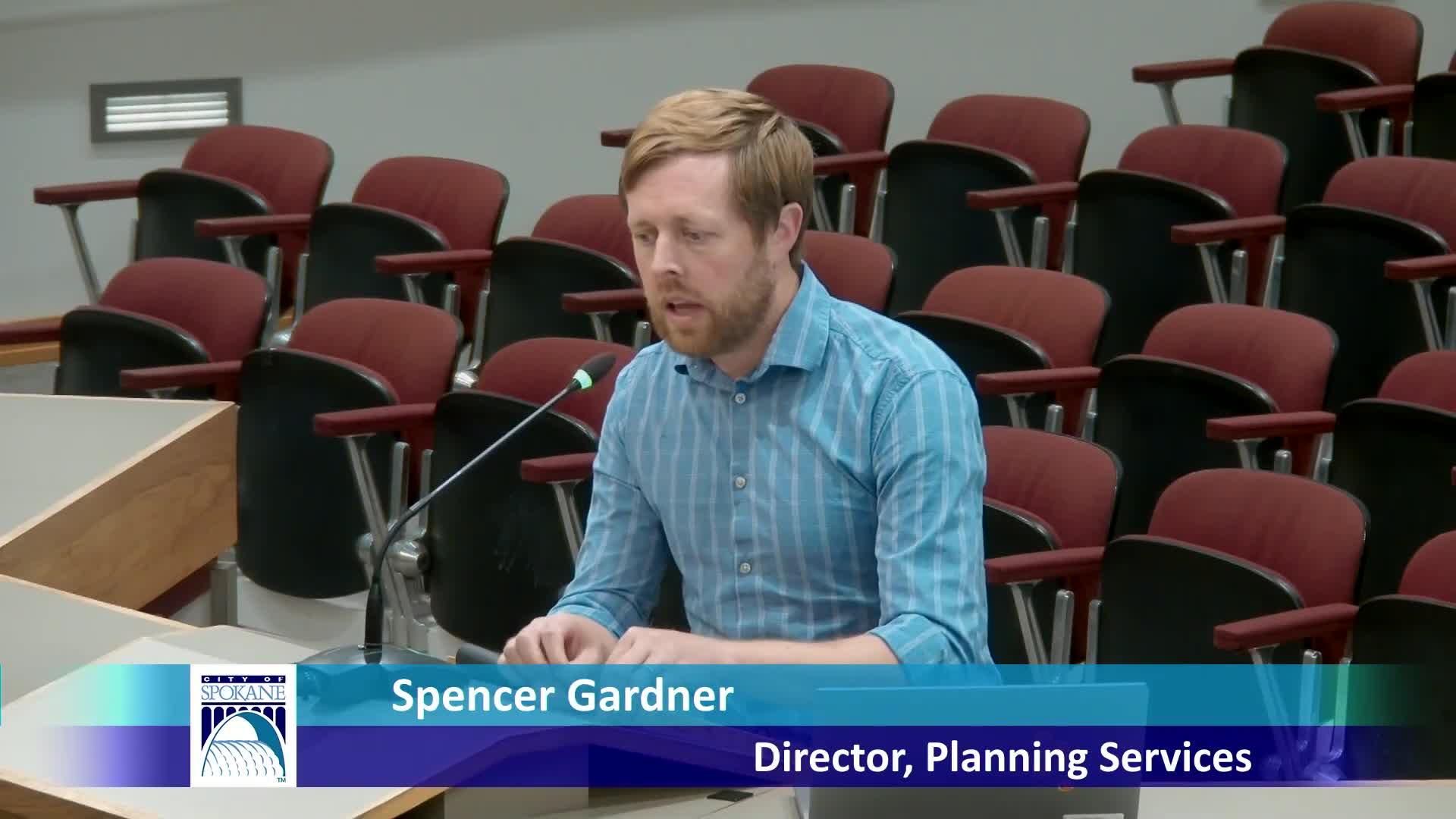
Summary
City planning staff proposed interim code amendments to align density calculations (planned-unit developments), clarify street/driveway/alley definitions and allow flexible addressing (letters appended) to prevent readdressing neighbors and to support infill.
City planning staff asked the committee to approve interim code clarifications to resolve inconsistencies that have arisen in recent land-use decisions, particularly for infill development. Spencer Gardner, a planning staff member, said a January code change intended to relax density calculations inadvertently left a separate planned-unit development (PUD) section unchanged; the interim ordinance would make the PUD language point to the updated, citywide density method. He said no developments are yet approved that require the change but that correcting the discrepancy will reduce future confusion. The nut graf: staff brought two companion ordinances—one to clarify streets, alleys and driveways (including a clearer definition of driveways, a planning-director role for through lots, and a clarified city-engineer role for designations) and a companion addressing code change to allow flexible addressing in constrained infill situations. For example, when there is no available numeric address between adjacent numbers, staff recommended appending letters (e.g., 118A, 118B) rather than forcing neighbors to readdress, a practice other cities (Seattle, Portland) use. Staff also proposed clarifying when private streets or private alleys may be used (planned unit developments, binding site plans, mobile home parks, unit-lot subdivisions) and gave the city engineer the authority to review dead-end alleys and to determine appropriate access treatments. Councilors asked about pedestrian facilities for lane/driveway-front developments and limits on unit counts when using shared driveways; staff said most plats still require frontage on public or private streets and that unit-lot subdivisions historically cap at nine units, with PUD processes available for larger developments. Staff said the interim ordinances will be followed by permanent code updates during comprehensive-plan work to ensure clarity for future projects.