Get Full Government Meeting Transcripts, Videos, & Alerts Forever!
Get email alerts on the Subdivision Regulation topic
No spam. Unsubscribe anytime.
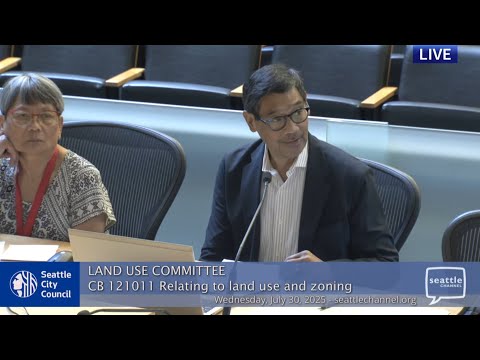
Council hears briefing on plan to delegate final subdivision plats to city departments
Summary
Council Central Staff briefed the Land Use Committee on Council Bill 121009, which would amend SMC Title 23 to let department directors sign off on final subdivision plats instead of routing routine ministerial approvals to the full council.
Council Central Staff presented Council Bill 121009 to the Land Use Committee on July 30, a proposed ordinance that would amend Seattle Municipal Code Title 23 to delegate final plat decision authority to city department directors rather than routinely bringing final plats to the City Council for action.
Why it matters: State subdivision law (Chapter 58.17 of the Revised Code of Washington) establishes preliminary and final plat procedures. Central staff told the committee that in many cases final plats — particularly those involving more than 10 lots — are ministerial because infrastructure and conditions were already reviewed at the preliminary stage. Delegating final-plat signature authority to department directors could trim months from the approval timeline for some developments, staff said.
What presenters told the committee: HB Harper, a central-staff analyst, explained that departments already confirm preliminary-plat conditions and that the council’s later role is generally ministerial. The proposal would codify delegation and permit department directors to take final action, improving permitting efficiency without changing substantive project review conducted earlier. Staff noted an average of roughly two such final plats come before council annually and framed this as a narrow procedural change to accelerate completion of approved subdivisions.
Public input and outcome: No speakers were present for the item’s scheduled public hearing; the committee treated the session as a briefing and the item was not voted on during the July 30 meeting. Councilmembers did not raise substantive objections on the record at that time; staff said they will follow up on technical questions and return with implementation language before any committee vote.
Next steps: Staff recommended drafting implementing language and returning to committee with details on ministerial criteria and any necessary code clarifications. The committee did not set a formal vote at the July 30 meeting.