Get Full Government Meeting Transcripts, Videos, & Alerts Forever!
Get email alerts on the Housing Rental Search topic
No spam. Unsubscribe anytime.
Committee backs city-branded rental search platform; will send MOU to council
Summary
A committee approved recommending to the Common Council a memorandum of understanding with Citywide Software LLC to host a city-branded searchable rental housing database at no cost to Green Bay, with staff to provide links and a possible demonstration to council.
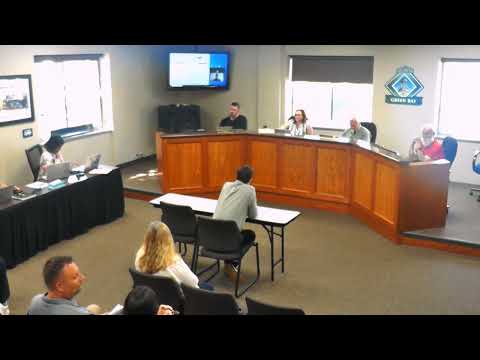
The Protection Policy Committee voted July 28 to recommend that the Common Council consider a memorandum of understanding with Citywide Software LLC to host a city-branded, searchable database of rental housing available in Green Bay at no cost to the city. The committee approved the recommendation by voice vote and will forward the item to the Common Council for final action.
The proposal, presented by Jeremy Schmidt and Dominic Anzalone of Citywide (the company founders), would place a city-branded housing search engine on a Green Bay domain and use Citywide as the vendor behind the platform. “We’re asking the city to launch a site in the city’s name,” Dominic Anzalone said, explaining the model used in other Wisconsin cities.
The nut graf: proponents said the platform is intended to increase the number of rental listings visible to renters—especially affordable and mid‑market units—and to make those listings free to smaller landlords and to government‑subsidized properties. Citywide representatives said the platform has increased inventory in other cities and that its costs are covered by charging larger property owners a subscription fee.
Citywide said properties in buildings with fewer than 20 units and government‑subsidized housing would be listed at no charge; larger buildings would be asked to pay a fee to appear. “Small landlords pay nothing, government‑subsidized properties pay nothing,” Anzalone said; he added that larger buildings are charged to subsidize the platform. Presenters described sample pricing (a $500 monthly fee cited as an upper range for larger buildings) and claimed the platform has been adopted in about 10 Wisconsin cities and can substantially increase local listings compared with national aggregator sites.
Committee members and staff asked how the city would be tied to the platform, how data and code‑enforcement links would work, and what safeguards exist against scams. Schmidt said Citywide would operate the software behind the scenes while the site would carry the city logo and domain; he said the company vets listings and does not include open public comment forums. A staff member from Community Economic Development told the committee the department had previewed the platform and recommended it as a tool for renters and for data to inform housing policy.
Alder Eckstine raised a common concern: the site’s usefulness depends on broad landlord participation. Anzalone said Citywide’s approach is to work directly with property owners and to adjust pricing in markets where needed to secure participation; he said the company aims to enroll roughly nine out of 10 landlords in a market.
Committee members asked staff to include links to other city implementations in the meeting packet and discussed whether a demonstration for Common Council would be helpful. The committee approved forwarding the MOU recommendation to council and asked staff to provide sample links and to coordinate any demo for the council meeting.
Less critical details: presenters estimated national advertising costs on aggregator sites and provided urban examples from Kenosha and Milwaukee; those figures were described by presenters as contextual examples of how Citywide is funded in other markets.