Get Full Government Meeting Transcripts, Videos, & Alerts Forever!
Get email alerts on the Municipal Fees topic
No spam. Unsubscribe anytime.
Green Bay committee reviews broad 2026 fee schedule changes, holds vote after amendments
Summary
The Finance Committee reviewed proposed changes to the City of Green Bay's 2026 fee schedule — covering animal licenses, massage licenses, inspection and permit fees, short-term rentals and more — approved two fee amendments and voted to hold final approval until staff refines language and budget impacts.
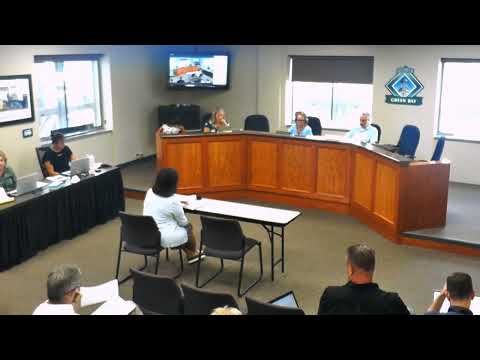
The City of Green Bay Finance Committee on July 29 reviewed a proposed 2026 fee schedule that would raise a range of license and permit costs, approve two amendments to development-related fees and defer final action to a later meeting.
The committee debated hikes and structural changes to multiple fees — including late processing for liquor licenses, higher initial fees for chicken coop inspections, increased reinspection and minimum inspection charges, higher massage-establishment fees and changes for direct-seller and solicitor permits — before voting to amend parkland and street‑tree charges and to hold the schedule so staff can finish ordinance changes and budget work.
Committee members and staff said the package is intended to align permit fees with the city’s actual inspection and enforcement costs and to move common fees out of city code and into a centralized fee schedule. Clerk Jeffreys explained that many ordinance updates will be required and that some line items would still need law‑department review. “A lot of these changes would require some ordinance updates,” Jeffreys said during the presentation.
Inspectors’ office staff warned that the department’s minimum service fee for inspections has been set at $75 and that many permit fees were raised by roughly $25 to match that baseline; the inspection representative said the change is intended to reflect the true cost of sending an inspector. Staff also said increases bring Green Bay more in line with neighboring municipalities for several permit categories.
On animal licensing, staff proposed a $75 initial inspection/permit fee for new backyard chicken coops (a one‑time fee) with subsequent annual renewal at $25; exotic and over‑limit animals would be assessed an initial charge and then move to a $15 annual renewal (the same as cats and dogs). Regarding enforcement, staff said coop inspections were proposed after department analysis showed correlations between poorly maintained coops and increased rat activity in overlayed inspection maps.
Massage establishment licensing drew discussion: staff proposed eliminating prorating for massage licenses and moving the fee to a flat $150; Jeffreys said fewer than a dozen massage licenses have been issued in recent years and that law‑department revisions will shape the final structure. For direct sellers and solicitors, staff proposed replacing the current 30‑day option with an annual $50 license that expires each calendar year, which would require ordinance changes.
Building and construction permits were revised to align permit charges with a $75 minimum inspection fee, typically increasing many permit fees by about $25; staff said the change bundles required inspections into base permit fees and leaves reinspection charges for cases of noncompliance.
Short‑term rental fees also appeared in the draft: the schedule lists an initial permit fee of $500 and an annual renewal described in the draft as “$2.50.” Committee members questioned that figure during the meeting and asked staff to confirm the renewal amount and to provide enforcement and complaint counts tied to short‑term rentals before the next hearing.
Two specific amendments were approved during the meeting: raising the parkland development fee from $3.50 per dwelling unit to $400 and increasing the street‑tree fee from $100 to $150. The committee then voted to hold the broader fee schedule and return it to a future meeting after staff completes ordinance language, confirms numeric details (for example, the short‑term renewal amount), and incorporates the changes into the 2026 budget planning timeline.
The committee and staff also agreed to solicit additional departmental data and stakeholder feedback on items flagged for further review, including massage licensing structure and recurring special‑event fees.
Next steps: staff will incorporate the two approved amendments, refine ordinance language with the law department, confirm numeric and programmatic details, and return the revised fee schedule for further committee consideration prior to final council action.