Get Full Government Meeting Transcripts, Videos, & Alerts Forever!
Get email alerts on the Community Preservation And Salvage topic
No spam. Unsubscribe anytime.
Local preservation group urges plaque program, district mapping and salvage options as county drafts ordinance
Summary
Members of the Griffin-Spalding Historical Society described a voluntary plaque program, work on a Third Ward historic district and recommended accessible guidance and salvage channels for architectural elements during the planning commission's review of a proposed county preservation ordinance.
Representatives of the Griffin-Spalding Historical Society told the Spalding County Planning Commission they already operate a voluntary recognition program for historic properties and urged the county to coordinate its draft ordinance with existing local efforts and practical owner guidance.
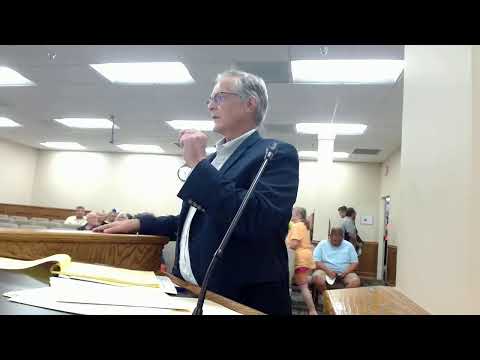
Kirby Sisk, introduced as the current and outgoing president of the Griffin-Spalding Historical Society, said the society’s preservation committee started an effort about a year and a half ago to recognize historic properties with a plaque and an application that the committee reviews before the society’s board decides whether to award a plaque. “It’s not a historic registry designation at all,” Sisk said, calling the plaque program a recognition of owners who maintain historically significant properties rather than a set of restrictions.
Drew Payne, who said he would be the historical society’s incoming president in August, said the society has been working with consultant NewTown Macon to identify a single historic district (the Third Ward) after tornado damage reduced an earlier two-district concept. Payne recommended the county publish clear guidance — for example, by adopting or adapting other municipalities’ online guidance pages — so property owners and developers would know in advance what design changes are likely to be approved.
Several attendees proposed practical approaches to salvaging architectural materials from threatened or demolished properties. Commenters noted that commercial salvage businesses in other Georgia cities (Macon, Savannah) can inventory and purchase usable items such as mantels, doors, windows and metalwork before demolition, and suggested the county consider outreach to connect owners with salvage services. A preservation advocate said the historical society could maintain a registry or point of contact to facilitate salvage sales prior to demolition, while acknowledging the society lacks funds to run a commercial salvage operation.
Why it matters: Commissioners heard that voluntary recognition, district planning and salvage channels can reduce loss of historic fabric while avoiding heavy-handed regulatory frameworks. Several speakers urged the county to publish straightforward guidance that property owners can rely on when restoring historic buildings.
No formal action was taken on these proposals during the meeting. Speakers asked planning staff to coordinate with the historical society to avoid duplicative efforts and to provide accessible online guidance for owners pursuing restoration or designation.
Ending: Commissioners closed the special-call meeting after public comment and postponed final action on the draft ordinance pending further revisions and outreach.