Get Full Government Meeting Transcripts, Videos, & Alerts Forever!
Get email alerts on the Public Safety Telecommunicators Pension Reclassification topic
No spam. Unsubscribe anytime.
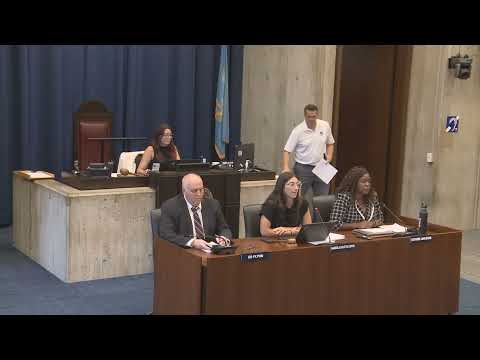
Boston hearing advances home‑rule petition to reclassify 911 telecommunicators for pension benefits
Summary
Boston City Council committee held a hearing July 29 on Docket 1277, a home‑rule petition to reclassify BPD 911 dispatchers and call takers as a higher retirement group; the panel heard testimony on staffing, overtime and mental‑health impacts but took no vote.
A Boston City Council committee on July 29 held a hearing on Docket 1277, a home‑rule petition asking the state to reclassify Boston Police Department 911 dispatchers and call takers from retirement Group 1 to Group 2 to reflect the job’s public‑safety responsibilities and change pension benefits.
The hearing before the Committee on Government Operations gathered city councilors, union representatives, BPD leadership and current dispatchers to review the petition’s language, staffing data and estimated pension costs. No committee vote was taken at the hearing; sponsors said they will refine statutory language and await actuarial figures from the Retirement Board before advancing the petition.
Why it matters: Sponsors and witnesses told the committee that the operations division’s civilian telecommunicators handle high‑stress, technically complex emergency work — coordinating police, fire and EMS responses, counseling callers and often monitoring violent incidents — but are currently classified in a pension group the sponsors say is more appropriate for clerical positions. Reclassification would change retirement eligibility and accruals for an estimated, targeted population of BPD operations employees.
Union and dispatcher testimony emphasized on‑the‑job stress, mandatory overtime and retention problems. “After 24 years of being with the department … I would only be walking away with 16%,” BPD dispatcher Melinda Santos said of her current projected pension if she were forced to retire now. Michael Shackeford, unit president and a dispatcher, told the committee that many operators do not reach higher accrual thresholds and that life expectancy and post‑retirement time with family are concerns.
SEIU Local 888 President Tom McKeever described the job’s volume and demands: “Each call taker roughly takes, in a 40 year career, about 700,000 calls.” Union leaders and city labor advisers outlined bargaining gains and recruitment measures the administration has used — including retention bonuses and a temporary residency waiver — but said staffing remains short of targets.
Councilors pressed administration and union witnesses for staffing numbers, overtime practices and the petition’s scope. The committee heard that roughly 94 people work in the operations division (the council president called that the approximate headcount), that the committee’s back‑of‑the‑envelope payroll estimate is roughly $7.99 million (94 employees at a base of $85,000 before overtime and benefits), and that three candidates were reported to be in the hiring pipeline at the time of the hearing.
Members of the panel raised occupational‑health concerns tied to long shifts and forced overtime. “No one should work 18 hours a day,” Councilor Ed Flynn said during the hearing; witnesses confirmed incidents of 16‑ to 18‑hour workdays and described the cumulative stress and mental‑health effects on dispatchers. The union said civilian peer‑support efforts exist but have been funded by employees and asked that the city incorporate support resources in future bargaining.
Officials described technical and operational changes that affect duties, including multiple new software screens, ShotSpotter integration, video‑to‑text 911 and rising expectations to serve as court witnesses for what dispatchers observe or hear. The mayor’s office and labor advisers referenced an executive order that recognized dispatchers as first responders and said the home‑rule petition seeks to reflect that recognition in retirement code.
Committee sponsors and legal staff said they will clarify petition language to explicitly include call takers and dispatchers and to map the covered population so the state petition can move without unintended gaps. Administration representatives and union leaders said actuarial numbers from the Retirement Board are forthcoming and will be reviewed before the council advances the petition to the state legislature.
The hearing concluded without formal action. Committee leaders thanked witnesses and said they will continue to refine petition language, obtain actuarial estimates and work with the union and state legislators on next steps.