Get Full Government Meeting Transcripts, Videos, & Alerts Forever!
Get email alerts on the Wildlife Management topic
No spam. Unsubscribe anytime.
Council considers codified deer‑management rule to allow archery hunting during state archery season
Summary
City staff and a county wildlife officer briefed council on a proposed ordinance to permit archery deer hunting inside city limits during statewide archery season, with restrictions including insurance, distance and property‑owner permission; council asked for more data and further questions were deferred to a future committee meeting.
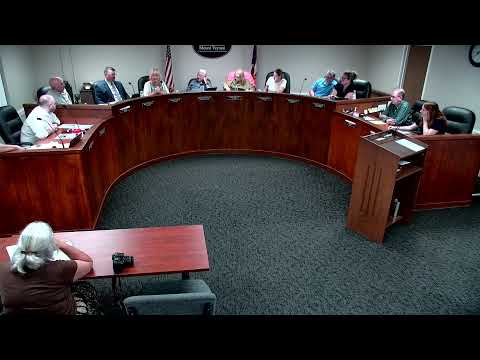
Mount Vernon staff and a county wildlife officer discussed a draft ordinance that would permit white‑tailed deer archery hunting within the city during Ohio’s regular archery season, subject to local rules and safety standards. Austin Levering, a wildlife officer who advised council, described archery hunting as a low‑incident, effective tool for reducing deer populations and related complaints when properly regulated. He said urban archery programs are in place elsewhere in Ohio, including parts of Columbus and Gambier, and that properly administered programs can reduce deer densities with few reported incidents. The draft city ordinance circulated to council includes criteria commonly used by other communities: written property‑owner permission, insurance requirements, minimum setback distances (the draft includes a 500‑foot distance requirement), and id‑and‑permit processes tied to the state’s archery season dates. Levering and staff noted hunters commonly take proficiency tests and that hunters must have permission to recover an animal on private property. Why it matters: residents have reported deer conflicts; council members asked for local harvest data and copies of previously adopted local rules. Council members also asked staff to research prior Mount Vernon ordinances that had allowed hunting, and whether those measures had been time‑limited or linked to crop/damage permits; staff said they would follow up and bring additional data to a future committee meeting. Ending: Council took the ordinance for a second reading and scheduled a follow‑up committee session to allow more detailed questions and to review prior local experience and neighboring programs.